Chronic pelvic pain, intense periods, and persistent fatigue are just a few symptoms people with endometriosis or adenomyosis might experience. While both conditions can cause significant discomfort, they are quite different in how they affect the body. And to make things even more complex, it’s possible to have both conditions at the same time.
So when it comes to adenomyosis vs. endometriosis, how can you tell the difference? And is adenomyosis more serious than endometriosis? We can help shed some light on these questions and why understanding each is key to getting the right diagnosis and treatment.
What is adenomyosis?
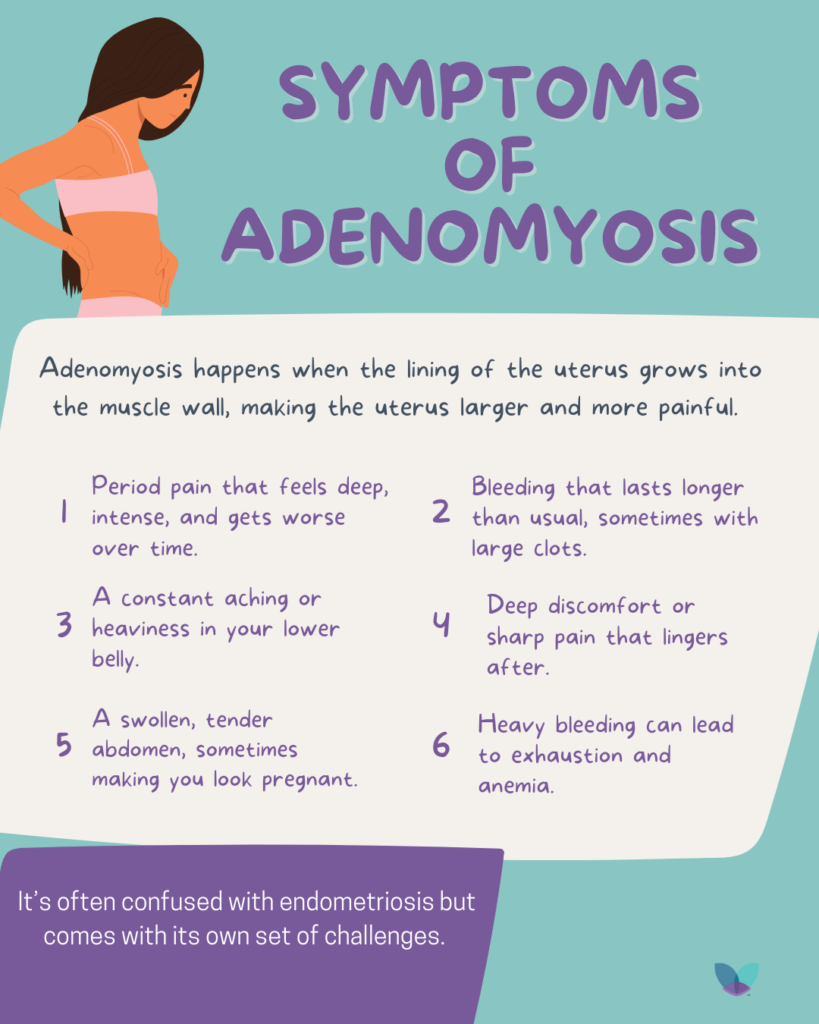
Adenomyosis occurs when the endometrial tissue (the lining of the uterus) grows into the muscular wall of the uterus. This causes the uterus to become enlarged, thickened, and painful. Imagine tree roots growing deep into the soil, making the ground denser and heavier, and you can begin to understand how adenomyosis affects the uterus.
Common symptoms of adenomyosis include:
- Period pain that feels deep, intense, and worsens over time
- Heavy, prolonged bleeding (often with large clots)
- A constant ache or heaviness in the lower belly
- Lingering pain even after menstruation
- A tender, swollen abdomen—sometimes causing a bloated or “pregnant” appearance
- Fatigue and anemia due to significant blood loss
What is endometriosis?
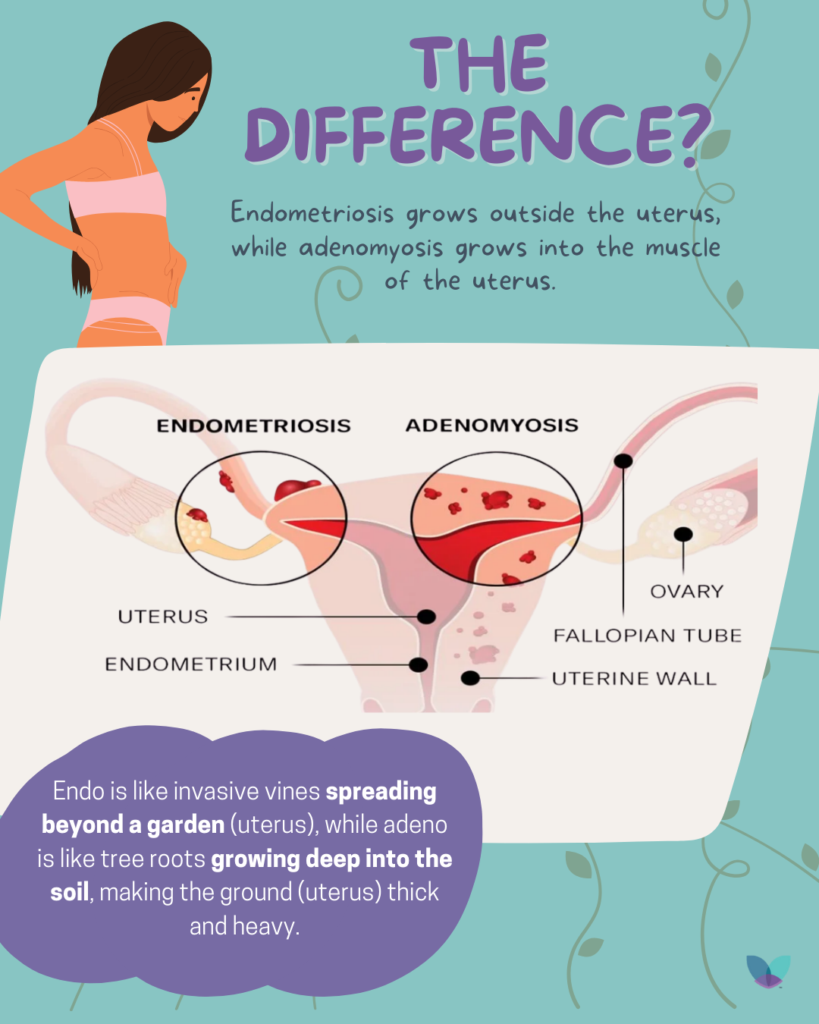
Endometriosis is a condition where tissue similar to the uterine lining grows outside the uterus—on organs such as the ovaries, fallopian tubes, bowel, diaphragm, and more. This can trigger chronic inflammation, pain, and scar tissue formation. Unlike adenomyosis, which is confined to the uterine wall, endometriosis spreads throughout the pelvic cavity and other places within the body.
Symptoms of endometriosis can include:
- Pain during or after sex
- Painful periods (dysmenorrhea)
- Pain with bowel movements or urination
- Ongoing pelvic or abdominal pain
- Gastrointestinal symptoms like bloating, nausea, or constipation
- Difficulty getting pregnant
As one helpful analogy explains: endometriosis is like invasive vines spreading beyond the garden (uterus), while adenomyosis is like roots growing deep into the soil, thickening the ground itself.
Is adenomyosis more serious than endometriosis?
Many people wonder, “Is adenomyosis more serious than endometriosis?” The answer depends on the individual and how each condition affects their body.
While adenomyosis can cause extreme period pain, heavy bleeding, and anemia, endometriosis often involves more widespread inflammation and scar tissue that can affect fertility and organ function. Both are serious conditions in their own right, and both can have a major impact on quality of life. One is not necessarily more severe than the other—they’re just different in how they show up and what they affect.
Most importantly, some people have both adenomyosis and endometriosis, which can intensify symptoms and make diagnosis more complex. This is why it’s so important to work with a pelvic pain specialist who understands the nuances of these conditions.
Why A Proper Diagnosis Matters
Whether you’re facing adenomyosis or endometriosis or dealing with both, finding the right diagnosis is key to finding the right course of treatment. These conditions are often misdiagnosed or misunderstood, but with the right team of pelvic pain specialists, targeted treatments like hormone therapy, the PRM Protocol™, or excision surgery can make a significant difference.
If your symptoms are interfering with your life, trust your instincts and seek expert care. Understanding the differences between endometriosis and adenomyosis is the first step toward lasting relief—and reclaiming your health.
Take the Endometriosis Symptom Quiz