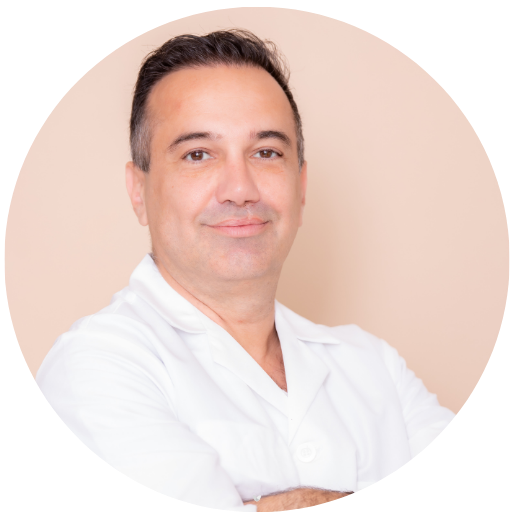
Dr. Reza Askari is a fellowship-trained minimally invasive gynecologic surgeon with deep expertise in endometriosis excision and complex pelvic surgery in Los Angeles, CA. He operates at Providence Little Company of Mary Medical Center-San Pedro, Providence Little Company of Mary Medical Center-Torrance and Cedars-Sinai Torrance Memorial in California. At PRM, he takes a patient-first approach rooted in listening and partnership, focusing on understanding each patient’s unique story as the foundation for care.
He performs 150–200 advanced gynecologic surgeries annually, including deep endometriosis excision, pelvic reconstruction, and fertility-preserving procedures. He has treated endometriosis involving nearly all pelvic and abdominal structures, including the bowel, bladder, diaphragm, and ureters, while prioritizing function, pain relief, and fertility preservation whenever possible.
Dr. Askari brings clinical excellence and empathy to every patient encounter, with a strong commitment to improving outcomes for individuals affected by endometriosis.
He is aligned with PRM’s mission to reduce the time patients suffer from pelvic pain. Through the PRM Protocol™, he supports patients before, during, and after surgery, combining surgical precision with comprehensive, multidisciplinary care.
Fellowship Minimally Invasive Gynecologic Surgery | The Unversity at Buffalo – The State University of New York
Residency Obstetrics and Gynecology | Lincoln Medical and Mental Health Center, Major Affiliation with the Weill-Cornell College of Medicine
Medical School Saba University of Medicine
Hospital Affiliations:
Providence Little Company of Mary Medical Center – San Pedro, CA
Providence Little Company of Mary Medical Center – Torrance, CA
Torrance Memorial Medical Center – Torrance, CA
My approach is actually pretty simple: I listen. Every patient’s journey is unique. So the first step for me is hearing your story—your symptoms, your struggles, your goals. From there, we build a treatment plan together.
It’s not just about surgery—it’s about trust, compassion, and tailoring care that fits you. It all starts with listening to you because what I do is for you.
This mission really hits home for me. The delay in getting diagnosed and treated for endometriosis is way too long. At PRM, we’re actively working to change that. We don’t dismiss your pain—we validate it, we investigate it, and we act sooner. That’s why I’m proud to be part of this team.
Surgery is just one part of the healing process. What we do before and after matters a lot. Pre- and post-hab help reduce inflammation, release years of pelvic floor tension, and set your body up for a smoother recovery. Through the PRM Protocol™, we support you on every step—before, during, and after surgery.
I completed a fellowship in minimally invasive gynecologic surgery and trained with some of the most respected endometriosis surgeons in the world. I’ve published peer-reviewed research, presented at national conferences, and most importantly—I’ve had the honor of helping hundreds of patients feel better and reclaim their lives.
On average, I perform between 150 to 200 complex gynecologic surgeries a year. That includes deep endometriosis, pelvic reconstruction, and fertility-preserving operations. Every case is approached with precision and intention.
Fertility is always top of mind, especially for younger patients. My approach is careful and conservative—I work to protect ovarian function, preserve the uterus, and avoid removing any reproductive organs unless absolutely necessary. And I always collaborate with fertility specialists when needed.
Endometriosis—this is personal for me. Endometriosis has affected people in my own family. So when I sit with a patient, I don’t just see a chart or a diagnosis—I see a whole person.
I believe in thoughtful surgery, yes—but also in patience, presence, and partnership. You’re not alone in this.
Dr. Askari is a fellowship-trained minimally invasive gynecologic surgeon with a deep commitment to compassionate, patient-centered care. Having trained alongside some of the world’s leading endometriosis surgeons, he brings advanced surgical expertise and a personal connection to his work—endometriosis has affected members of his own family.
With a focus on fertility preservation, Dr. Askari takes a careful, conservative approach, always working to protect ovarian function and the uterus. He partners closely with fertility specialists when needed to support his patients’ future goals.
Beyond the operating room, Dr. Askari values presence, patience, and partnership—ensuring every patient feels seen, heard, and never alone. His dedication has helped hundreds of individuals reclaim their lives from chronic pain.
I met with Dr Askari for the first time to discuss a possible hysterectomy. I came loaded with questions and concerns. He met with me and I was so impressed by his preparation. He did not carry my chart in to the room, but referenced having studied it just prior to our meeting. He was very prepared; asking specific questions about my previous gynecological procedures as well as others I have had; he was very knowledgeable about my personal history as well as clear in answering all of my questions. Dr. Askari was kind, professional, clear and throrough.
Dr Askari is a compassionate, caring, kind & professional with excellent surgical skills. I was embarrassed to discuss my health issue but he made me feel comfortable. I didn’t need any pain medication after surgery & made a speedy recovery because I trusted him & felt confident In his skills. He even drew a diagram so I could understand what he was going to do. I’ve never had surgery before so I was anxious & called him many times with questions & he talked with me no matter how busy he was. He advised the best choices of treatment & let me make the final decision. He really cares & respects women & wants them to be happy. I’m very grateful my primary care physician referred me to his care. He has changed my quality of life 200%! I think he should be training other doctors on how to give excellent patient care.
Dr Askari always goes above and beyond to ease my fears giving clear and compassionate advise related to my healthcare needs.
Explore patient testimonials to learn more about outstanding care at PRM.
Experience compassionate care and expertise in pelvic rehabilitation with Pelvic Rehabilitation Medicine. Schedule your appointment today and take the first step towards better pelvic health.
Endometriosis excision surgery is an advanced minimally invasive procedure that involves carefully identifying and removing endometriosis lesions from affected areas while preserving healthy tissue. Unlike approaches that only treat visible disease on the surface, excision surgery focuses on removing endometriosis at its root to help reduce symptoms and improve quality of life. At PRM, fellowship-trained minimally invasive gynecologic surgeons use advanced laparoscopic techniques and comprehensive evaluation to develop individualized treatment plans based on each patient’s symptoms, goals, and disease severity.
Endometriosis surgery may be considered for patients whose symptoms are not adequately controlled with medications or hormonal treatments, whose pain significantly impacts daily life, or who are experiencing fertility challenges. Surgery may also be recommended when imaging or evaluation suggests deeper disease, such as endometriosis involving the bowel, bladder, or other pelvic structures. Common reasons to consider an endometriosis surgery consultation include persistent pelvic pain despite medical treatment, painful periods, painful intercourse, gastrointestinal or bladder symptoms, difficulty conceiving, or findings such as endometriomas or deep infiltrating endometriosis. During an evaluation at PRM, providers review your symptoms, medical history, imaging, and treatment goals to determine whether excision surgery is the right option for you and develop a personalized care plan.
During an endometriosis surgery consultation at PRM, patients can expect a comprehensive evaluation focused on understanding their symptoms, medical history, and treatment goals. The surgeon will review your experience with pelvic pain, painful periods, painful intercourse, bowel or bladder symptoms, previous diagnoses, and any prior treatments. The consultation may include a physical and pelvic exam to evaluate areas of tenderness, pelvic floor muscle dysfunction, scarring, or other findings that may contribute to symptoms. Additional imaging, such as specialized pelvic ultrasound or MRI, may be recommended to better understand the location and extent of endometriosis. Your surgeon will also discuss whether excision surgery is appropriate, explain the surgical approach, and review what to expect before, during, and after the procedure. PRM’s approach includes personalized pre- and post-operative care, which may involve pelvic rehabilitation, lifestyle strategies, and other treatments to support healing and long-term outcomes.
PRM’s endometriosis surgeons specialize in advanced laparoscopic excision surgery and care for patients through a fully integrated, multidisciplinary approach. Unlike a surgery only model, PRM combines surgical expertise with pelvic pain care to address the inflammation, nerve sensitivity, and pelvic floor dysfunction that can contribute to ongoing symptoms. PRM’s fellowship-trained Minimally Invasive Gynecologic Surgeons (MIGS) have specialized training in complex excision surgery and treat advanced endometriosis, including cases involving areas such as the bowel, bladder, and diaphragm. Their approach also includes comprehensive support before and after surgery, including pelvic rehabilitation through the PRM Protocol™ to help reduce pain, support healing, and improve long-term outcomes. PRM focuses on personalized, whole-body care designed to help patients achieve meaningful relief while reducing the need for repeated procedures. Providers also evaluate patients clinically based on symptoms, medical history, and physical examination, allowing treatment planning to begin without waiting for surgical confirmation.
Yes, endometriosis excision surgery can improve fertility for some patients by removing endometriosis lesions, treating scar tissue and adhesions, restoring normal pelvic anatomy, and reducing inflammation that may interfere with conception. The impact of surgery depends on factors such as the severity of endometriosis, age, ovarian reserve, and overall fertility health. For patients with mild to moderate endometriosis, removing visible disease may improve the chances of spontaneous pregnancy. In more advanced cases, surgery may help restore the relationship between the ovaries, fallopian tubes, and surrounding pelvic structures to support reproductive goals. At PRM, providers consider each patient’s fertility goals and individual circumstances when determining whether surgery is the right approach and how it fits into a broader fertility plan.
Recovery after endometriosis excision surgery varies depending on the extent of disease treated and each patient’s healing process. Many patients experience gradual improvement over the first several months rather than immediate relief. The first menstrual cycle after surgery (typically 4–8 weeks post-surgery) may be the most challenging, with some patients experiencing increased cramping, pelvic pain, or heavier bleeding as the body heals. By the second cycle, many patients begin noticing improvements, and within three to six months, patients often report reduced pain, improved energy, and better daily function. At PRM, recovery is supported through a comprehensive approach that combines surgical expertise with individualized follow-up care and additional treatments when needed to support long-term healing and quality of life.
Endometriosis excision surgery is an advanced minimally invasive procedure that involves carefully identifying and removing endometriosis lesions from affected areas while preserving healthy tissue. Unlike approaches that only treat visible disease on the surface, excision surgery focuses on removing endometriosis at its root to help reduce symptoms and improve quality of life. At PRM, fellowship-trained minimally invasive gynecologic surgeons use advanced laparoscopic techniques and comprehensive evaluation to develop individualized treatment plans based on each patient’s symptoms, goals, and disease severity.
Endometriosis surgery may be considered for patients whose symptoms are not adequately controlled with medications or hormonal treatments, whose pain significantly impacts daily life, or who are experiencing fertility challenges. Surgery may also be recommended when imaging or evaluation suggests deeper disease, such as endometriosis involving the bowel, bladder, or other pelvic structures. Common reasons to consider an endometriosis surgery consultation include persistent pelvic pain despite medical treatment, painful periods, painful intercourse, gastrointestinal or bladder symptoms, difficulty conceiving, or findings such as endometriomas or deep infiltrating endometriosis. During an evaluation at PRM, providers review your symptoms, medical history, imaging, and treatment goals to determine whether excision surgery is the right option for you and develop a personalized care plan.
During an endometriosis surgery consultation at PRM, patients can expect a comprehensive evaluation focused on understanding their symptoms, medical history, and treatment goals. The surgeon will review your experience with pelvic pain, painful periods, painful intercourse, bowel or bladder symptoms, previous diagnoses, and any prior treatments. The consultation may include a physical and pelvic exam to evaluate areas of tenderness, pelvic floor muscle dysfunction, scarring, or other findings that may contribute to symptoms. Additional imaging, such as specialized pelvic ultrasound or MRI, may be recommended to better understand the location and extent of endometriosis. Your surgeon will also discuss whether excision surgery is appropriate, explain the surgical approach, and review what to expect before, during, and after the procedure. PRM’s approach includes personalized pre- and post-operative care, which may involve pelvic rehabilitation, lifestyle strategies, and other treatments to support healing and long-term outcomes.
PRM’s endometriosis surgeons specialize in advanced laparoscopic excision surgery and care for patients through a fully integrated, multidisciplinary approach. Unlike a surgery only model, PRM combines surgical expertise with pelvic pain care to address the inflammation, nerve sensitivity, and pelvic floor dysfunction that can contribute to ongoing symptoms. PRM’s fellowship-trained Minimally Invasive Gynecologic Surgeons (MIGS) have specialized training in complex excision surgery and treat advanced endometriosis, including cases involving areas such as the bowel, bladder, and diaphragm. Their approach also includes comprehensive support before and after surgery, including pelvic rehabilitation through the PRM Protocol™ to help reduce pain, support healing, and improve long-term outcomes. PRM focuses on personalized, whole-body care designed to help patients achieve meaningful relief while reducing the need for repeated procedures. Providers also evaluate patients clinically based on symptoms, medical history, and physical examination, allowing treatment planning to begin without waiting for surgical confirmation.
Yes, endometriosis excision surgery can improve fertility for some patients by removing endometriosis lesions, treating scar tissue and adhesions, restoring normal pelvic anatomy, and reducing inflammation that may interfere with conception. The impact of surgery depends on factors such as the severity of endometriosis, age, ovarian reserve, and overall fertility health. For patients with mild to moderate endometriosis, removing visible disease may improve the chances of spontaneous pregnancy. In more advanced cases, surgery may help restore the relationship between the ovaries, fallopian tubes, and surrounding pelvic structures to support reproductive goals. At PRM, providers consider each patient’s fertility goals and individual circumstances when determining whether surgery is the right approach and how it fits into a broader fertility plan.
Recovery after endometriosis excision surgery varies depending on the extent of disease treated and each patient’s healing process. Many patients experience gradual improvement over the first several months rather than immediate relief. The first menstrual cycle after surgery (typically 4–8 weeks post-surgery) may be the most challenging, with some patients experiencing increased cramping, pelvic pain, or heavier bleeding as the body heals. By the second cycle, many patients begin noticing improvements, and within three to six months, patients often report reduced pain, improved energy, and better daily function. At PRM, recovery is supported through a comprehensive approach that combines surgical expertise with individualized follow-up care and additional treatments when needed to support long-term healing and quality of life.