Understanding the connection between surgical menopause and endometriosis symptoms.
For many patients with endometriosis, a hysterectomy is presented as a solution, sometimes even the solution, to their endometriosis pain and symptoms. But the reality is far more complex. Whether you’ve had a partial or full hysterectomy for your endometriosis, it’s important to understand how endometriosis and menopause can continue to be connected, and what you should expect when navigating your health after hysterectomy.
What Is a Hysterectomy—and What’s the Difference Between Partial and Full?
- Partial Hysterectomy typically refers to the removal of the uterus while leaving the ovaries intact.
- Full (or Total) Hysterectomy generally means removal of the uterus and cervix, and it may or may not include removal of the ovaries and fallopian tubes.
- Surgical Menopause occurs when both ovaries are removed (bilateral oophorectomy), leading to an abrupt drop in estrogen.
Can Endometriosis Continue After Menopause?
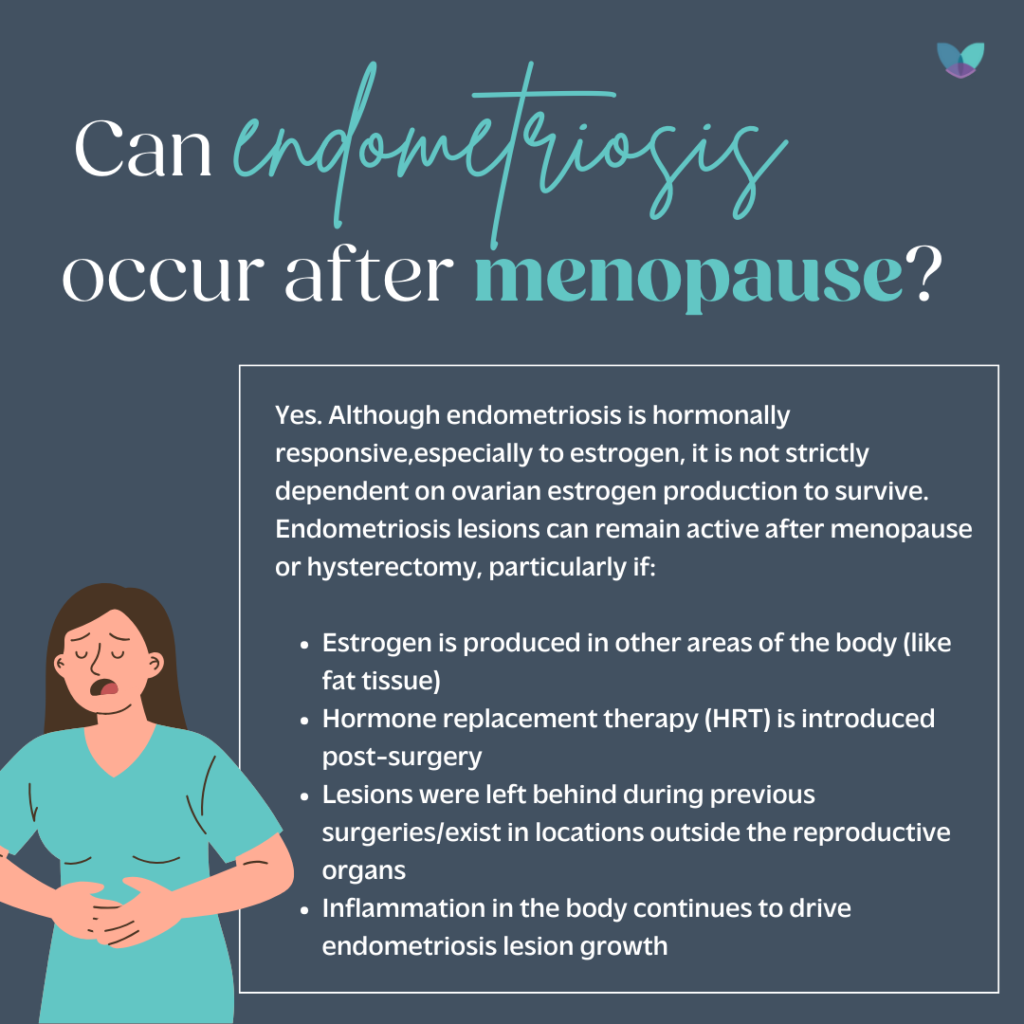
Yes. Although endometriosis is hormonally responsive—especially to estrogen—it is not strictly dependent on ovarian estrogen production to survive. Endometriosis lesions can remain active after menopause or hysterectomy, particularly if:
- Estrogen is produced in other areas of the body (like fat tissue)
- Hormone replacement therapy (HRT) is introduced post-surgery
- Lesions were left behind during previous surgeries
- Inflammation in the body continues to drive endometriosis lesion growth
What Patients Often Hear—and What They Deserve to Know
Too many patients are told that a hysterectomy will cure their endometriosis. This is NOT true. If excision surgery is not performed to fully remove endometriosis lesions, symptoms may persist, even if the uterus is gone. And if the ovaries are left in place, hormonal activity may still stimulate any remaining disease.
Even in cases of surgical menopause, some patients report endometriosis pain continuing due to:
- Residual lesions
- Scar tissue or adhesions
- Nerve sensitization from years of inflammation
Talk to a Specialist to See If You’re Still Experiencing the Pain and Symptoms of Endometriosis
Should You Consider Hormone Replacement Therapy?
For endometriosis patients who undergo a hysterectomy that results in hormonally induced menopause, the decision to start hormone replacement therapy (HRT) can be complex and should be made in consultation with a knowledgeable provider. On the pro side, HRT can help alleviate common menopausal symptoms such as hot flashes, night sweats, and vaginal dryness, and may protect long-term bone and cardiovascular health. However, HRT can also carry risks for endometriosis patients, particularly if residual endometrial tissue remains after surgery.
Estrogen can potentially stimulate this leftover tissue, leading to a recurrence of pain or other symptoms. In some cases, a combined therapy (estrogen with a progestin) may be recommended to reduce that risk, but this too must be carefully considered. Ultimately, whether or not to pursue HRT depends on the severity of symptoms, the extent of disease removed during surgery, and each patient’s personal risk factors and quality of life concerns.
It’s essential to work with a provider who fully understands the nuances of endometriosis and menopause, and can tailor your treatment accordingly.
Request to Speak with a Specialist
What Are Your Options If Symptoms Persist?
If you’ve had a hysterectomy and are still experiencing pelvic pain or other endometriosis-related symptoms, you’re not alone—and you’re not imagining it. You may want to consider the following options:
- Consulting with an expert endometriosis excision specialist who can evaluate for residual disease.
- A pelvic pain specialist who understands endometriosis, central sensitization, and post-surgical recovery.
- A multidisciplinary approach to care that considers your hormones, scar tissue, musculoskeletal system, and quality of life.
Schedule with a PRM Specialist
The Bottom Line
A hysterectomy—partial or full—does not cure endometriosis. Education, expert care, and comprehensive treatment are key to managing your symptoms long-term. If you’re still struggling after surgery, there is hope—and there are providers who will listen.