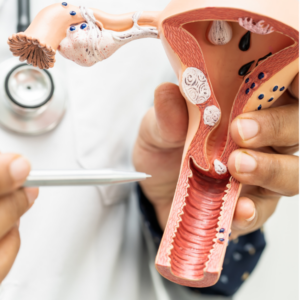
Endometriosis affects 1 in 9 women, often causing pain that far exceeds what might be expected from visible tissue damage alone. Recent research has begun to unravel why: endometriotic lesions themselves can develop their own nerve supply, meaning they’re not just a source of inflammation, but a generator of pain signals.
This discovery helps explain why many patients continue to experience pelvic pain even after hormonal therapy or surgery. And it’s exactly why PRM’s treatment protocol was designed to address not just the visible disease, but the invisible nerve-based pain behind it.
Nerve Fibers in Endometriosis: A Critical Discovery
Research now shows that endometriotic lesions often contain sensory and sympathetic nerve fibers, meaning these lesions can both sense and generate pain. A study in the Journal of Pain Research found significantly higher nerve fiber density in abdominal wall endometriosis lesions compared to normal scar tissue.
This is a major shift in understanding: the pain isn’t just caused by inflammation or physical disruption, it’s often neuropathic, stemming from irritated or overly sensitized nerves.
How These Nerve Fibers Amplify Pain
1. Neuroangiogenesis
Endometriosis lesions can stimulate the growth of new blood vessels and accompanying nerve fibers, a process called neuroangiogenesis. This creates a dense, highly sensitive environment that amplifies pain responses, especially around menstruation.
2. Nerve Growth Factors (NGFs)
Elevated levels of NGF and BDNF (Brain-Derived Neurotrophic Factor) have been found in endometriotic tissue. These proteins fuel nerve fiber development and maintain pain sensitivity, even when lesions are small or seemingly inactive.
3. Peripheral and Central Sensitization
When nerve fibers are chronically stimulated, pain signals can become amplified both at the site (peripheral sensitization) and in the brain and spinal cord (central sensitization). This means even minor pelvic changes can feel intensely painful.
How PRM’s Protocol™ Targets Nerve-Based Endometriosis Pain
Understanding the nervous system’s role in endometriosis pain led PRM to develop a proprietary treatment: the PRM Protocol™. This patented, ultrasound-guided procedure is performed in-office and precisely targets inflamed pelvic nerves and spasming muscles—two of the most common drivers of chronic pain in endometriosis patients.
Here’s how it works:
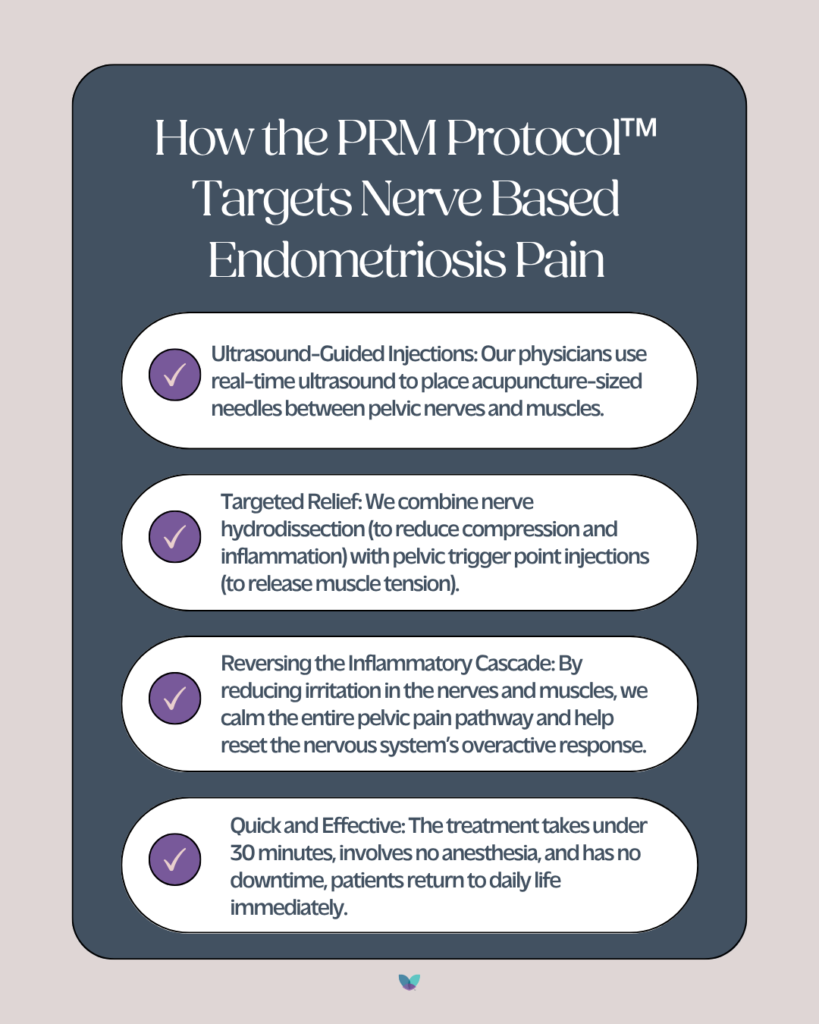
- Ultrasound-Guided Injections: Our physicians use real-time ultrasound to place acupuncture-sized needles between pelvic nerves and muscles.
- Targeted Relief: We combine nerve hydrodissection (to reduce compression and inflammation) with pelvic trigger point injections (to release muscle tension).
- Reversing the Inflammatory Cascade: By reducing irritation in the nerves and muscles, we calm the entire pelvic pain pathway and help reset the nervous system’s overactive response.
- Quick and Effective: The treatment takes under 30 minutes, involves no anesthesia, and has no downtime, patients return to daily life immediately.
Our internal data shows that patients undergoing the PRM Protocol™ report significant pain reduction, better pelvic function, fewer emergency room visits, and decreased use of pain medications.
Final Thoughts
The presence of nerve fibers in endometriotic lesions explains why this disease causes such persistent and severe pain. It also highlights why pain can remain even after lesion removal or hormonal treatment.
At PRM, we believe endometriosis care must address both the disease and the nervous system’s response to it. If you’re experiencing unresolved pelvic pain, even after surgery or years of treatment, you deserve care that looks deeper.