Insight from Jennifer Ezavin, DNP, FNP-BC, Women’s Health Certified Pelvic Pain Specialist at PRM Miami
Pelvic pain is rarely random. For many patients, flare-ups seem to appear “out of nowhere,” even when symptoms have been stable for weeks. But behind the scenes, the body is responding to a combination of physical, inflammatory, and emotional stressors that can quickly overwhelm the pelvic floor and pelvic nerves.
To help patients better understand their symptoms, Jennifer Ezavin, DNP, FNP-BC, Women’s Health Certified Pelvic Pain Specialist at PRM Miami, shares insight into the most common causes of pelvic pain flare-ups — and why they happen.
How Pelvic Pain Flares Start
Pelvic pain flares often begin with changes inside the pelvis that create a cascade of inflammation and muscular tension. Certain conditions are well-known triggers, including:
• Constipation
Slowed or difficult bowel movements can put pressure on pelvic organs and muscles, increasing strain on an already sensitive pelvic floor.
• Urinary Tract Infections
UTIs can cause significant inflammation in the bladder and surrounding tissues, irritating pelvic nerves and contributing to painful spasms.
• Prostatitis (in men)
Inflammation of the prostate can trigger a protective tightening response in the pelvic floor, leading to nerve pain and pelvic pressure.
• PCOS
Hormonal fluctuations linked to polycystic ovary syndrome can drive inflammation and increase pelvic floor sensitivity.
• Endometriosis & Adenomyosis
Both conditions cause chronic inflammation and irritation of pelvic tissues. Even small changes in hormone levels or inflammation can trigger a flare.
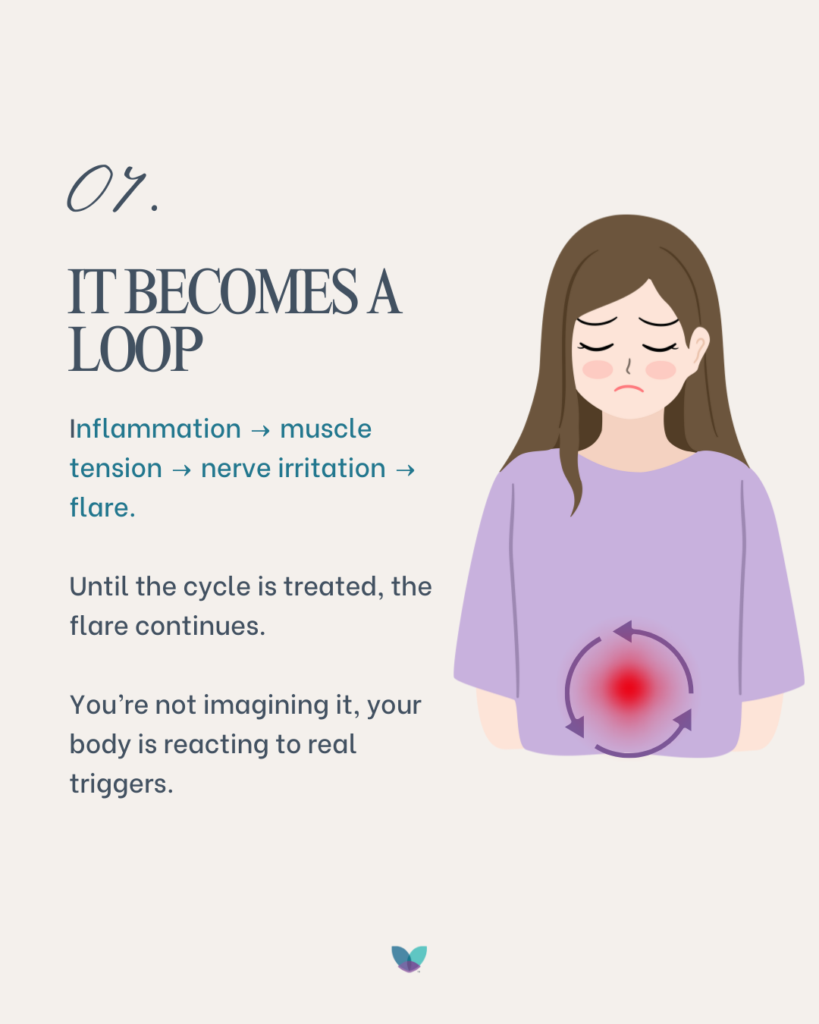
When inflammation rises, the pelvic floor often responds by contracting into a hypertonic (overly tight) state. This tightening compresses the pelvic nerves, restricts blood flow, and fuels even more inflammation — creating a cycle that keeps pain active.
Stress Plays a Bigger Role Than Most People Realize
Many patients are surprised to learn how strongly stress impacts pelvic pain. Stress doesn’t just affect the mind — it shapes how the body reacts.
The Stress-Pelvic Pain Connection
Stressful events such as:
-
the loss of a loved one
-
illness
-
work burnout
-
emotional overwhelm
-
major life transitions
can all activate the body’s “fight or flight” response.
When this system switches on, it sends signals that increase muscle tension — especially in the pelvic floor, one of the body’s most reactive muscle groups under stress.
Fight or Flight = Pelvic Floor Tightening
In moments of stress, the body unintentionally braces. The pelvic floor tightens as part of a protective reflex. Over time, this can:
-
heighten inflammation
-
irritate pelvic nerves
-
increase sensitivity
-
trigger pain flares
This is why patients often experience symptoms during emotionally intense periods, even when nothing else has changed.
Why Understanding Your Triggers Matters
Recognizing what contributes to a flare can be empowering. When patients understand that flare-ups are not random or “in their head,” they can begin to:
-
identify patterns
-
reduce avoidable triggers
-
manage stress more intentionally
-
seek targeted treatment
-
communicate symptoms more clearly
Education is one of the most powerful tools in reclaiming control over chronic pelvic pain.
You’re Not Alone — And Support Is Available
Pelvic pain is complex, but you don’t have to navigate it alone. Whether your flares are driven by inflammation, muscle tension, stress, or an underlying condition, the right treatment plan can help break the cycle and restore balance within the pelvic floor.
If pelvic pain flare-ups are interfering with your daily life, the specialists at Pelvic Rehabilitation Medicine are here to help you uncover the root cause, and support you every step of the way.