• Houston, TX

Gynecologic Surgeon & Endometriosis Excision Specialist

Tamisa Koythong, MD

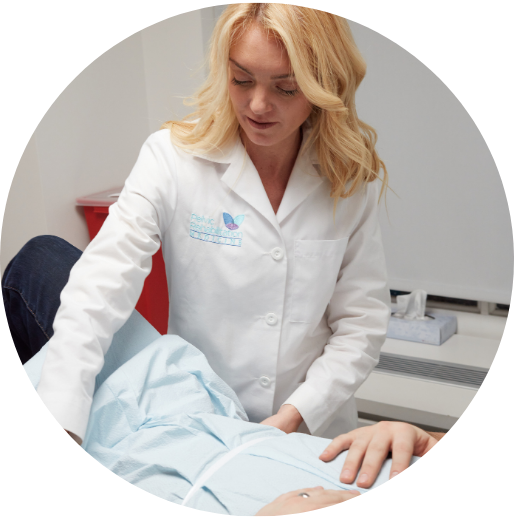
Dr. Tamisa Koythong is a board-certified, fellowship-trained Minimally Invasive Gynecologic Surgeon (MIGS) specializing in the diagnosis and surgical treatment of endometriosis, chronic pelvic pain, fibroids, and other complex gynecologic conditions. Through advanced robotic gynecologic surgery and minimally invasive techniques, she helps patients achieve lasting relief with less pain, faster recovery, and improved quality of life.

She treats a wide range of conditions, including endometriosis, adenomyosis, abnormal uterine bleeding, and pelvic floor dysfunction. Her approach combines evidence-based medicine with compassionate, individualized care so patients feel heard, supported, and empowered throughout their treatment.

Dr. Koythong earned her medical degree from the University of Texas School of Medicine at San Antonio and completed her Obstetrics and Gynecology residency and Minimally Invasive Gynecologic Surgery fellowship at Baylor College of Medicine in Houston.

At PRM, Dr. Koythong is proud to help patients in Houston, TX, find answers sooner and provide expert, personalized care for endometriosis, chronic pelvic pain, and other complex gynecologic conditions through the PRM Protocol™.

Get To Know Your Provider

Education

Fellowship, Minimally Invasive Gynecologic Surgery (MIGS)
Baylor College of Medicine

Residency, Obstetrics and Gynecology
Baylor College of Medicine

Doctor of Medicine (MD)
University of Texas School of Medicine at San Antonio

Bachelor of Science in Neurobiology, with honors
The University of Texas at Austin

Bachelor of Science in Psychology, with honors
The University of Texas at Austin

Experience

Assistant Professor, Division of Minimally Invasive Gynecologic Surgery
Baylor College of Medicine

Associate Program Director, Fellowship in Minimally Invasive Gynecologic Surgery
Baylor College of Medicine

Co-Director, OB/Gyn Residency Robotics Program
Baylor College of Medicine

OB/Gyn Residency Site Director, Gynecology
Texas Children’s Hospital Pavilion for Women

Specialties & Clinical Focus

Endometriosis excision surgery
Chronic pelvic pain
Robotic gynecologic surgery
Minimally invasive gynecologic surgery (MIGS)
Pelvic organ prolapse
Urinary incontinence
Fibroids and abnormal uterine bleeding
Complex pelvic reconstructive surgery

Professional Recognition & Certifications

Diplomate, American Board of Obstetrics and Gynecology
Focused Practice Designation in Minimally Invasive Gynecologic Surgery
AAGL Recognition of Excellence in Minimally Invasive Gynecology
Intuitive da Vinci Xi Robot Certified

One guiding principle I follow in caring for patients with endometriosis is that no two patients experience this condition the same way, and so care should never be one-size-fits all. I begin my listening carefully to each patient’s story: her symptoms, and goals – whether that be related to pain, bleeding, or fertility. From there, I build a personalized plan to find a solution that matters most to the patient.
Treatment is typically layered and flexible. Surgical treatment is often one part of the equation, but long term effects of endometriosis or concurrent contributing pathology often require additional therapeutic interventions after surgery is performed.
When surgery is part of the discussion, equally important is coordination of care. Endometriosis often benefits from a multidisciplinary approach, so I have built a team and will frequently collaborate with other indicated specialists, such as other surgical subspecialists, reproductive endocrinologists, and pelvic floor therapists.
Throughout the process, I emphasize shared decision-making. I believe it is important for my patients to feel empowered in their own care, and my patients are given explanations of their options, risks, and expected outcomes so they can make informed choices that feel right for them.

Too many of our patients spend years searching for answers, with their symptoms minimized or normalized. This leaves them feeling frustrated, unheard, and discouraged. PRM’s dedication to this mission means creating a pathway where patients are listened to early, evaluated thoroughly, and offered evidence-based treatment options without unnecessary delays. What excites me most about PRM’s mission is their active commitment to changing the patient experience from one of prolonged suffering and uncertainty to one of validation, answers, and hope. Being one part of that process is one of the most meaningful aspects of caring for women with pelvic pain.

Pre-habilitation helps optimize a patient’s physical and emotional readiness. Many patients with endometriosis and chronic pelvic pain have developed pelvic floor dysfunction, muscle guarding, deconditioning, or pain patterns that have been present for years. Addressing these issues beforehand can improve surgical recovery, reduce complications, and help patients enter surgery in the best possible condition.
After surgery, rehabilitation is equally important. While excision surgery can remove disease, patients may still need support recovering from years of chronic pain, inflammation, altered movement patterns, and pelvic floor dysfunction. Postoperative rehabilitation helps restore strength, mobility, function, and confidence while supporting a return to daily activities, exercise, work, and intimacy.
I often explain to patients that excision surgery addresses the disease, while pre- and post-habilitation help address the body’s response to living with that disease. When combined, they can maximize surgical outcomes, improve quality of life, and help patients achieve a more complete and lasting recovery.
Most importantly, incorporating prehabilitation and rehabilitation reflects a whole-person approach to care – one that focuses not only on removing endometriosis but also on helping patients regain function, reduce pain, and return to the activities that matter most to them.

Throughout my career, I have trained in high-volume academic environments and had the opportunity to learn from renowned experts in the field. This type of training has exposed me to the ideal multidisciplinary approach and critical and evidence based decision making in complex and challenging surgical cases. A meaningful part of my work has also been in teaching and mentoring residents and fellows in surgical gynecology.
In addition, I have held leadership roles within academic departments and surgical programs, where I have contributed to advancing standards of care, improving surgical training curricula, and promoting high-quality, consistent approaches to complex gynecologic surgery.
These experiences have shaped how I care for patients today. They reinforce my commitment to patient safety and outcomes, excellence in operative technique, and delivering care that reflects the highest standards of medicine – while still being deeply personalized to each patient’s goals and needs. As a result, I have been recognized as a Master Surgeon by the Surgical Review Committee and for excellence in minimally invasive gynecologic surgery.

I perform approximately 200-250 surgeries per year.

I have treated the full spectrum of disease, from stage I to stage IV.

Fertility preservation is one of the most important considerations when performing surgery for patients with endometriosis. When future fertility is a goal, my approach is centered on careful planning, precise surgical technique, and protecting normal anatomy as much as possible.
Before surgery, I take time to understand each patient’s reproductive goals so that every decision in the operating room is made with those goals in mind. I will often collaborate with reproductive endocrinology colleagues when needed to support patients in achieving their fertility goals, whether naturally or with assisted reproductive technologies.

I think it’s important that patients understand a deeper commitment to evolving care. Endometriosis and chronic pelvic pain are still areas where many patients feel underdiagnosed, undertreated, or dismissed. Because of that, I place a strong emphasis on staying current with emerging evidence, evolving surgical techniques, and advances in multidisciplinary pain care. Medicine in this field is not static, and neither should the approach to it be.
I also think it matters for patients to know that I view learning as ongoing rather than completed. That includes actively engaging with new research, learning from patient outcomes over time, and being willing to refine how I evaluate and treat pelvic pain when better approaches emerge. Some of the most important progress in this field has come from clinicians who were willing to challenge older assumptions and improve standards of care.
Equally important is a commitment to contributing back to the field – whether through collaboration with colleagues, participation in educational efforts, or helping advance awareness of endometriosis so patients can be diagnosed earlier and more accurately. The goal is not only to provide individualized care, but also to be part of improving how pelvic pain is understood and treated more broadly.

Your Gynecologic Surgeon

Meet Dr. Koythong

Prior to joining PRM’s Center of Excellence, Dr. Tamisa Koythong completed her fellowship in Minimally Invasive Gynecologic Surgery and her residency in Obstetrics and Gynecology at Baylor College of Medicine. She earned her medical degree from the University of Texas School of Medicine at San Antonio and has extensive experience in robotic gynecologic surgery, endometriosis, and chronic pelvic pain care.

Sarah

I’m forever grateful to be in her care through my endometriosis journey. I was diagnosed with stage 4 endometriosis but my previous doctor changed clinics and was no longer in network. I found Dr. Koythong through some online research and her clinic was able to see me right away. We scheduled surgery within a few months and my endometriosis is now healed. She was very caring, and understanding. She is also fully capable and knowledgeable from her experience, studies and her work in research studies. I highly recommend her.

Pelvic Pain Patient

Dr. Koythong is very, very caring, kind, professional, and personable. She made me feel comfortable, did not rush me into making any decisions, and provided me with lots of information to help me make decisions about my healthcare. I have already recommended her to all of my friends. If you need an EXCELLENT OB/GYN / gynecological surgeon, see Dr. Koythong. Thank you!

Pelvic Pain Patient

As my former residents, I knew I was in excellent hands when Dr. Koythong agreed to perform hysterectomy, aided by Dr. Thigpen. Her skill set allowed me to choose a completely vaginal or minimally invasive robotic approach with only 2 incisions. My recovery was expedient, requiring only 24 hours of narcotics, and I didn’t spend one night in the hospital. I was working in just 1 week from home and back in the office in 2. The complete experience at Texas Children’s was excellent. Thank you so very much, Tamisa!

Patient Testimonials

Explore patient testimonials to learn more about outstanding care at PRM.

Access to Care for Pelvic Pain Patients

We Provide In Network & Out of Network Options for Patients

At Pelvic Rehabilitation Medicine, we are on a mission to provide access to care to every patient. We believe the cost of comprehensive care should not be a burden for patients seeking diagnosis and treatment that ensures a full and complete, pain-free life. Learn more about our insurance coverage.

FAQ's

FAQ's

Endometriosis excision surgery is an advanced minimally invasive procedure that involves carefully identifying and removing endometriosis lesions from affected areas while preserving healthy tissue. Unlike approaches that only treat visible disease on the surface, excision surgery focuses on removing endometriosis at its root to help reduce symptoms and improve quality of life. At PRM, fellowship-trained minimally invasive gynecologic surgeons use advanced laparoscopic techniques and comprehensive evaluation to develop individualized treatment plans based on each patient’s symptoms, goals, and disease severity.

Endometriosis surgery may be considered for patients whose symptoms are not adequately controlled with medications or hormonal treatments, whose pain significantly impacts daily life, or who are experiencing fertility challenges. Surgery may also be recommended when imaging or evaluation suggests deeper disease, such as endometriosis involving the bowel, bladder, or other pelvic structures. Common reasons to consider an endometriosis surgery consultation include persistent pelvic pain despite medical treatment, painful periods, painful intercourse, gastrointestinal or bladder symptoms, difficulty conceiving, or findings such as endometriomas or deep infiltrating endometriosis. During an evaluation at PRM, providers review your symptoms, medical history, imaging, and treatment goals to determine whether excision surgery is the right option for you and develop a personalized care plan.

During an endometriosis surgery consultation at PRM, patients can expect a comprehensive evaluation focused on understanding their symptoms, medical history, and treatment goals. The surgeon will review your experience with pelvic pain, painful periods, painful intercourse, bowel or bladder symptoms, previous diagnoses, and any prior treatments. The consultation may include a physical and pelvic exam to evaluate areas of tenderness, pelvic floor muscle dysfunction, scarring, or other findings that may contribute to symptoms. Additional imaging, such as specialized pelvic ultrasound or MRI, may be recommended to better understand the location and extent of endometriosis. Your surgeon will also discuss whether excision surgery is appropriate, explain the surgical approach, and review what to expect before, during, and after the procedure. PRM’s approach includes personalized pre- and post-operative care, which may involve pelvic rehabilitation, lifestyle strategies, and other treatments to support healing and long-term outcomes.

PRM’s endometriosis surgeons specialize in advanced laparoscopic excision surgery and care for patients through a fully integrated, multidisciplinary approach. Unlike a surgery only model, PRM combines surgical expertise with pelvic pain care to address the inflammation, nerve sensitivity, and pelvic floor dysfunction that can contribute to ongoing symptoms. PRM’s fellowship-trained Minimally Invasive Gynecologic Surgeons (MIGS) have specialized training in complex excision surgery and treat advanced endometriosis, including cases involving areas such as the bowel, bladder, and diaphragm. Their approach also includes comprehensive support before and after surgery, including pelvic rehabilitation through the PRM Protocol™ to help reduce pain, support healing, and improve long-term outcomes. PRM focuses on personalized, whole-body care designed to help patients achieve meaningful relief while reducing the need for repeated procedures. Providers also evaluate patients clinically based on symptoms, medical history, and physical examination, allowing treatment planning to begin without waiting for surgical confirmation.

Yes, endometriosis excision surgery can improve fertility for some patients by removing endometriosis lesions, treating scar tissue and adhesions, restoring normal pelvic anatomy, and reducing inflammation that may interfere with conception. The impact of surgery depends on factors such as the severity of endometriosis, age, ovarian reserve, and overall fertility health. For patients with mild to moderate endometriosis, removing visible disease may improve the chances of spontaneous pregnancy. In more advanced cases, surgery may help restore the relationship between the ovaries, fallopian tubes, and surrounding pelvic structures to support reproductive goals. At PRM, providers consider each patient’s fertility goals and individual circumstances when determining whether surgery is the right approach and how it fits into a broader fertility plan.

Recovery after endometriosis excision surgery varies depending on the extent of disease treated and each patient’s healing process. Many patients experience gradual improvement over the first several months rather than immediate relief. The first menstrual cycle after surgery (typically 4–8 weeks post-surgery) may be the most challenging, with some patients experiencing increased cramping, pelvic pain, or heavier bleeding as the body heals. By the second cycle, many patients begin noticing improvements, and within three to six months, patients often report reduced pain, improved energy, and better daily function. At PRM, recovery is supported through a comprehensive approach that combines surgical expertise with individualized follow-up care and additional treatments when needed to support long-term healing and quality of life.