PRM Featured in National Media: Dr. Allyson Shrikhande Weighs In on Marilyn Monroe, Endometriosis, and the Ongoing Women’s Health Gap
When a national publication revisits the story of one of the world’s most iconic women through the lens of women’s health, it highlights just how far we’ve come, and how far we still have to go.
Recently, Glam featured Pelvic Rehabilitation Medicine’s Chief Medical Officer and Co-Founder, Dr. Allyson Shrikhande, in an article exploring Marilyn Monroe’s heartbreaking fertility journey and her lifelong struggle with endometriosis. The article examines how a condition that remains widely misunderstood today may have played a significant role in Monroe’s chronic pain, fertility challenges, and overall quality of life.
For PRM, being included in this national conversation is about more than media recognition. It’s an opportunity to continue raising awareness about a disease that affects millions yet remains one of the most underdiagnosed and undertreated conditions in women’s healthcare.
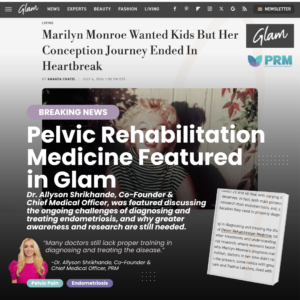
PRM’s Dr. Allyson Shrikhande Featured in Glam
In the article, Marilyn Monroe Wanted Kids But Her Conception Journey Ended In Heartbreak, Dr. Allyson Shrikhande spoke about one of the most persistent challenges facing endometriosis patients today:
“Many doctors still lack proper training in diagnosing and treating the disease. The slow progress in finding better treatments and understanding its causes reflects a gender bias in medical research, where women’s health issues receive less attention and funding.”
While Monroe lived decades before modern advances in endometriosis care, Dr. Shrikhande’s comments highlight a reality that many patients still experience today: delayed diagnosis, dismissal of symptoms, and limited access to specialized care.
Marilyn Monroe’s Story Reflects What Many Patients Still Face
Marilyn Monroe reportedly experienced severe pelvic pain throughout her life and suffered multiple pregnancy losses. Historians and medical experts have long speculated that advanced endometriosis contributed to these struggles.
While much has changed since the 1950s, some of the same barriers remain:
- Painful periods are still often normalized.
- Patients are frequently told their symptoms are “just part of being a woman.”
- Many spend years searching for answers.
- Fertility concerns may go unaddressed until the disease has progressed.
- Access to specialists remains limited in many areas.
For many women living with endometriosis today, Monroe’s story feels surprisingly familiar.
Why Endometriosis Remains So Difficult to Diagnose
Endometriosis occurs when tissue similar to the lining of the uterus grows outside the uterus, triggering inflammation, scarring, and pain.
Symptoms can include:
- Severe menstrual pain
- Chronic pelvic pain
- Pain during intercourse
- Painful bowel movements
- Painful urination
- Fatigue
- Bloating
- Infertility
- Hip pain
- Tailbone pain
- Leg pain
- Sciatica-like symptoms
One of the biggest challenges is that endometriosis does not look the same in every patient. Symptoms can affect multiple organ systems and may mimic gastrointestinal, urological, musculoskeletal, or neurological conditions.
As a result, patients are often referred from specialist to specialist before receiving an accurate diagnosis.
The Women’s Health Gap Still Exists
Dr. Shrikhande’s quote in the article points to a larger issue that extends beyond endometriosis alone.
Historically, women’s health conditions have received less research funding, fewer clinical resources, and less medical education compared to many other chronic diseases.
The consequences are significant:
- Delayed diagnoses
- Limited treatment options
- Reduced quality of life
- Increased healthcare costs
- Higher rates of mental health challenges
- Fertility complications
At PRM, we see firsthand how these delays impact patients physically, emotionally, professionally, and socially.
Many arrive after years of being told their pain is normal.
It isn’t.
PRM’s Mission: Reduce the Time Patients Suffer
Being featured in publications like Glam helps bring national attention to a condition that has remained in the shadows for far too long.
At Pelvic Rehabilitation Medicine, our mission is simple:
Reduce the time patients suffer.
Through our multidisciplinary Center of Excellence model, we help patients access comprehensive pelvic pain care that addresses the many factors contributing to their symptoms.
This includes evaluating:
- Pelvic nerves
- Pelvic floor dysfunction
- Inflammation
- Endometriosis-related pain
- Musculoskeletal contributors
- Bladder and bowel symptoms
- Functional limitations
Because pelvic pain is rarely caused by a single factor, treatment should never be one-dimensional.
Why Awareness Matters
Marilyn Monroe’s story resonates because it reminds us that chronic pain does not discriminate.
It affects celebrities and everyday people alike.
What makes the difference is whether patients are heard, believed, and given access to appropriate care.
Every conversation, every article, and every opportunity to educate the public brings us one step closer to changing the future for those living with endometriosis and chronic pelvic pain.
We’re proud to see Dr. Allyson Shrikhande’s expertise included in this important national discussion and remain committed to advocating for greater awareness, earlier diagnosis, and better outcomes for patients everywhere.
You Deserve Answers
If you’ve been told your symptoms are normal, if you’re struggling with chronic pelvic pain, or if you’re still searching for a diagnosis, know that your pain is real and you deserve answers.
At PRM, we hear you. We see you. We believe you.