Pelvic 101
Understanding your pelvis is the first step toward healing. Take it at your own pace — we'll save your progress.
Persistent abdominal pelvic pain affects 15% of women and 10% of men — and it's been underdiagnosed, undertreated, and ignored for too long.
The pudendal nerve carries sensation from the clitoris, labia, perineum, and anus — which is why symptoms can appear anywhere from the lower abdomen to the buttocks and thighs.
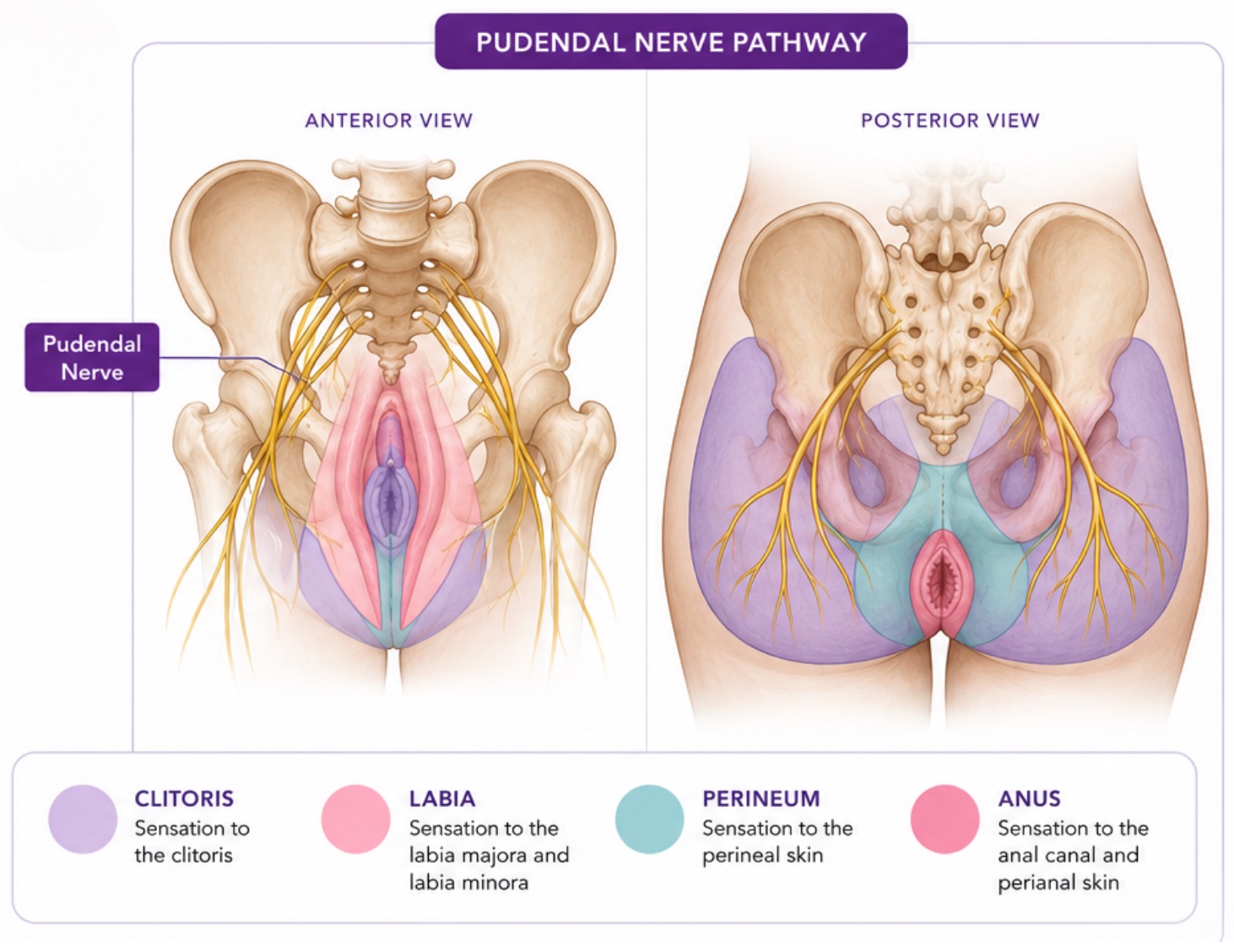
Anatomical illustration for education. Used with license.
Basic Pelvic Anatomy
Tap any labeled point to see what it does in plain language.
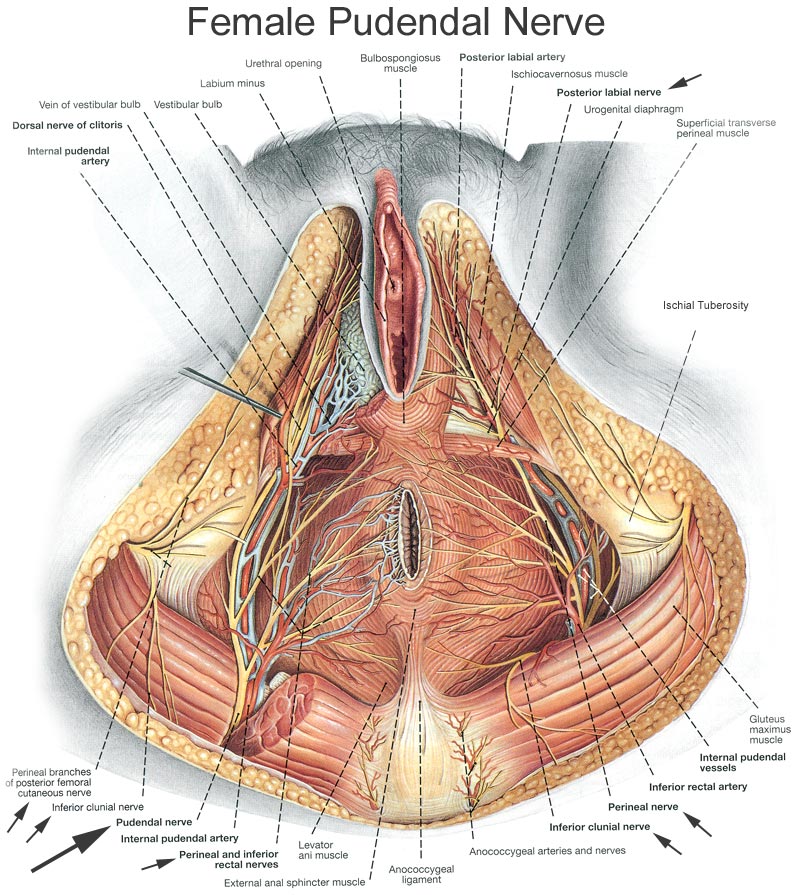
Tap any labeled point — or a name below — to learn what it does.
Pelvic Floor Muscles
A healthy pelvic floor isn't just strong — it knows how to relax.
Inhale as the circle grows, exhale as it shrinks.
Pelvic Nerves
Tap a nerve ending to see what it does — and how irritation can feel.
☝ Tap a nerve ending on the map to learn what it does and how irritation can feel.
What it does:
When irritated:
Common Conditions
Tap a condition to learn more.
A Closer Look: Endometriosis
Stage does not equal pain. Tap each stage to explore.
The Path to Treatment
Tap each step to see what's involved.
The PRM Protocol™
Ultrasound-guided, in-office. A treatment so fast, you can do it on your lunch break.
the inflammatory cascade.
the pelvic environment.
nerves and muscles.
Lifestyle Support
Tap a card for practical ideas.
Resources
Is This Right for Me?
This is not a diagnosis — only a conversation starter.
Take the Symptom Quiz →You Made It Through!
You've completed Pelvic 101 — now you know more about your pelvic health than most people ever learn. Take the next step whenever you're ready.

Have Questions About This Course?
Our team is happy to help you find the right course or program for your needs.