• Miami, FL

Gynecologic Surgeon & Endometriosis Excision Specialist

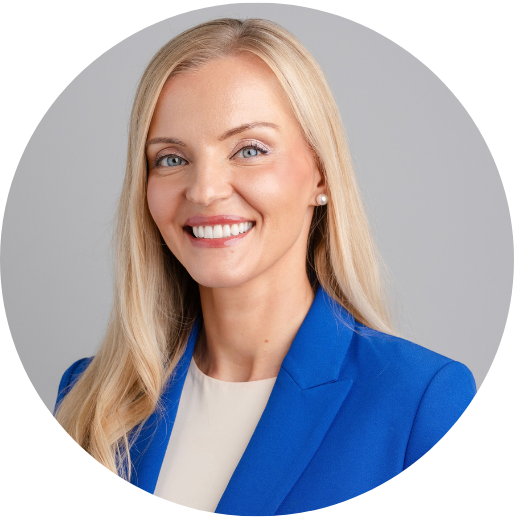
Katerina Litvinova, MD, FACOG

Dr. Litvinova will be joining PRM’s Miami Center of Excellence in October 2026. Stay tuned.

Dr. Katerina Litvinova, MD, FACOG, is a gynecologic surgeon specializing in Minimally Invasive Gynecologic Surgery (MIGS) and advanced surgical care for complex pelvic conditions. She will provide specialized gynecologic surgical care to patients in Miami and throughout South Florida.

Dr. Litvinova completed her Obstetrics and Gynecology residency at Sinai Chicago and went on to complete fellowship training in Minimally Invasive Gynecologic Surgery. She has specialized experience in advanced laparoscopic and robotic gynecologic surgery, with a focus on minimally invasive surgical techniques for complex gynecologic conditions, including endometriosis and chronic pelvic pain.

Her academic and clinical interests include minimally invasive gynecologic procedures, reproductive pathology, cystoscopy, and advanced gynecologic surgical techniques. She has contributed to research and publications in these areas, and her academic work has received multiple honors, including a first-place poster presentation award.

At PRM’s Miami Center of Excellence, Dr. Litvinova brings her expertise in minimally invasive gynecologic surgery to patients seeking advanced care for endometriosis, chronic pelvic pain, and other complex pelvic conditions. Her approach combines advanced surgical techniques with personalized, patient-centered care for women in Miami and the surrounding South Florida communities.

Get To Know Your Provider

Experience
– The Center for Gynecologic Oncology
Gynecologist

– The Society of Laparoscopic & Robotic Surgeons (SLS)
Fellow

– AAGL
JMIG Social Media Scholar

– Sinai Chicago
Obstetrics and Gynecology Resident

Education
– Ross University School of Medicine
Doctor of Medicine – MD

– University of Illinois Chicago
Bachelor’s degree, Neuroscience

My approach to caring for endometriosis patients is compassionate, evidence-based, and comprehensive. I start by understanding your personal health journey with endometriosis and how it affects you as a whole – focusing not only on your symptoms, but also on your fertility goals, daily activities, and quality of life. After gathering your history and performing an exam, we will review all management options including non-pharmacologic, medical, and surgical approaches. When surgery is appropriate, my goal is excision of visible disease, restoring normal anatomy, and fertility-sparing techniques. A multidisciplinary approach, including management of pelvic floor dysfunction and other contributors to chronic pelvic pain, often leads to the best outcomes for endometriosis patients. Ultimately, I want my patients to understand their disease, feel heard in their experience, and participate actively in decisions about their treatment.

I am proud and excited to be part of Pelvic Rehabilitation Medicine (PRM) because PRM is transforming the visibility of endometriosis as a multifactorial disease and revolutionizing the treatment approach to chronic pelvic pain conditions. The PRM mission aligns with my own treatment goals for patients. With a diagnostic delay of up to 10 years, endometriosis patients simply deserve better. The PRM approach resonates with me because early recognition, a carefully coordinated treatment plan, and decreased time spent suffering means that patients have improvement in pain sooner and ultimately regain parts of their lives that have been negatively impacted by chronic pelvic pain.

Pre and post-habilitation complement the surgical component of endometriosis treatment and allow for a multimodal approach to managing perioperative pain. Inflammatory mediators and muscle spasticity from chronic pelvic pain may cause pelvic floor muscle dysfunction and sensitization that persist even after surgical treatment. The PRM protocol is at the national forefront of comprehensive endometriosis pain management and treats pelvic floor inflammation and pain before and after surgery. While surgery removes identifiable disease, pre and post-habilitation address other contributors to pain thereby supporting overall recovery, improving daily function, and reducing need for postoperative pain medication.

I am a board-certified fellowship-trained Obstetrician and Gynecologist with fellowship training in Minimally Invasive Gynecologic Surgery. My surgical training focused on advanced hysteroscopic, laparoscopic, and robotic surgery, primarily including advanced endometriosis excision, fibroid surgery, fertility-enhancing surgery, excision of adnexal masses with ovarian preservation, pelvic reconstruction, hysterectomy, and advanced pelvic dissection.
I have also remained involved in education and research. I enjoy teaching medical students and residents as well as developing research abstracts and surgical videos in minimally invasive gynecologic surgery. I have presented research at various national and international conferences.

I performed over 830 gynecologic surgeries during my two-year minimally invasive gynecologic surgery fellowship, including operative hysteroscopy, advanced laparoscopy, robotic, and open surgery.

I have experience excising endometriosis involving multiple areas of the pelvis including the ovaries, pelvic sidewalls, uterosacral ligaments, posterior cul-de-sac, rectovaginal space, and disease involving or adjacent to the bladder, ureters, and bowel. My experience includes superficial peritoneal disease, ovarian endometriomas, deeply infiltrating endometriosis, and complex adhesive disease.

Fertility goals are an important part of my preoperative conversation with every reproductive-age patient. When fertility preservation is desired, I will work with a reproductive endocrinologist to create an individualized plan for disease treatment that also focuses on preserving reproductive anatomy and function whenever possible.
Fertility-preserving surgical techniques include careful tissue handling, minimizing unnecessary thermal energy use, preserving healthy ovarian tissue, and restoring normal pelvic anatomy. My surgical plan is mindful of where the patient is today and where they hope to be in the future.

I see my practice as a partnership with the patient. My purpose extends beyond surgery – it is to develop an individualized treatment strategy that combines minimally invasive gynecologic surgery with thoughtful pelvic pain care, respecting and working toward each patient’s fertility, recovery, and quality of life goals.

Your Gynecologic Surgeon

Meet Dr. Litvinova

Prior to joining PRM’s Center of Excellence, Dr. Katerina Litvinova completed her Obstetrics and Gynecology residency at Sinai Chicago and is currently completing fellowship training in Minimally Invasive Gynecologic Surgery. She earned her medical degree from Ross University School of Medicine and has specialized training in advanced laparoscopic and robotic gynecologic surgery, with a focus on minimally invasive surgical care for complex gynecologic conditions.
Healthgrades User

Dr. Litvinova has been the only Dr. to take my pelvic discomfort seriously. Willing to go above and beyond and take the time to figure out what will work. Hopefully she will be in South Florida for a long time and I’ll be able to follow her wherever she goes. It’s hard to find a Dr. who listens.

Healthgrades User

Dr. Katerina Litvinova is the best doctor I have ever had. She always takes the time to listen to all of my concerns and addresses them quickly. She is very thorough, explains everything clearly, and always goes over the pros and cons so I can make informed decisions about my care. She is kind, professional, caring, and truly passionate about helping her patients. I never feel rushed during my appointments, and I always leave feeling heard and well cared for. I wouldn’t change doctors for anything. I highly recommend Dr. Litvinova to anyone looking for a knowledgeable and compassionate physician.

Healthgrades User

Dr. Litvinova explained well the condition I went to see her for and answered my all my questions. She is very friendly, professional and caring. I would definitely recommend her to other patients.

Patient Testimonials

Explore patient testimonials to learn more about outstanding care at PRM.

Access to Care for Pelvic Pain Patients

We Provide In Network & Out of Network Options for Patients

At Pelvic Rehabilitation Medicine, we are on a mission to provide access to care to every patient. We believe the cost of comprehensive care should not be a burden for patients seeking diagnosis and treatment that ensures a full and complete, pain-free life. Learn more about our insurance coverage.

In the News & From Our Providers

Featured coverage from our team, including Dr. Allyson Shrikhande, Co-Founder & Chief Medical Officer.

FAQ's

Endometriosis excision surgery is an advanced minimally invasive procedure that involves carefully identifying and removing endometriosis lesions from affected areas while preserving healthy tissue. Unlike approaches that only treat visible disease on the surface, excision surgery focuses on removing endometriosis at its root to help reduce symptoms and improve quality of life. At PRM, fellowship-trained minimally invasive gynecologic surgeons use advanced laparoscopic techniques and comprehensive evaluation to develop individualized treatment plans based on each patient’s symptoms, goals, and disease severity.

Endometriosis surgery may be considered for patients whose symptoms are not adequately controlled with medications or hormonal treatments, whose pain significantly impacts daily life, or who are experiencing fertility challenges. Surgery may also be recommended when imaging or evaluation suggests deeper disease, such as endometriosis involving the bowel, bladder, or other pelvic structures. Common reasons to consider an endometriosis surgery consultation include persistent pelvic pain despite medical treatment, painful periods, painful intercourse, gastrointestinal or bladder symptoms, difficulty conceiving, or findings such as endometriomas or deep infiltrating endometriosis. During an evaluation at PRM, providers review your symptoms, medical history, imaging, and treatment goals to determine whether excision surgery is the right option for you and develop a personalized care plan.

During an endometriosis surgery consultation at PRM, patients can expect a comprehensive evaluation focused on understanding their symptoms, medical history, and treatment goals. The surgeon will review your experience with pelvic pain, painful periods, painful intercourse, bowel or bladder symptoms, previous diagnoses, and any prior treatments. The consultation may include a physical and pelvic exam to evaluate areas of tenderness, pelvic floor muscle dysfunction, scarring, or other findings that may contribute to symptoms. Additional imaging, such as specialized pelvic ultrasound or MRI, may be recommended to better understand the location and extent of endometriosis. Your surgeon will also discuss whether excision surgery is appropriate, explain the surgical approach, and review what to expect before, during, and after the procedure. PRM’s approach includes personalized pre- and post-operative care, which may involve pelvic rehabilitation, lifestyle strategies, and other treatments to support healing and long-term outcomes.

PRM’s endometriosis surgeons specialize in advanced laparoscopic excision surgery and care for patients through a fully integrated, multidisciplinary approach. Unlike a surgery only model, PRM combines surgical expertise with pelvic pain care to address the inflammation, nerve sensitivity, and pelvic floor dysfunction that can contribute to ongoing symptoms. PRM’s fellowship-trained Minimally Invasive Gynecologic Surgeons (MIGS) have specialized training in complex excision surgery and treat advanced endometriosis, including cases involving areas such as the bowel, bladder, and diaphragm. Their approach also includes comprehensive support before and after surgery, including pelvic rehabilitation through the PRM Protocol™ to help reduce pain, support healing, and improve long-term outcomes. PRM focuses on personalized, whole-body care designed to help patients achieve meaningful relief while reducing the need for repeated procedures. Providers also evaluate patients clinically based on symptoms, medical history, and physical examination, allowing treatment planning to begin without waiting for surgical confirmation.

Yes, endometriosis excision surgery can improve fertility for some patients by removing endometriosis lesions, treating scar tissue and adhesions, restoring normal pelvic anatomy, and reducing inflammation that may interfere with conception. The impact of surgery depends on factors such as the severity of endometriosis, age, ovarian reserve, and overall fertility health. For patients with mild to moderate endometriosis, removing visible disease may improve the chances of spontaneous pregnancy. In more advanced cases, surgery may help restore the relationship between the ovaries, fallopian tubes, and surrounding pelvic structures to support reproductive goals. At PRM, providers consider each patient’s fertility goals and individual circumstances when determining whether surgery is the right approach and how it fits into a broader fertility plan.

Recovery after endometriosis excision surgery varies depending on the extent of disease treated and each patient’s healing process. Many patients experience gradual improvement over the first several months rather than immediate relief. The first menstrual cycle after surgery (typically 4–8 weeks post-surgery) may be the most challenging, with some patients experiencing increased cramping, pelvic pain, or heavier bleeding as the body heals. By the second cycle, many patients begin noticing improvements, and within three to six months, patients often report reduced pain, improved energy, and better daily function. At PRM, recovery is supported through a comprehensive approach that combines surgical expertise with individualized follow-up care and additional treatments when needed to support long-term healing and quality of life.