Dr. Ally Featured in Woman’s World: 3 Easy Ways to Support Your Pelvic Floor
Pelvic floor health is finally getting mainstream attention, and our own Co-Founder and Chief Medical Officer is part of the conversation.
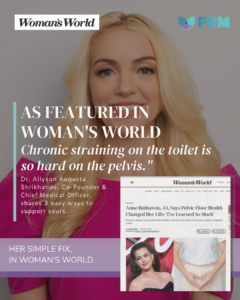
Dr. Allyson Augusta Shrikhande served as the medical reviewer on a recent Woman’s World piece on why pelvic floor health matters, and she’s quoted as an expert source throughout. The feature also earned her an official Woman’s World author profile.
Why This Conversation Is Happening Now
The article, titled “Why Anne Hathaway, 43, Wants To Write a Guide To Pelvic Floor Health,” was sparked by the actress’s recent comments about wishing she’d had more information about pelvic floor health earlier in life. It points to something many of our patients already know: pelvic floor health is still under-discussed, even as topics like perimenopause and menopause have become part of everyday conversation.
Pelvic floor health isn’t only a pregnancy or postpartum topic. These muscles support your bladder, bowel, and reproductive organs, and they play a role in everyday function at every stage of life.
Three Easy Ways to Support Your Pelvic Floor
The piece shares three simple, at-home habits. Two of them draw on Dr. Shrikhande’s expertise.
1. Skip the “just in case” bathroom trips
Another expert featured in the article explains that going to the bathroom out of habit, rather than because your bladder is truly full, can work against you. The goal is to build awareness of when you actually need to go, and when you do, to take your time and let your pelvic floor muscles fully relax so your bladder can empty completely.
2. Practice diaphragmatic (belly) breathing
Dr. Shrikhande walks through a simple version: lie back or sit comfortably with one hand on your heart and the other on your abdomen. Breathe in slowly through your nose, letting your belly, and your pelvic floor, gently expand. Then exhale through your mouth as everything softens.
This matters because a pelvic floor that’s constantly clenched can contribute to pain and dysfunction. Learning to release is just as important as learning to strengthen. If this sounds familiar, it’s the same principle behind the breathing tip our own Jennifer Ezavin, DNP shared in our wellness conversation on stress and the pelvic floor.
3. Stop straining in the bathroom
Dr. Shrikhande explains that chronic straining puts intense physical pressure on delicate pelvic floor muscles and can inflame the nerves running through the area. A simple adjustment can help: elevating your knees above your hips naturally straightens the path for stool to pass, so you don’t have to force it.
What This Means for Pelvic Pain
For people living with chronic pelvic pain, pelvic floor muscle tension and irritated nerves are often part of the picture. These at-home habits are a good starting point, but they aren’t a substitute for an evaluation if you’re dealing with ongoing symptoms.
At PRM, the PRM Protocol™ is built around exactly these two drivers: inflamed pelvic nerves and tight pelvic floor muscles.
Want to Learn More About Your Pelvic Floor?
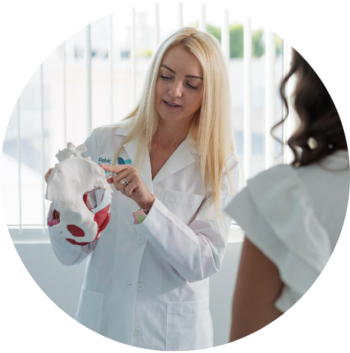
If you’d like a clearer picture of how your pelvic anatomy works, our free, interactive Pelvic Pain 101 course walks through the pelvic floor, nerves, and common conditions in plain language.
Read the full Woman’s World article →
Experiencing ongoing pelvic pain? Request an appointment with the PRM team.
This article is for general education and isn’t a substitute for personalized medical advice.
We hear you. We see you. We believe you.
Pelvic Rehabilitation Medicine
Frequently Asked Questions
She served as the medical reviewer on the piece and is quoted as an expert source.
Skip “just in case” bathroom trips, practice diaphragmatic (belly) breathing, and stop straining in the bathroom.
Lie back or sit comfortably with one hand on your heart and the other on your abdomen. Breathe in slowly through your nose, letting your belly and pelvic floor gently expand, then breathe out through your mouth as everything softens.
Chronic straining puts intense pressure on the pelvic floor muscles and can inflame the nerves in the area. Raising your knees above your hips can help stool pass without forcing it.
No. The pelvic floor supports your bladder, bowel, and reproductive organs, and it matters at every stage of life.
At-home habits are a good starting point, but they are not a substitute for an evaluation if you have ongoing pelvic symptoms.