If your body can predict a storm before your weather app can, you’re not imagining it.
For many people living with chronic pelvic pain, endometriosis or other chronic conditions, fall and winter bring more than cozy sweaters. Cold, damp and gray days can mean stiffer muscles, more fatigue and flares that seem to come out of nowhere.
Here’s what research says about weather and pain, why the season change can hit so hard, and simple ways to feel more supported until spring.
Is weather-related pain real?
Yes. Weather sensitivity even has a name: meteoropathy. Many people with chronic pain say they can feel changes in the weather in their bodies, and research backs them up.
In 2019, researchers at the University of Manchester published a large study called Cloudy with a Chance of Pain. They followed 2,658 people with chronic pain conditions who logged their symptoms daily on a smartphone app for about six months, then matched those reports to local weather data.
What they found:
- High humidity was the weather factor most strongly linked to pain.
- Low air pressure and higher wind speed were also linked to more painful days.
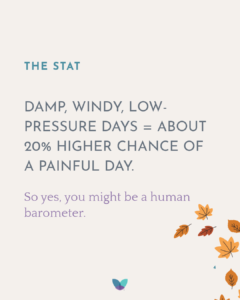
- On damp, windy, low-pressure days, people had about a 20% higher chance of a painful day compared with an average day.
- Rain on its own was not linked to pain, and neither was temperature on average. But cold days that were also damp and windy could be more painful.
In other words, it’s not just “cold” that does it. It’s the combination of damp, windy, low-pressure days that often shows up in fall and winter.
The study focused on conditions like arthritis, fibromyalgia, migraine and nerve pain. Research on weather and pelvic pain specifically is still limited, but if you notice the same pattern in your own body, it’s worth paying attention to.
Why might weather affect pain?
Researchers don’t know exactly why yet, but there are a few leading theories:
- Pressure changes. When air pressure drops before a storm, tissues around joints and nerves may expand slightly, like a balloon when outside pressure lifts. In a body that’s already sensitive, that small change may be enough to register as pain.
- Muscle tension. Many people tense up and hunch their shoulders in the cold. For people with pelvic floor dysfunction, that extra tension can add up.
- Moving less. Cold, dark days make it tempting to stay curled up on the couch. Less movement can mean more stiffness and less blood flow.
- A sensitized nervous system. Living with chronic pain can make the nervous system more reactive, so changes other people barely notice may feel much bigger.
Whatever the cause, your pain is real, rain or shine.
Shorter days can make pain harder to handle
Weather isn’t the only change this time of year. As the days get shorter, many people notice lower energy and a heavier mood.
According to the National Institute of Mental Health, less winter sunlight may affect serotonin, a brain chemical that helps regulate mood. Your body also makes vitamin D from sunlight, so darker months can mean lower vitamin D levels. Some people also produce more melatonin in winter, which can make you feel sleepier.
When you’re living with chronic pain, low energy and low mood can make every flare feel heavier. If your mood drops every winter and gets in the way of daily life, talk to your doctor. Seasonal affective disorder (SAD) is real and treatable.
Your cold weather flare survival kit
You can’t control the forecast, but you can give your body more support when the seasons change.
- Keep heat close. A heating pad, heat wraps or a warm bath can help relax tight muscles, including the pelvic floor.
- Dress for your core. Layers, a cozy waistband and warm socks help keep your body from tensing up against the cold.
- Keep moving, gently. Stretching, yoga, a short walk or your pelvic floor PT exercises can help ease stiffness on cozy days.
- Chase the daylight. Get outside or sit by a sunny window, especially in the morning.
- Track your flares. Note your symptoms alongside the weather. Patterns can help you plan ahead and give your care team useful information.
- Stay hydrated. It’s easy to drink less water when it’s cold out. Warm herbal teas count too.
- Choose gentler warm drinks. If seasonal lattes tend to bother you, try a non-dairy milk, half-caf or decaf, and lighter syrup.
- Rest without guilt. Slowing down on a hard day is part of taking care of yourself.
When to see a specialist
The weather may make pain worse, but it shouldn’t be the reason you’re in pain in the first place. Reach out to a pelvic pain specialist if:
- Your pain gets in the way of work, sleep, relationships or daily life
- Your flares are getting more frequent or more severe
- You have painful periods, pain with sex, or pain with bowel movements or urination
- You’ve been told your tests look normal, but you still don’t feel well
At PRM, our multidisciplinary team specializes in persistent pelvic pain, endometriosis and pelvic floor dysfunction. We’ll listen to your full story and build a plan that supports you in every season.
We hear you. We see you. We believe you.
Sources
- University of Manchester: “Cloudy with a Chance of Pain” smartphone study shows pain more likely on humid, windy days (published in npj Digital Medicine, Oct 2019)
- National Institute of Mental Health: Seasonal Affective Disorder
Frequently Asked Questions
Research on weather and endometriosis specifically is limited. But studies of other chronic pain conditions show that damp, windy, low-pressure days are linked to more pain, so if you notice your endo flaring when the weather turns, you’re not alone in wondering why.
Meteoropathy is the term for sensitivity to changes in the weather, such as shifts in humidity, air pressure or wind.
In the University of Manchester study, rain on its own was not linked to pain. High humidity, low pressure and wind were the bigger factors.
Heat, gentle movement, staying warm, getting daylight, staying hydrated and tracking your flares can all help. If your pain is getting in the way of daily life, talk to a specialist.