If you’re experiencing chronic pelvic pain, painful periods, or gastrointestinal symptoms, you may wonder whether a colonoscopy could help identify the cause. While colonoscopies are essential for evaluating the colon and detecting conditions like polyps, Crohn’s disease, or colon cancer, they cannot diagnose endometriosis.
Why a Colonoscopy Isn’t Enough
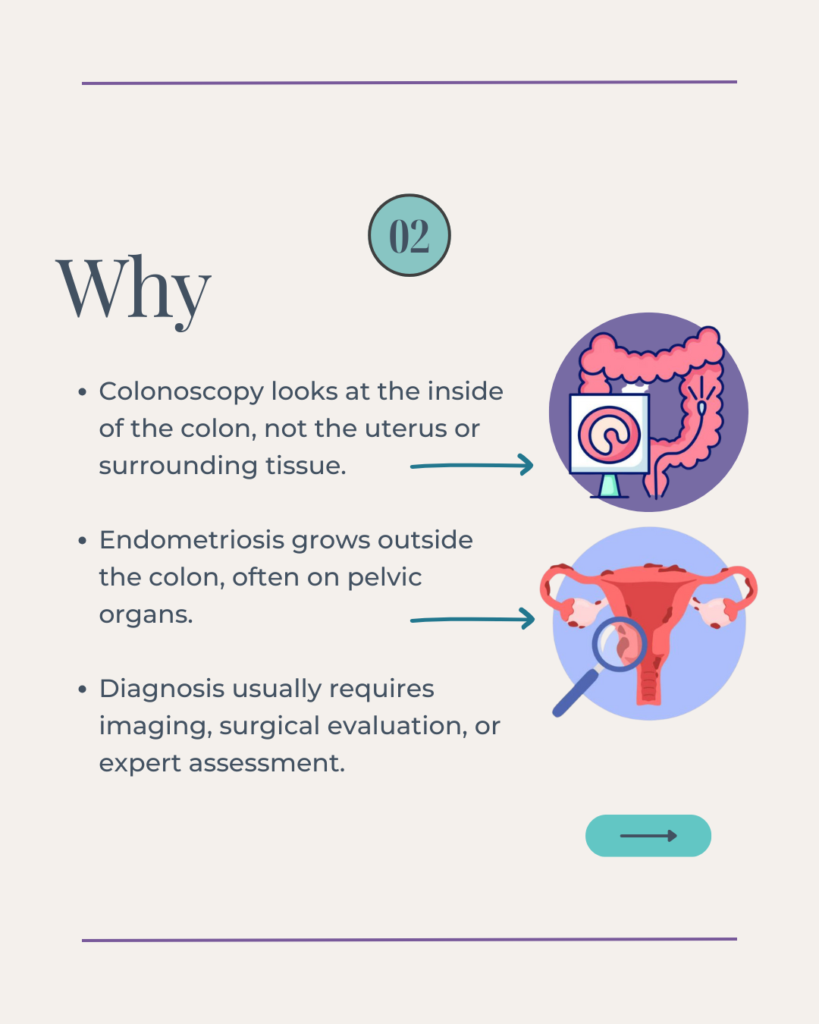
Endometriosis occurs when tissue similar to the lining of the uterus grows outside the uterus, often affecting the pelvis, ovaries, bladder, or bowel. However:
-
Endometriosis lesions on the bowel are usually outside the lining that a colonoscopy examines.
-
Colonoscopy only visualizes the inner surface of the colon, so it can’t detect lesions in deeper tissue layers or on surrounding pelvic structures.
-
While some bowel involvement may be visible in rare cases, most endometriosis-related pain is not diagnosable via colonoscopy.
How Endometriosis Is Diagnosed
A proper diagnosis usually requires a combination of:
-
Medical history & symptom review – tracking menstrual cycles, pain patterns, and bowel or urinary symptoms
-
Pelvic exam – evaluating for tenderness, nodules, or masses
-
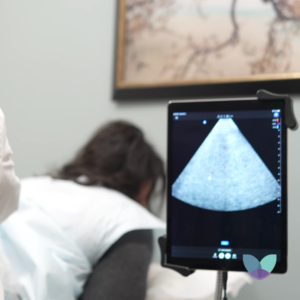
Imaging – such as MRI or specialized ultrasound to identify lesions
-
Laparoscopy – the gold standard surgical procedure for directly visualizing and sometimes removing endometriosis tissue
Why Early and Accurate Diagnosis Matters
Endometriosis is often underdiagnosed or misdiagnosed, leaving patients to suffer for years without relief. Early, accurate evaluation by a pelvic pain specialist can:
-
Reduce the time spent in chronic pain
-
Improve treatment outcomes
-
Help patients regain confidence and control over their bodies
How PRM Can Help
At PRM, we combine expert evaluation, imaging, and surgical collaboration to ensure patients receive a timely and accurate diagnosis. Our approach goes beyond symptom management: we treat the root causes of pelvic pain to improve function and quality of life.