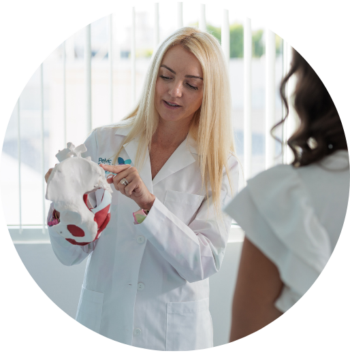
Uterine fibroids refer to the overgrowth of muscle cells within the uterine wall. Fibroids are benign tumors comprising the uterine muscle and connective tissue in the uterus, and may result in heavy, painful, or irregular periods and local pressure symptoms such as difficult defecation, frequent urination, and pain in the lower back. Uterine fibroid pain is pain associated with uterine fibroids, also known as leiomyomas or myomas.
While many women will have a uterine fibroid in their lifetime, there are certain risk factors which may cause their growth, and furthermore, the severity of symptoms experienced.

Women who have a family history of fibroids

Pre-menopausal women have a greater risk of having symptoms

Obesity

Alcohol use

High red-meat diet

African-American females tend to have a higher likelihood of having uterine fibroids and are often more symptomatic, with development at an earlier age and having larger-sized fibroids.
Diagnosing a uterine fibroid requires a medical history, exam and imaging.
Here’s what you can expect when you are a patient at Pelvic Rehabilitation Medicine:

Step One– First, our providers will ask questions about your medical history and listen to your symptoms to get a full picture of what is going on with you.

Step Two – Next, an external exam of your hips, abdomen, and posterior sacrum.

Step Three – Next, your pelvic nerves are evaluated externally with a soft cotton tip.

Step Four – Next, with your consent, gel is placed on a gloved finger and an internal exam is performed to allow us to evaluate the nerves and muscles within the pelvis. There is no speculum required as we are evaluating the pelvic floor muscles and nerves not the organs.

Step Five – Sometimes patients will need Imaging to help us understand if there is an associated cause of the pelvic nerve and muscle pain and dysfunction found on exam.

Step Six – Oftentimes, treatment can be started the same day as there is no down time. Our patients have been suffering with pelvic pain symptoms for 6+ months. We like to get them on the road to feeling better as soon as we can as the longer the symptoms are present the harder it is for us to resolve them.
Take the first step towards your healing journey by booking a free 15-minute consultation or new patient visit with a pelvic pain specialist today.
Dr. Allyson Shrikhande, PRM’s Co-Founder and Chief Medical Officer, served as medical reviewer and expert source…
Dr. Allyson Shrikhande had a blog published in Rosy discussing Chronic Pelvic Pain Syndrome (CPPS).
Dr. Allyson Shrikhande had a discussion with Dr. Melanie Carminati of Inspira Physical Therapy.
In this episode of the Period Party Podcast, Dr. Shrikhande and Nicole Jardim talk about the…