Free Pelvic Wellness Guide | Everyday Tips for Pelvic Health

Pelvic wellness is about more than your period, it's the coordinated health of your pelvic floor, bladder, bowel, reproductive organs, and nerves. Common signs worth taking seriously include severe period pain, pain during sex or urination, chronic bloating, and pain that persists even when test results look normal. Endometriosis and other pelvic pain conditions often take years to diagnose, largely because symptoms get dismissed as "normal." Everyday habits like intentional breathing, posture, and symptom tracking can support pelvic health alongside professional care. PRM's free Pelvic Wellness Guide offers practical tools to help you understand your symptoms and prepare for your next appointment.
If you’ve ever wondered whether your pelvic pain is “normal,” searched your symptoms at 1 a.m., or nodded along when a doctor said everything looked fine even though you still didn’t feel fine, this guide is for you.
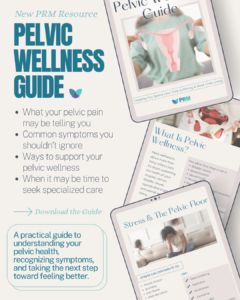
Today, Pelvic Rehabilitation Medicine (PRM) is launching The PRM Pelvic Wellness Guide, a free resource built to help you understand your body, recognize the signs worth paying attention to, and build small, sustainable habits that support your pelvic health every day.
Pelvic wellness isn’t just about your reproductive organs. It’s the health and coordination of your pelvic floor muscles, bladder, bowel, nerves, and reproductive system, all working together. When that system is out of sync, it can affect your energy, your mood, your relationships, and your daily life in ways that are easy to normalize and hard to explain to someone who hasn’t lived it.
This post walks through what pelvic wellness actually means, the everyday signs worth paying attention to, and what you’ll find inside the new guide.
Your pelvis is home to a connected system: pelvic floor muscles, bladder, bowel, reproductive organs, and the nerves that link them all. Pelvic wellness is what happens when that system works the way it’s supposed to, supported by posture, breathing, movement, and yes, stress levels too.
Most people never think about their pelvic floor until something feels off. And when something does feel off, it’s common to be told it’s normal, it’s stress, or it’s “just part of being a woman.” Too often, real symptoms get dismissed, minimized, or misunderstood, by doctors, by friends, and sometimes by ourselves.
Pelvic wellness starts with a simple idea: your symptoms are real, they have explanations, and there are ways to feel better.
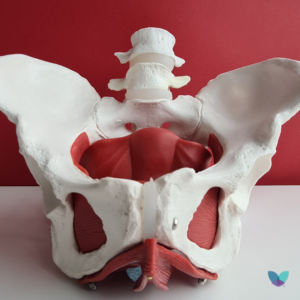
Most people can name their quads or their core, but few could point to their pelvic floor or explain what it actually does. It’s a hammock of muscles that stretches from your pubic bone to your tailbone, and it’s working constantly, whether you notice it or not.
Your pelvic floor helps control your bladder and bowel, supports your reproductive organs, stabilizes your core, and even plays a role in how you breathe. When it’s too tight, too weak, or simply uncoordinated, the effects can show up in surprising places: lower back pain, hip tightness, bloating, or a bladder that feels unpredictable. Because the symptoms can feel disconnected from their actual source, it’s common for people to treat each one separately for years without anyone connecting the dots back to the pelvic floor itself.
This is also why pelvic floor issues aren’t just a “postpartum thing” or something that only affects older adults. Posture, stress, sitting for long stretches, and even how you breathe throughout the day all place demands on this muscle system, at any age.
Because the pelvic floor sits at the center of so many systems, dysfunction rarely stays in one lane. Understanding these connections is often the missing piece that helps symptoms finally make sense.
Bladder. Your pelvic floor works together with your bladder to control when and how you urinate. When these muscles are too tight, too weak, or poorly coordinated, it can show up as urgency, frequency, leaking, or a bladder that never quite feels empty.
Bowel. The same muscles that support your bladder also support your bowel. Chronic constipation, straining, or pain with bowel movements can both cause and be caused by pelvic floor tension, which is part of why GI symptoms and pelvic pain so often travel together.
Reproductive organs. Your uterus, ovaries, and surrounding tissue sit in close proximity to your pelvic floor muscles and the nerves that serve them. Conditions like endometriosis and adenomyosis can cause inflammation that radiates outward, affecting nearby muscles and making pelvic floor symptoms worse, and vice versa.
Nerves. A dense network of nerves runs through the pelvis, connecting your brain, muscles, and organs. When these nerves become irritated, compressed, or overly sensitized, pain can radiate to your lower back, hips, thighs, or abdomen, often in ways that don’t look “textbook” and can be hard to trace back to their source.
Movement. How you sit, stand, breathe, and move all place demands on your pelvic floor throughout the day. Posture and movement patterns can either ease pressure on the pelvis or quietly add to it, which is part of why two people with the same diagnosis can have very different experiences of pain.
Seeing these systems as connected, rather than treating each symptom in isolation, is often the shift that finally moves someone from years of frustration toward an actual explanation.
Some symptoms are easy to brush off because they’ve become background noise in daily life. Here are signs worth paying closer attention to:
If any of these sound familiar, take a moment with our quick symptom quiz to see whether it’s worth a closer look.
A lot of unnecessary suffering comes down to a handful of persistent myths. A few worth challenging:
“Painful periods are just part of being a woman.” Mild cramping is common. Pain severe enough to interfere with school, work, or daily plans is not something you’re supposed to just push through, and it’s often a sign of a treatable underlying condition.
“If my imaging is normal, there’s nothing wrong.” Conditions like endometriosis frequently don’t show up on standard ultrasounds or MRIs. A normal scan is genuinely reassuring for some things, but it doesn’t rule out pelvic floor dysfunction, adenomyosis, or several other common causes of pelvic pain.
“I’m too young (or too old) for this to be serious.” Pelvic floor and reproductive symptoms can start in the teens and continue well past menopause. Age doesn’t rule anything in or out.
“I already had a baby, so this is just how my body is now.” Postpartum pelvic pain and bladder symptoms are common, but common doesn’t mean permanent or untreatable. Many symptoms that get written off as “the new normal” respond well to the right care.
If you’ve been dealing with symptoms for a long time without a clear answer, you’re far from alone. Pelvic pain conditions, endometriosis in particular, are notorious for long diagnostic delays, with research showing an average of roughly seven years from the start of symptoms to an actual diagnosis, and considerably longer for many patients.
A few reasons this happens so often:
None of this means the delay is your fault, or that your symptoms were ever “not that bad.” It means the system often makes it harder than it should be to get taken seriously, which is exactly why early recognition and self-advocacy matter so much.
Pelvic wellness isn’t only about treatment, it’s also about the small things you do (or don’t do) every day. A few places to start:
These habits are a starting point, not a substitute for care. If pain is a regular part of your life, self-care alone isn’t the whole answer, and the guide goes further into building a routine that actually fits your day.
There’s a difference between mild, occasional discomfort and pain that shapes your life. If you’re rearranging plans around your symptoms, canceling things you used to enjoy, or quietly accepting pain as something you just have to live with, that’s worth a real conversation, not another round of “wait and see.”
Conditions like endometriosis, adenomyosis, chronic pelvic pain syndrome, uterine fibroids, and pelvic floor dysfunction are common, and often take years to diagnose, not because the symptoms are rare, but because they’re so often dismissed.
The guide was built to meet you exactly where you are, whether this is your first step or your fiftieth appointment. It brings together clear, judgment-free explanations of how your pelvic floor connects to the rest of your body, practical tools to help you notice patterns in your own symptoms, and guidance for making the most of your next appointment, so you walk in feeling prepared instead of overwhelmed.
It’s designed to be something you actually use: a resource you can return to as your understanding (and your needs) change over time.
Download your free copy of the guide here.
This guide was created for anyone navigating symptoms that are often dismissed, delayed, or hard to explain, including people managing:
If pelvic pain or discomfort is affecting your daily life, even if you don’t see your exact experience listed above, this guide is a good place to start.
At PRM, our mission is helping patients spend less time suffering and more time living. We hear you. We see you. We believe you.
Download the free PRM Pelvic Wellness Guide today and take your next step toward understanding your body and feeling like yourself again.
If you’re ready to talk to a specialist now, you can also request an appointment directly.
Pelvic wellness refers to the health and coordination of the pelvic floor muscles, bladder, bowel, reproductive organs, and nerves that connect them. Good pelvic wellness supports everyday comfort, movement, and function.
Mild discomfort during your period is common, but pain severe enough to interfere with school, work, or daily activities is not something you have to just accept. It can be a sign of an underlying condition worth discussing with a specialist.
Pain that is persistent, recurring, or affects your daily life is worth evaluating, even if previous imaging or lab work came back normal. A specialist can help identify what standard testing may have missed.
Yes. Because the pelvic floor supports your core and connects to the muscles around your hips and lower spine, dysfunction here can contribute to lower back pain that doesn’t respond to typical back-focused treatment.
Not necessarily, but persistent or recurring pain always deserves a real explanation rather than being dismissed. Pelvic pain has many possible causes, some minor and manageable, others requiring more involved care, and the only way to know which you’re dealing with is a proper evaluation.
Pelvic pain is a symptom, discomfort felt anywhere in the pelvic region. Pelvic floor dysfunction refers specifically to the muscles themselves not working the way they should, whether too tight, too weak, or poorly coordinated, and it’s one of many possible causes of pelvic pain.
Yes. The PRM Pelvic Wellness Guide is a free download, with no obligation.