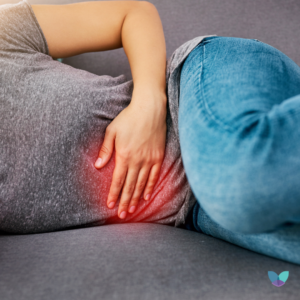
Endometriosis is sometimes misunderstood as just a “pelvic pain” condition. But the pain associated with endometriosis can be sharp, shooting, burning — and travel far beyond the pelvis. Why? Because of the way endometriosis interacts with the pelvic nerves.
Think of your pelvic nerves like highways. They carry important messages between your brain and your body — including pain signals. But when endometriosis lesions grow near or directly on these nerves, it’s like throwing up a roadblock on a major freeway.
Signals get stuck. They back up. They may speed up, misfire, or get misdirected altogether.
Nerve Involvement Makes Endo Pain More Complex
Endometriosis lesions can cause inflammation and irritation when they’re close to sensitive nerves like the sciatic, pudendal, obturator, or hypogastric nerves. When these nerves are affected, the pain can radiate to areas that seem unrelated to the reproductive system — like the lower back, legs, buttocks, bladder, and even down to the feet.
Some patients describe it as:
- Electric shock-like sensations
- Stabbing or burning pain
- Tingling or numbness
- Pain that worsens with sitting, walking, or certain movements
This is called neuropathic pain, and it’s a very real part of the endometriosis experience for many people.

Why Diagnosis and Treatment Can Be Tricky
Because nerve-related endometriosis pain doesn’t always line up neatly with the menstrual cycle or stay in the pelvis, it’s often misdiagnosed. Patients may be told they have sciatica, interstitial cystitis, or irritable bowel syndrome — when in reality, endometriosis is the underlying cause.
Treating nerve-involved endometriosis requires a comprehensive approach. This may include:
- Expert imaging and mapping to locate lesions near nerves (note that endometriosis is not always or often seen on imaging)
- Excision surgery by a specialist trained in nerve-sparing techniques
- Pelvic floor physical therapy to help relax the muscles
- PRM Protocol™ to address nerve inflammation and spastic muscles
Your Endometriosis Pain Could Be Nerve Involvement
If your pain travels, feels sharp or electric, or isn’t relieved by traditional pelvic pain treatments, nerve involvement could be the reason. Endometriosis doesn’t just affect the organs it touches, as it can disrupt the way your nervous system functions.
Getting care from a team that understands the full picture — including the nervous system’s role — can make all the difference.