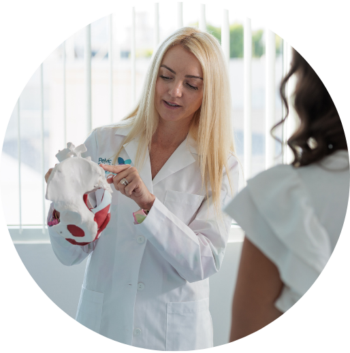
The Georgetown Panel at a Glance
- Event: University Health Initiative (UHI) Panel Discussion, “Endometriosis & Chronic Pelvic Pain”
- Where: Georgetown University
- When: September 2026
- Presented by: The University Health Initiative, a campus program from PRM and Project Endo
- Who it was for: Students, who are often at the age when endometriosis symptoms begin
For many people with endometriosis, the hardest part is not the pain. It is the years spent trying to be taken seriously. In September, the University Health Initiative brought that conversation straight to students at Georgetown University with a panel on endometriosis and chronic pelvic pain.
What the Panelists Said
“It just takes a decade for them to find someone who will actually listen.”
One panelist noted that it was odd to be the only “Y chromosome” in the room talking about debilitating pain, and said providers have to be willing to step up with empathy for the women who have been struggling. The delay in being heard, the panel said, is often the longest part of the journey.
“There’s no perfect treatment.”
The panel was candid that there is no magic pill and no magic surgery. They also said the situation is improving: care today is “light years ahead of where it was a decade ago,” and the goal is to bring more of it together in a single appointment.
“If you build the right team, you can optimize your future with endometriosis.”
Panelists encouraged students to look for specialty care and to stay vigilant about their symptoms. A coordinated team, rather than one provider doing everything, gives patients the best chance of managing the disease over time.
What would change things
The panel closed on research funding. In their words: “Maybe one day we’ll get there, where we have that transformative amount of research funding.”
Why This Conversation Belongs on Campus
Symptoms often begin in adolescence or young adulthood, and severe period pain is still too often treated as normal. Endometriosis affects up to 1 in 10 women, and according to Fierce Healthcare’s coverage of UHI, women take an average of four to 11 years to get a diagnosis.
As PRM’s Co-Founder and Chief Medical Officer, Allyson Augusta Shrikhande, MD, told Fierce Healthcare, college is “a classic time for symptoms to flare,” and students are often away from home for the first time. University health centers are well placed to spot the signs early.
About the University Health Initiative
The University Health Initiative is a national program from PRM (Pelvic Rehabilitation Medicine) and Project Endo, designed to help students recognize endometriosis symptoms earlier and reach care sooner. PRM is the initiative’s Founding Clinical Partner, and Project Endo, founded by Shannon Cohn, is the national awareness effort behind it. Partner schools receive, at no cost:
- Clinical education on endometriosis and pelvic pain conditions
- Symptom screening tools
- Student education materials and campus awareness programming
- Referral support and care navigation guidance
- Connections to pelvic pain providers and Centers of Excellence nationwide
Students can learn the signs, myths and facts on PRM’s Endometriosis Awareness Starts on Campus page. Read the full announcement on PRM and Project Endo’s launch of the University Health Initiative.
What You Can Do Now
If you have pelvic pain, don’t just track when your period starts and ends. Consider tracking:
- Pain: when it happens and how severe it is
- GI symptoms: bloating, nausea, constipation, diarrhea or painful bowel movements
- Urinary symptoms: frequency, urgency, discomfort or pain
- Sexual health: pain during or after intercourse
- Daily life: classes missed, plans canceled, workouts skipped
That last one matters. What your symptoms stop you from doing can be just as important as the symptoms themselves, and a record gives you something concrete to bring to a provider. You don’t need to have every symptom, and imaging described as normal doesn’t mean you should stop asking questions.
For Campus Health Teams
If you work at a university health center and want these resources on your campus, see PRM’s University Health Initiative page and Project Endo.
Watch More
- Short version (0:30): Watch the highlights reel
- Full highlights (0:58): Watch on YouTube
If This Sounds Familiar
If you have pelvic pain that disrupts your school, work or life, you don’t need to prove it is bad enough. Request an appointment with PRM.
We hear you. We see you. We believe you.
This post is for general education and is not a substitute for personalized medical advice. Always check with your provider about what is right for you.
Frequently Asked Questions
The University Health Initiative is a national campus program from PRM (Pelvic Rehabilitation Medicine) and Project Endo. It gives partner schools free clinical education, symptom screening tools, student education materials, referral support and connections to pelvic pain providers, so students can recognize endometriosis symptoms earlier and reach care sooner.
No. Imaging that is described as normal does not mean you should stop asking questions, and you don’t need to have every symptom for your concerns to be worth investigating. If you are still having significant symptoms, talk with a healthcare provider and bring a record of what you’ve been experiencing.
Track more than your period dates. Note when pain happens and how severe it is, any bloating, nausea, constipation or diarrhea, urinary frequency or discomfort, pain during or after intercourse, and what your symptoms stop you from doing, such as missing class, work or plans. A record gives you something concrete to discuss with your provider.
Campus health teams can learn more on PRM’s University Health Initiative page at pelvicrehabilitation.com/university or through Project Endo at projectendo.org.