Have you ever noticed that when you’re stressed, your jaw clenches, your shoulders creep up, and your breath becomes shallow? These patterns of tension are not random—they’re part of a deeply connected system.
At the center of this tension triangle is your pelvic floor, and the effects of holding tension there can impact your daily life in ways you may not expect.
The Pelvic Floor: A Key Player in Whole-Body Health
The pelvic floor is a group of muscles at the base of your pelvis that support your bladder, bowel, and reproductive organs. But it doesn’t work in isolation. It’s part of a team that includes your jaw, shoulders, diaphragm, and core—all connected through the nervous system and a web of fascia (connective tissue) that runs throughout your body.
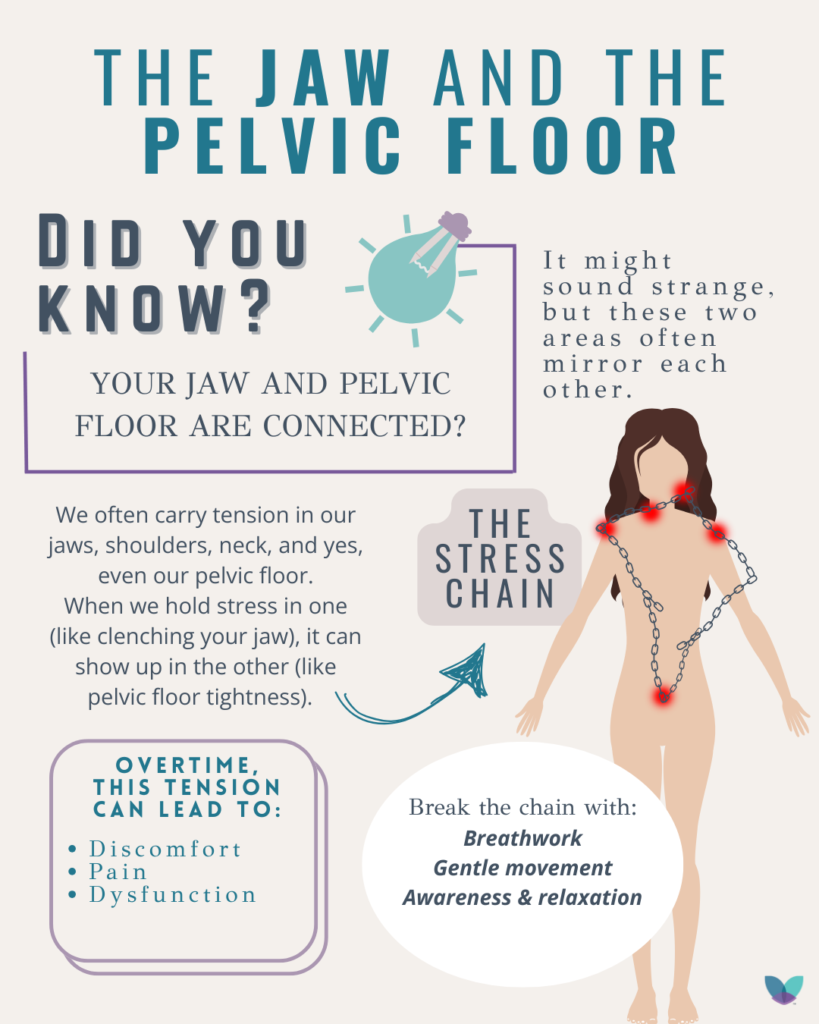
How Tension Travels Down the Chain
When we feel stressed, we tend to brace ourselves:
- We clench our jaw
- We tighten our shoulders and upper back
- We may even hold our breath and squeeze or grip the pelvic floor muscles—often without even realizing it
This holding pattern, especially when it becomes chronic, can lead to pelvic floor dysfunction. And because the pelvic floor is responsible for functions like urination, bowel movements, and sexual activity, tension here can show up as distressing symptoms that interfere with everyday life.
Common Symptoms of Pelvic Floor Tension
When the pelvic floor muscles are too tight (a condition sometimes referred to as non-relaxing pelvic floor dysfunction), they can’t function properly. The result? A wide range of frustrating and often misdiagnosed symptoms, such as:
- UTI-like symptoms: frequent urges to urinate, burning, or the sensation of not fully emptying, but a urinary tract infection is not present
- Chronic constipation: straining to have a bowel movement, incomplete emptying, or a feeling of blockage
- Pelvic pain: deep, aching pain in the hips, low back, or tailbone
- Pain with intercourse: discomfort, burning, or tightness during or after sex (No, you don’t just need to “drink a glass of wine”)
- Pain with sitting: due to pressure on tightened muscles or nerves
- Core and back pain: from imbalances in the deep core system
These symptoms are real, physical, and often misunderstood—especially when they’re caused by muscular tension rather than infection, inflammation, or structural damage.
The Breath-Pelvic Floor Connection
Your breath is one of the most powerful tools for releasing tension. When you take a deep inhale, your diaphragm lowers, and your pelvic floor naturally responds by lengthening and relaxing. On the exhale, the pelvic floor returns to a supportive, lifted position.
But under stress, we tend to breathe from our chest—short, shallow breaths that don’t engage the diaphragm or encourage pelvic floor mobility. Over time, this contributes to a tight, reactive pelvic floor.
Small Shifts That Support Big Relief
The good news? Awareness is the first step toward change. Here are some ways to begin unwinding tension across the jaw, shoulders, and pelvic floor:
- Relax the jaw: Rest your tongue gently on the roof of your mouth (behind your front teeth) and let your jaw soften. This can send a message of relaxation down through the rest of your body.
- Drop the shoulders: Several times a day, check in and consciously lower your shoulders away from your ears.
- Practice diaphragmatic breathing: Inhale slowly through your nose and imagine the breath traveling all the way down to your pelvis. Allow the pelvic floor to release and open. On the exhale, gently engage your lower belly.
- Let go of gripping: Tune in to moments when you might be holding your pelvic muscles—like when you’re working, driving, or even scrolling on your phone. See if you can soften.
- Consider the PRM Protocol™: PRM’s patented, in-office treatment that directly addresses spastic muscles and inflamed nerves in the pelvic floor, which are often the cause of pelvic pain and dysfunction.
You’re Not Alone—and You Don’t Have to Live This Way
At PRM, we see many patients who’ve been told their symptoms are “in their head” or that they just have to “live with it.” That’s not true. Pelvic floor dysfunction is real, and with the right care, you can find relief.
If you’ve been experiencing UTI-like urgency, constipation, pelvic pain, or pain with intercourse, pelvic floor tension could be the missing link. And by recognizing the connection between the jaw, shoulders, and pelvic floor, you can begin to release long-held tension and reclaim your quality of life.