Exploring how semaglutide might impact inflammation, pain, and fertility, with expert input from Dr. Allyson Shrikhande
Ozempic (semaglutide), a medication FDA-approved for type 2 diabetes and chronic weight management, is increasingly being discussed by people living with endometriosis. While not approved to treat the condition, some patients are exploring it as a potential way to reduce inflammation, manage pain, and even support fertility.
Dr. Allyson Shrikhande, PRM Co-Founder and Chief Medical Officer, explains why there’s growing interest in Ozempic among endometriosis patients—and what you need to know before considering it.
Why Are Endometriosis Patients Taking Ozempic?
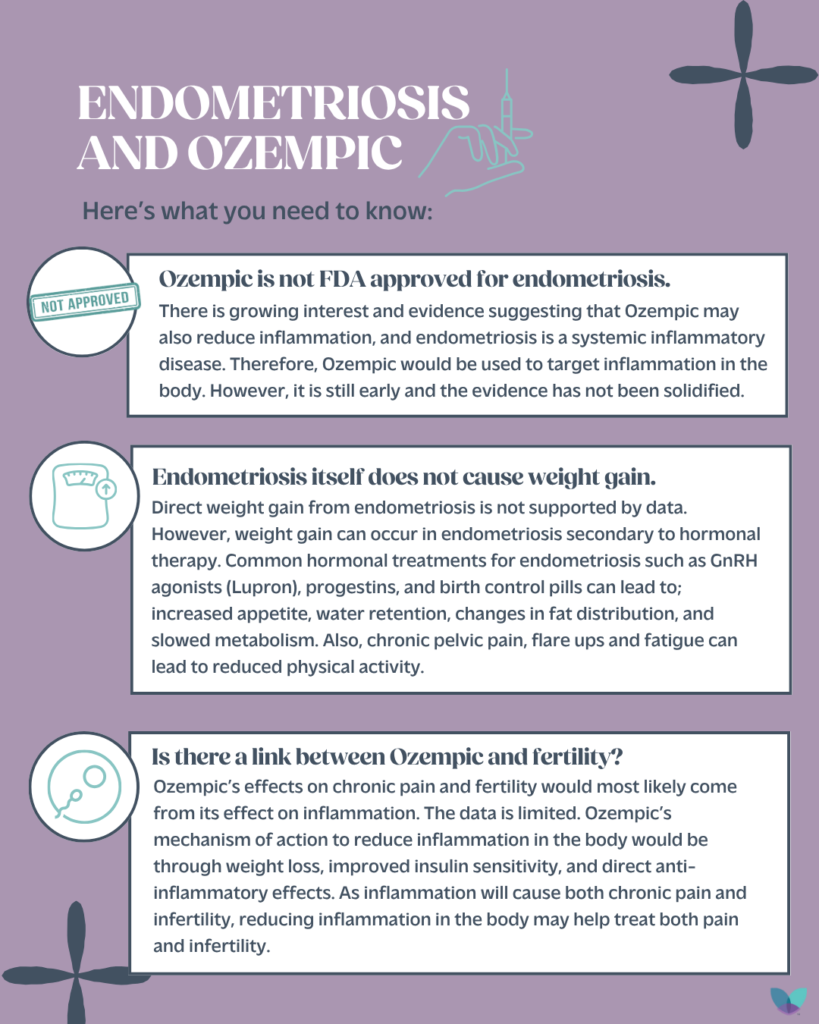
Endometriosis is a systemic inflammatory disease, meaning inflammation can affect the entire body—not just the pelvic region. Although Ozempic is not a treatment for endometriosis, it may have anti-inflammatory effects that some patients find beneficial.
Here’s why some providers and patients are exploring its off-label use:
- Ozempic reduces systemic inflammation, which may help with endometriosis-related symptoms.
- It improves insulin sensitivity, which is important since insulin resistance can contribute to hormonal imbalances.
- The weight loss effects of Ozempic may also indirectly reduce estrogen levels, which could help reduce the severity of endometriosis lesions.
However, Dr. Ally emphasizes that scientific evidence is still early, and more research is needed to confirm Ozempic’s role in managing endometriosis.
Weight Gain and Endometriosis: What’s the Connection?
Endometriosis itself does not directly cause weight gain, but many women experience weight changes due to treatment or lifestyle limitations caused by chronic pain.
Factors that can contribute to weight gain in endometriosis patients include:
- Hormonal therapies such as:
- Birth control pills
- Progestins
- GnRH agonists (like Lupron)
Side effects of these treatments may include:
- Increased appetite
- Water retention
- Slower metabolism
- Changes in fat distribution
- Reduced physical activity due to chronic pain, fatigue, or flare-ups
Dr. Ally notes that weight loss recommendations should be individualized, but in certain cases, reducing body fat may help with symptom relief:
- Adipose (fat) tissue produces estrogen through an enzyme called aromatase.
- Since endometriosis is estrogen-dependent, excess fat may fuel the growth of lesions.
- Reducing BMI under medical supervision could potentially help slow lesion growth and reduce symptom severity.
Some patients anecdotally report reduced pain while taking Ozempic. Though this hasn’t been studied extensively, Dr. Ally believes this may be due to:
- Reduced systemic inflammation
- Improved insulin sensitivity
- Decreased estrogen production from fat cells
- These effects may contribute to:
Fewer or less intense pelvic pain flares - Improved energy levels and daily functioning
- Better symptom management overall
Every endometriosis case is different. While Ozempic might provide some relief for certain patients, it is not a substitute for targeted endometriosis treatment or excision surgery.
Ozempic and Fertility: Is There a Connection?
There have been anecdotal reports of women becoming pregnant shortly after starting Ozempic or other GLP-1 medications. While the science is still developing, Dr. Ally notes that the possible link lies in reduction of inflammation.
Here’s how Ozempic may support fertility in some patients:
- Reduces chronic inflammation, which is a known contributor to infertility
- Improves metabolic health, supporting hormone balance
- Lowers estrogen levels by reducing fat tissue, potentially stabilizing reproductive function
It’s important to note:
- These outcomes are not guaranteed
- More research is needed to establish clear links between Ozempic and fertility
- Talk to your provider before starting any new medication while trying to conceive
Final Takeaways About Endometriosis and Ozempic
Although Ozempic is not FDA-approved for treating endometriosis, its potential to reduce inflammation and improve metabolic health has sparked interest in the endometriosis community. Dr. Shrikhande emphasizes that treatment should always be personalized and provider-guided.
Things to keep in mind:
- Ozempic may help reduce inflammation, which can positively impact pain and fertility
- Weight loss from Ozempic may lower estrogen production, which could slow lesion growth
- It is not a cure for endometriosis
- Scientific evidence is still limited—more research is needed
- Only take Ozempic under the guidance of a qualified healthcare provider
- At PRM, we believe in a multidisciplinary approach to managing endometriosis, which includes laparoscopic excision surgery of endometriosis lesions, alongside a restorative approach which includes the PRM Protocol™
If you’re curious about incorporating Ozempic into your endometriosis care plan, we encourage you to discuss this with your multidisciplinary care team, which may include a pelvic pain specialist, endometriosis excision surgeon, and primary care doctor. The best treatment plans are comprehensive, individualized, and supported by a multidisciplinary care team.
PRM providers do not prescribe Ozempic, but our team can help you understand your endometriosis symptoms and what you can do to improve your overall quality of life while living with endometriosis.
Schedule An Endometriosis Consultation