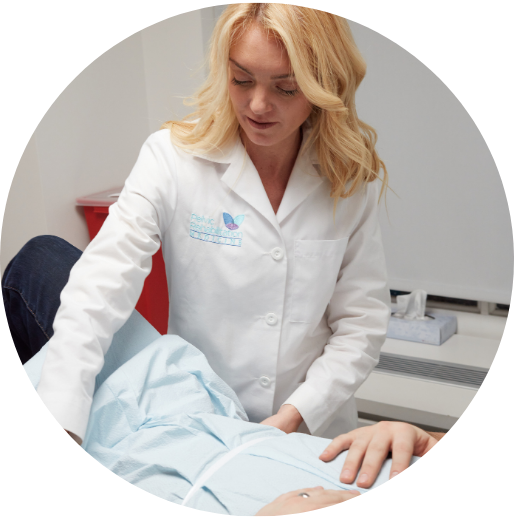
• Falls Church, VA

Gynecologic Surgeon & Endometriosis Excision Specialist

Anna Reinert, MD

Dr. Anna Reinert will be joining PRM’s Center of Excellence in Falls Church, VA, in September 2026. Stay tuned.

Dr. Anna Reinert is a board-certified gynecologic surgeon specializing in minimally invasive gynecologic surgery (MIGS), endometriosis, chronic pelvic pain, and other complex pelvic disorders. Fellowship-trained in minimally invasive gynecologic surgery and chronic pelvic pain, she is recognized for providing advanced, evidence-based care that helps patients achieve lasting relief and improved quality of life.

She diagnoses and treats a wide range of conditions, including endometriosis, adenomyosis, pelvic floor dysfunction, and overlapping pelvic pain disorders. Dr. Reinert is an ABOG-certified surgeon with a Focused Practice Designation in Minimally Invasive Gynecologic Surgery and an iCareBetter video-vetted endometriosis excision surgeon, reflecting her expertise in advanced endometriosis excision surgery and minimally invasive surgical care.

Dr. Reinert serves as an Assistant Professor of Clinical Obstetrics and Gynecology at the Keck School of Medicine of USC, where she is actively involved in surgical education, research, and advancing the treatment of endometriosis and chronic pelvic pain. She also contributes to national leadership through organizations including AAGL and the International Pelvic Pain Society.

At PRM, Dr. Reinert is proud to help patients in Falls Church find answers sooner and provide expert, personalized care for endometriosis, chronic pelvic pain, and complex gynecologic conditions through the PRM Protocol™.

Get To Know Your Provider

Education & Training
Harvard University – Bachelor of Arts in Biology, Cum Laude, with certificates in French and Neurobiology

Columbia University College of Physicians and Surgeons – Doctor of Medicine (MD)

University of Maryland Medical Center – Residency in Obstetrics & Gynecology, including service as Administrative Chief Resident

Creighton University / St. Joseph’s Hospital and Medical Center – AAGL Fellowship in Minimally Invasive Gynecologic Surgery and Chronic Pelvic Pain (FMIGS)

Experience & Leadership
Board-Certified Obstetrician-Gynecologist (ABOG)

ABOG Focused Practice Designation in Minimally Invasive Gynecologic Surgery

iCareBetter Video-Vetted Endometriosis Excision Surgeon

Assistant Professor of Clinical Obstetrics and Gynecology, Keck School of Medicine of USC

Nationally recognized educator and lecturer on endometriosis, chronic pelvic pain, adenomyosis, and minimally invasive gynecologic surgery

Faculty member for AAGL and multiple surgical training programs focused on pelvic pain and advanced gynecologic surgery

Active leader within AAGL, contributing to chronic pelvic pain practice guidelines, physician education, and specialty certification development

Published researcher and author with expertise in endometriosis, chronic pelvic pain, minimally invasive surgery, and women’s health

Recipient of multiple teaching and research awards recognizing excellence in gynecologic surgery, resident education, and pelvic pain care

I aim to provide thoughtful, fertility-preserving, and individualized care that integrates surgical precision with multidisciplinary medical management to optimally address pelvic pain and infertility. This approach emphasizes hormonal suppression in patients not actively attempting pregnancy, lifestyle strategies, and collaboration with physical medicine and pain specialists to promote lasting relief.

The current state of endometriosis diagnosis and treatment in America is unacceptable, tragic, and a result of systemic problems relating to GYN surgical training and reimbursement that are unlikely to change anytime soon. I am excited to be a part of an organization that is aiming to change the practice of medicine for endometriosis care, as our patients deserve a better way.

The way that the body processes chronic pelvic pain means that, even after endometriosis is excised, your body still has to unlearn the pain – to reverse changes in the central nervous system that can contribute to recurrent or persistent pain. The PRM protocol focuses on this process.

Prior to joining PRM, I was an assistant professor at University of Southern California Keck School of Medicine for 7 years. I have served on the AAGL 2025 Scientific Program Committee and AAGL 2026 Professional Education Committee. I am passionate about empowering patients through education about their bodies and reproductive health conditions; with this goal I have served as an video content expert on Roon.com, and have contributed articles to the LA Times and Slate.

I have performed over a thousand complex gynecologic surgeries.

I am comfortable excising endometriosis from the pelvis, ovaries, fallopian tubes, vagina, rectum, sigmoid colon, small bowel, appendix, bladder, ureter, abdominal wall, umbilicus, and diaphragm.

For patients desiring to maintain fertility, my surgical approach involves thorough excision of endometriosis, use of careful technique for excising ovarian endometrioma cysts with suturing rather than burning tissues to control bleeding, meticulous dissection and reconstruction of the fallopian tubes to remove endometriosis and restore or maintain tubal function when possible.

As a mother of four young children, I feel the deep importance of helping patients try to achieve the family they hope for. This purpose drives my work and sharing in the joy of a successful post-surgical pregnancy makes the hard days worthwhile. Born and raised in Northern Virginia, having attended Thomas Jefferson High School for Science and Technology, I am looking forward to returning to and caring for this community.

Your Gynecologic Surgeon

Meet Dr. Reinert

Prior to joining PRM’s Center of Excellence, Dr. Anna Reinert completed an AAGL Fellowship in Minimally Invasive Gynecologic Surgery and Chronic Pelvic Pain at Creighton University, following her OB/GYN residency at the University of Maryland Medical Center. She earned her medical degree from Columbia University and is a board-certified gynecologic surgeon specializing in endometriosis, minimally invasive surgery, and chronic pelvic pain care.
Healthgrades User

Dr. Anna Reinert is a very skilled and attentive surgeon. I had a surgical procedure with her(fibroid removal 1,3cm) , and everything went smoothly. She explained the process clearly, the surgery itself was gentle, and my recovery has been almost painless — no bleeding, no complications. I truly appreciate her professionalism, calm approach, and the excellent care she provided. Highly recommend her if you are looking for a trustworthy OB-GYN in Los Angeles.

Healthgrades User

She is an exceptionally compassionate and dedicated professional who always takes the time to truly listen to my concerns. Her warm and empathetic approach immediately puts me at ease during every visit.What truly sets her apart is her accommodating nature. She goes above and beyond to make sure scheduling an appointment is as convenient as possible, which is especially important for me since I travel from a distance. She genuinely values her patients’ time and well-being, which is reflected in the care and attention she provides.

Healthgrades User

Outstanding Doctor. Goes over and beyond. Very thorough and patient with questions. If you need endo care/excision, go to her!

Patient Testimonials

Explore patient testimonials to learn more about outstanding care at PRM.

Access to Care for Pelvic Pain Patients

We Provide In Network & Out of Network Options for Patients

At Pelvic Rehabilitation Medicine, we are on a mission to provide access to care to every patient. We believe the cost of comprehensive care should not be a burden for patients seeking diagnosis and treatment that ensures a full and complete, pain-free life. Learn more about our insurance coverage.

FAQ's

FAQ's

Endometriosis excision surgery is an advanced minimally invasive procedure that involves carefully identifying and removing endometriosis lesions from affected areas while preserving healthy tissue. Unlike approaches that only treat visible disease on the surface, excision surgery focuses on removing endometriosis at its root to help reduce symptoms and improve quality of life. At PRM, fellowship-trained minimally invasive gynecologic surgeons use advanced laparoscopic techniques and comprehensive evaluation to develop individualized treatment plans based on each patient’s symptoms, goals, and disease severity.

Endometriosis surgery may be considered for patients whose symptoms are not adequately controlled with medications or hormonal treatments, whose pain significantly impacts daily life, or who are experiencing fertility challenges. Surgery may also be recommended when imaging or evaluation suggests deeper disease, such as endometriosis involving the bowel, bladder, or other pelvic structures. Common reasons to consider an endometriosis surgery consultation include persistent pelvic pain despite medical treatment, painful periods, painful intercourse, gastrointestinal or bladder symptoms, difficulty conceiving, or findings such as endometriomas or deep infiltrating endometriosis. During an evaluation at PRM, providers review your symptoms, medical history, imaging, and treatment goals to determine whether excision surgery is the right option for you and develop a personalized care plan.

During an endometriosis surgery consultation at PRM, patients can expect a comprehensive evaluation focused on understanding their symptoms, medical history, and treatment goals. The surgeon will review your experience with pelvic pain, painful periods, painful intercourse, bowel or bladder symptoms, previous diagnoses, and any prior treatments. The consultation may include a physical and pelvic exam to evaluate areas of tenderness, pelvic floor muscle dysfunction, scarring, or other findings that may contribute to symptoms. Additional imaging, such as specialized pelvic ultrasound or MRI, may be recommended to better understand the location and extent of endometriosis. Your surgeon will also discuss whether excision surgery is appropriate, explain the surgical approach, and review what to expect before, during, and after the procedure. PRM’s approach includes personalized pre- and post-operative care, which may involve pelvic rehabilitation, lifestyle strategies, and other treatments to support healing and long-term outcomes.

PRM’s endometriosis surgeons specialize in advanced laparoscopic excision surgery and care for patients through a fully integrated, multidisciplinary approach. Unlike a surgery only model, PRM combines surgical expertise with pelvic pain care to address the inflammation, nerve sensitivity, and pelvic floor dysfunction that can contribute to ongoing symptoms. PRM’s fellowship-trained Minimally Invasive Gynecologic Surgeons (MIGS) have specialized training in complex excision surgery and treat advanced endometriosis, including cases involving areas such as the bowel, bladder, and diaphragm. Their approach also includes comprehensive support before and after surgery, including pelvic rehabilitation through the PRM Protocol™ to help reduce pain, support healing, and improve long-term outcomes. PRM focuses on personalized, whole-body care designed to help patients achieve meaningful relief while reducing the need for repeated procedures. Providers also evaluate patients clinically based on symptoms, medical history, and physical examination, allowing treatment planning to begin without waiting for surgical confirmation.

Yes, endometriosis excision surgery can improve fertility for some patients by removing endometriosis lesions, treating scar tissue and adhesions, restoring normal pelvic anatomy, and reducing inflammation that may interfere with conception. The impact of surgery depends on factors such as the severity of endometriosis, age, ovarian reserve, and overall fertility health. For patients with mild to moderate endometriosis, removing visible disease may improve the chances of spontaneous pregnancy. In more advanced cases, surgery may help restore the relationship between the ovaries, fallopian tubes, and surrounding pelvic structures to support reproductive goals. At PRM, providers consider each patient’s fertility goals and individual circumstances when determining whether surgery is the right approach and how it fits into a broader fertility plan.

Recovery after endometriosis excision surgery varies depending on the extent of disease treated and each patient’s healing process. Many patients experience gradual improvement over the first several months rather than immediate relief. The first menstrual cycle after surgery (typically 4–8 weeks post-surgery) may be the most challenging, with some patients experiencing increased cramping, pelvic pain, or heavier bleeding as the body heals. By the second cycle, many patients begin noticing improvements, and within three to six months, patients often report reduced pain, improved energy, and better daily function. At PRM, recovery is supported through a comprehensive approach that combines surgical expertise with individualized follow-up care and additional treatments when needed to support long-term healing and quality of life.