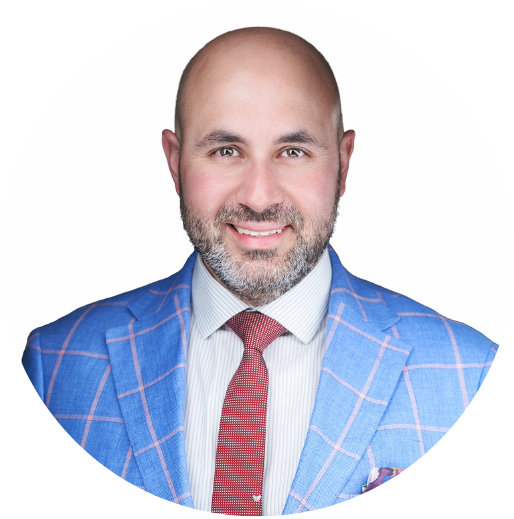
Dr. Faraj Touchan is a gynecologic surgeon specializing in endometriosis excision surgery using minimally invasive and robotic-assisted techniques in New Jersey and New York. He operates at Chilton Medical Center-Atlantic Health System, Cooperman Barnabas Medical Center, RWJ Barnabas Medical-Clara Maass and Englewood Hospital in New Jersey. With over a decade of experience, he performs more than 250 complex gynecologic procedures annually and has completed over 600 complex robotic cases, including advanced endometriosis and myomectomy surgeries. He treats deep infiltrating endometriosis, including cases involving the bowel, bladder, and ureters.
He takes a patient-first approach, tailoring each surgical plan to prioritize pain relief, fertility preservation, and long-term quality of life. His expertise extends beyond surgery, integrating PRM’s multidisciplinary care model to support recovery and overall patient well-being.
Dr. Touchan is a dedicated educator and has trained future surgeons and presented at major medical conferences. He is an active member of ACOG, AAGL, and other leading gynecologic organizations. As part of PRM’s Center of Excellence in New Jersey, he is committed to delivering advanced surgical care and innovative treatment strategies for patients with endometriosis.
Dr. Touchan has been recognized by NJ Top Docs in 2025 for minimally invasive gynecologic surgery in New Jersey. Learn more!
Residency | University at Buffalo Sisters of Charity Hspital
MD | University of Aleppo
2011-2016: Attending OB/GYN physician in Mount St. Mary’s hospital in Lewiston , NY
2012- 2016 : Attending physician and Minimally invasive surgeon at Catholic Health Hospitals in Buffalo, NY
2013-2016 : Clinical Associate Professor of Obstetrics & Gynecology at the School of Medicine and Biomedical Sciences university at buffalo
2016 – 2019: private practice physician, and teaching and minimally invasive surgeon at St. Barnabas medical center and Clara Maass hospital.
2019-2021: Minimally invasive surgeon at the Center for innovative gyn care, with extensive experience at retro-peritoneal dissection.
2017-present: Faculty member and supervisor and Laparoscopic and minimally invasive mentor for the residency program at RWJ-Barnabas health
2021-present: Minimally invasive and Robotic surgeon at Atlantic health system.
Hospital Affiliations:
Chilton Medical Center – Pompton Plains, NJ
Cooperman Barnabas Medical Center – Livingston, NJ
Clara Maass Medical Center – Belleville, NJ
Englewood Hospital – Englewood, NJ
Endometriosis is my passion. I feel deeply for the pain and suffering every patient encounters. Caring for endometriosis patients requires a holistic, medical surgical patient centered approach that addresses both the physical and emotional aspects of the condition, with detailed assessment and individualized plan to achieve best results possible.
The prolonged suffering patients have before diagnosis and effective treatment due to lack of medical attention and expertise in the disease lead to central sensitization which is very difficult to treat even with effective treatment, so because of that PRM’s approach is ideal to desensitize hyperactive receptors and make it the best approach in my opinion a combination of desensitization and excision to achieve best relief for patients.
Endometriosis is a unique disease and requires lifelong journey of support and treatment, recurrence is a trademark for the disease, and offering pre and post habilitation is essential for successful excision surgery, optimize outcomes, enhance recovery and improve long-term quality of life.
Extensive surgical training by Gyn Oncologists to master very difficult and deep spaces resection
Received ABOG designated speciality in minimally invasive Gynecologic Surgery
Extensive over 10 years expertise in robotic resection of endometriosis and complex gynecologic procedures.
I believe in patient-first philosophy such as pain relief, fertility preservation, and over all quality of life
I ran the 2024 NYC Marathon in support of endometriosis patients, supporting their pain and suffering
Won resident teaching award for excellence in teaching for Minimally invasive GYN surgery
Presenter at multiple AAGL Summits.
Member of ACOG, AAGL, Endometriosis Foundation, Fibroids Foundation.
Prior teaching faculty university at buffalo, and prior director of laparoscopic surgery resident teaching at st barnabas medical center.
I performed hundreds of complex Gynecologic procedures mostly and exclusively in a minimally invasive approach over 250 cases per year and utilizing the art of robotics for over 75% of these cases.
With the aid of robotic surgery I was able to resect lesions from lot of areas including, uterus, tubes, ovaries, bladder wall, retroperitoneal, over ureter course, small and large bowel with assistance of colo-rectal surgeons if needed, even from diaphragm in rare occasions.
Fertility is a huge aspect of endometriosis surgery and preserving it is always the main goal in young patients which are the majority, careful dissection and complete resection is key for fertility. Also, deep knowledge of anatomy and careful energy free resection is vital in saving ovarian reserve.
I have a commitment to compassionate patient first care, dedication to empowering patients through education and focus on improving quality of life, not just managing symptoms.
I am a strong believer in a multidisciplinary whole patient approach that addresses pain, fertility, and overall well-being.
I partner with my patients to help them regain their quality of life.
As a strong believer in a multidiscplinary whole-patient care approach, Dr. Faraj Touchan addresses pain, fertility and overall well-being.
He actively partners with his patients to help them regain their quality of life with a commitment to compassionate patient first care and dedication to empowering patients through educationa dn focus on improving their quality of life – not just managing their symptoms.
If I could give my experience a 10 out of 10, I definitely would. I’ve struggled finding a gynecologist that was going to take my needs into consideration, and also show me some compassion. It all started simply from me calling , whom ever I spoke to on the phone was very nice and understanding. Dr Touchan and his extraordinary staff help me and made me feel like I matter!
i’ve seen four other gynecologist they all treated me with no respect and also treated me very poorly. I have stage four endometriosis I also had two cyst on an ovary as as you can imagine I was walking around with excruciating pain. Not being able to have a normal way of life.
The first person that ever interacted with me here was Michelle. She welcomed me with a big smile on her face. She took the time to check me in , took the time to walk me through everything. Michelle is one of those people that work at the front desk that brightens your day . She takes pride in her work and she’s very dedicated to helping others.
The second person that I got a pleasure of meeting was my nurse. Her name is Vanessa. She is the most kind and dedicated nurse I’ve ever had I’m fortunate to see Vanessa every visit. She’s truly hard-working. Her bedside manner is phenomenal, I couldn’t have asked for a better nurse.
I love this place , Dr. Touchan is amazing and so is the staff.
Dr. Touchan is an amazing Doctor! I was living with chronic pain and illness from endometriosis for close to 5 years. Saw multiple physicians & pain management specialists that provided me with little options and never were able to help me or treat my symptoms effectively. Dr. Touchan provided me with excellent medical care & was able to provide me with an option for minimally invasive robotic surgery, a surgery that not many Doctor’s are trained to do, and two weeks post-op I am happy to report that I am not in pain or sick anymore, my incisions are barely visible & the recovery has been easy for a surgery that was very involved, as I was covered with endometriosis when he went in.
Dr Touchan was empathetic and very kind (even when I asked the same question more than once). Procedure and recovery time was exactly as he described. He explained everything in great detail and his office staff made the experience seamless!
Explore patient testimonials to learn more about outstanding care at PRM.
Experience compassionate care and expertise in pelvic rehabilitation with Pelvic Rehabilitation Medicine. Schedule your appointment today and take the first step towards better pelvic health.
Endometriosis excision surgery is an advanced minimally invasive procedure that involves carefully identifying and removing endometriosis lesions from affected areas while preserving healthy tissue. Unlike approaches that only treat visible disease on the surface, excision surgery focuses on removing endometriosis at its root to help reduce symptoms and improve quality of life. At PRM, fellowship-trained minimally invasive gynecologic surgeons use advanced laparoscopic techniques and comprehensive evaluation to develop individualized treatment plans based on each patient’s symptoms, goals, and disease severity.
Endometriosis surgery may be considered for patients whose symptoms are not adequately controlled with medications or hormonal treatments, whose pain significantly impacts daily life, or who are experiencing fertility challenges. Surgery may also be recommended when imaging or evaluation suggests deeper disease, such as endometriosis involving the bowel, bladder, or other pelvic structures. Common reasons to consider an endometriosis surgery consultation include persistent pelvic pain despite medical treatment, painful periods, painful intercourse, gastrointestinal or bladder symptoms, difficulty conceiving, or findings such as endometriomas or deep infiltrating endometriosis. During an evaluation at PRM, providers review your symptoms, medical history, imaging, and treatment goals to determine whether excision surgery is the right option for you and develop a personalized care plan.
During an endometriosis surgery consultation at PRM, patients can expect a comprehensive evaluation focused on understanding their symptoms, medical history, and treatment goals. The surgeon will review your experience with pelvic pain, painful periods, painful intercourse, bowel or bladder symptoms, previous diagnoses, and any prior treatments. The consultation may include a physical and pelvic exam to evaluate areas of tenderness, pelvic floor muscle dysfunction, scarring, or other findings that may contribute to symptoms. Additional imaging, such as specialized pelvic ultrasound or MRI, may be recommended to better understand the location and extent of endometriosis. Your surgeon will also discuss whether excision surgery is appropriate, explain the surgical approach, and review what to expect before, during, and after the procedure. PRM’s approach includes personalized pre- and post-operative care, which may involve pelvic rehabilitation, lifestyle strategies, and other treatments to support healing and long-term outcomes.
PRM’s endometriosis surgeons specialize in advanced laparoscopic excision surgery and care for patients through a fully integrated, multidisciplinary approach. Unlike a surgery only model, PRM combines surgical expertise with pelvic pain care to address the inflammation, nerve sensitivity, and pelvic floor dysfunction that can contribute to ongoing symptoms. PRM’s fellowship-trained Minimally Invasive Gynecologic Surgeons (MIGS) have specialized training in complex excision surgery and treat advanced endometriosis, including cases involving areas such as the bowel, bladder, and diaphragm. Their approach also includes comprehensive support before and after surgery, including pelvic rehabilitation through the PRM Protocol™ to help reduce pain, support healing, and improve long-term outcomes. PRM focuses on personalized, whole-body care designed to help patients achieve meaningful relief while reducing the need for repeated procedures. Providers also evaluate patients clinically based on symptoms, medical history, and physical examination, allowing treatment planning to begin without waiting for surgical confirmation.
Yes, endometriosis excision surgery can improve fertility for some patients by removing endometriosis lesions, treating scar tissue and adhesions, restoring normal pelvic anatomy, and reducing inflammation that may interfere with conception. The impact of surgery depends on factors such as the severity of endometriosis, age, ovarian reserve, and overall fertility health. For patients with mild to moderate endometriosis, removing visible disease may improve the chances of spontaneous pregnancy. In more advanced cases, surgery may help restore the relationship between the ovaries, fallopian tubes, and surrounding pelvic structures to support reproductive goals. At PRM, providers consider each patient’s fertility goals and individual circumstances when determining whether surgery is the right approach and how it fits into a broader fertility plan.
Recovery after endometriosis excision surgery varies depending on the extent of disease treated and each patient’s healing process. Many patients experience gradual improvement over the first several months rather than immediate relief. The first menstrual cycle after surgery (typically 4–8 weeks post-surgery) may be the most challenging, with some patients experiencing increased cramping, pelvic pain, or heavier bleeding as the body heals. By the second cycle, many patients begin noticing improvements, and within three to six months, patients often report reduced pain, improved energy, and better daily function. At PRM, recovery is supported through a comprehensive approach that combines surgical expertise with individualized follow-up care and additional treatments when needed to support long-term healing and quality of life.
Endometriosis excision surgery is an advanced minimally invasive procedure that involves carefully identifying and removing endometriosis lesions from affected areas while preserving healthy tissue. Unlike approaches that only treat visible disease on the surface, excision surgery focuses on removing endometriosis at its root to help reduce symptoms and improve quality of life. At PRM, fellowship-trained minimally invasive gynecologic surgeons use advanced laparoscopic techniques and comprehensive evaluation to develop individualized treatment plans based on each patient’s symptoms, goals, and disease severity.
Endometriosis surgery may be considered for patients whose symptoms are not adequately controlled with medications or hormonal treatments, whose pain significantly impacts daily life, or who are experiencing fertility challenges. Surgery may also be recommended when imaging or evaluation suggests deeper disease, such as endometriosis involving the bowel, bladder, or other pelvic structures. Common reasons to consider an endometriosis surgery consultation include persistent pelvic pain despite medical treatment, painful periods, painful intercourse, gastrointestinal or bladder symptoms, difficulty conceiving, or findings such as endometriomas or deep infiltrating endometriosis. During an evaluation at PRM, providers review your symptoms, medical history, imaging, and treatment goals to determine whether excision surgery is the right option for you and develop a personalized care plan.
During an endometriosis surgery consultation at PRM, patients can expect a comprehensive evaluation focused on understanding their symptoms, medical history, and treatment goals. The surgeon will review your experience with pelvic pain, painful periods, painful intercourse, bowel or bladder symptoms, previous diagnoses, and any prior treatments. The consultation may include a physical and pelvic exam to evaluate areas of tenderness, pelvic floor muscle dysfunction, scarring, or other findings that may contribute to symptoms. Additional imaging, such as specialized pelvic ultrasound or MRI, may be recommended to better understand the location and extent of endometriosis. Your surgeon will also discuss whether excision surgery is appropriate, explain the surgical approach, and review what to expect before, during, and after the procedure. PRM’s approach includes personalized pre- and post-operative care, which may involve pelvic rehabilitation, lifestyle strategies, and other treatments to support healing and long-term outcomes.
PRM’s endometriosis surgeons specialize in advanced laparoscopic excision surgery and care for patients through a fully integrated, multidisciplinary approach. Unlike a surgery only model, PRM combines surgical expertise with pelvic pain care to address the inflammation, nerve sensitivity, and pelvic floor dysfunction that can contribute to ongoing symptoms. PRM’s fellowship-trained Minimally Invasive Gynecologic Surgeons (MIGS) have specialized training in complex excision surgery and treat advanced endometriosis, including cases involving areas such as the bowel, bladder, and diaphragm. Their approach also includes comprehensive support before and after surgery, including pelvic rehabilitation through the PRM Protocol™ to help reduce pain, support healing, and improve long-term outcomes. PRM focuses on personalized, whole-body care designed to help patients achieve meaningful relief while reducing the need for repeated procedures. Providers also evaluate patients clinically based on symptoms, medical history, and physical examination, allowing treatment planning to begin without waiting for surgical confirmation.
Yes, endometriosis excision surgery can improve fertility for some patients by removing endometriosis lesions, treating scar tissue and adhesions, restoring normal pelvic anatomy, and reducing inflammation that may interfere with conception. The impact of surgery depends on factors such as the severity of endometriosis, age, ovarian reserve, and overall fertility health. For patients with mild to moderate endometriosis, removing visible disease may improve the chances of spontaneous pregnancy. In more advanced cases, surgery may help restore the relationship between the ovaries, fallopian tubes, and surrounding pelvic structures to support reproductive goals. At PRM, providers consider each patient’s fertility goals and individual circumstances when determining whether surgery is the right approach and how it fits into a broader fertility plan.
Recovery after endometriosis excision surgery varies depending on the extent of disease treated and each patient’s healing process. Many patients experience gradual improvement over the first several months rather than immediate relief. The first menstrual cycle after surgery (typically 4–8 weeks post-surgery) may be the most challenging, with some patients experiencing increased cramping, pelvic pain, or heavier bleeding as the body heals. By the second cycle, many patients begin noticing improvements, and within three to six months, patients often report reduced pain, improved energy, and better daily function. At PRM, recovery is supported through a comprehensive approach that combines surgical expertise with individualized follow-up care and additional treatments when needed to support long-term healing and quality of life.