• San Antonio, TX

Gynecologic Surgeon & Endometriosis Excision Specialist

Sonia Koshy, DO

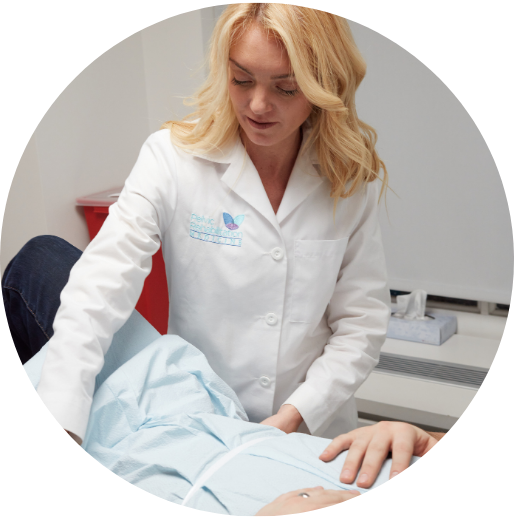
Dr. Sonia Koshy is a minimally invasive gynecologic surgeon dedicated to caring for patients with endometriosis, pelvic pain, and complex gynecologic conditions. She is operating at Methodist Main Hospital and St. Lukes Baptist in San Antonio, Texas. Her approach begins with listening, taking time to understand each patient’s symptoms, goals, and experience before developing an individualized plan of care.

She uses detailed pain mapping exams and advanced imaging to guide treatment decisions and collaborates with other specialists when endometriosis involves multiple organ systems. When surgery is appropriate, she works closely with patients to develop a comprehensive plan that aligns with fertility goals and includes coordinated pre-operative, surgical, and post-operative care.

Fellowship-trained in minimally invasive gynecologic surgery, Dr. Koshy has extensive experience managing complex endometriosis and fibroid cases. She is committed to PRM’s mission to reduce the time patients suffer and incorporates the PRM Protocol™ to address inflammation, pelvic floor dysfunction, and long-term recovery.

Dr. Koshy prioritizes fertility preservation whenever possible and focuses on helping patients regain function, reduce pain, and move forward with confidence.


Get To Know Your Provider

EDUCATION & TRAINING

Minimally Invasive Gynecology Fellowship
Center for Gynecologic Oncology / Society of Laparoscopic and Robotic Surgeons — Miramar, FL

Obstetrics and Gynecology Residency, Chief Resident
University of Toledo — Toledo, OH

Obstetrics and Gynecology Residency
Community Health of South Florida — Miami, FL

Traditional Rotating Internship
Garden City Hospital — Garden City, MI

Doctor of Osteopathic Medicine
Alabama College of Osteopathic Medicine — Dothan, AL

Master of Science, Biological Sciences
University of Houston–Clear Lake — Houston, TX

Bachelor of Science, Biology (Minor: Religious Studies)
University of Houston — Houston, TX

EXPERIENCE

Minimally Invasive Gynecologic Surgeon, Virtuosa GYN and Methodist Northeast Hospital
OB Hospitalist, Obstetrics and Gynecology, Palmetto General Hospital

My approach to caring for endometriosis patients starts with listening to them and getting down to the root cause of their symptoms. From there, I use a pain-mapping exam and imaging to help guide a plan for surgery, if appropriate, and involve other specialties when disease affects other major organ systems. Together, we then build a plan based on their future fertility goals, with a comprehensive pre-operative, surgical, and post-operative approach to their care.

My background includes a Master’s degree in Biological Sciences, with a research-based focus that deepened my understanding of the relationship between anatomy, physiology, and the cellular changes underlying pelvic pain. That foundation shaped how I think about pelvic pain, disease spread, and surgical planes, and allows me to approach endometriosis excision with precision and respect for surrounding nerves, vessels, and pelvic structures. I focus on complete excision of disease while minimizing tissue trauma, using advanced minimally invasive and robotic techniques.

Equally important, I believe surgery is only one part of care. Optimal outcomes require a thoughtful, multidisciplinary plan that supports patients before and after surgery so they can heal fully and regain function. That’s why it’s crucial to walk through what each treatment modality is meant to target, and how advanced minimally invasive surgery can be used as one tool among several therapeutic interventions on a patient’s path to recovery.

My approach also emphasizes fertility-conscious surgical planning, allowing me to tailor endometriosis treatment to each patient’s goals of care. What’s best for eliminating pain — such as complete excision — isn’t always what’s best for preserving fertility, which is why understanding each patient’s individual experience, and working together to build the right plan, is central to how I practice. I offer full-spectrum excision surgery, with multidisciplinary collaboration when it’s needed.

As a MIGS surgeon, I have been able to see the pain and lifestyle effects that endometriosis
has had on many patients. I have seen firsthand how debilitating the disease can be, and also
how silent endometriosis can wreak havoc on the body. PRM’s mission of providing
comprehensive care for endometriosis, both surgically and with conservative measures, is an
exciting new avenue for me to be involved with. I look forward to being able to offer patients
more tools to help treat this disease.

This mission strongly aligns with my practice philosophy. Endometriosis should not be managed reactively or in isolation. By combining accurate diagnosis, advanced surgical expertise, and structured perioperative care, we can shorten the path from suffering to meaningful improvement. For patients, that time matters—physically, emotionally, and personally.

Society has unfortunately perpetuated the idea that women’s health should be dealt with quietly and alone and PRM’s mission is to instead shed spotlight on pelvic pain and give women a starting point from which to reclaim ownership of their lives.

Inflammation is a key part of endometriosis, in the formation of adhesions, infertility and the
dysfunction of multiple organ systems. This inflammation tends to cause significant downstream
effects, in regards to day-to-day function, pain, and sexuality. I am excited to incorporate the
PRM protocol for my patients, to further address these issues.

I was able to complete a 2 year surgical fellowship with a group of GYN-oncologists and MIGS
surgeons in South Florida. This gave me a lot of exposure to very difficult cases and provided
me with some unique skills to help tackle difficult endometriosis. Additionally, I have been here
in this community since 2024, helping to take care of patients, both medically and surgically.
Pelvic pain and endometriosis are topics that I feel very passionately about as I know many
women and families that have personally been affected. I have been involved in conferences,
presenting data on the use of minimally invasive techniques in the management of
endometriosis and large uterine fibroids. These are things that I will continue to do for my
patients, and more, as new data and techniques arise.

I have performed over 700 Gynecologic surgeries.

Fertility preservation begins with careful preoperative planning and clear alignment with the patient’s reproductive goals. When fertility is desired, I use tissue-sparing surgical techniques, meticulous dissection, hemostasis and advanced minimally invasive approaches to preserve ovarian reserve, uterine integrity, and tubal function whenever possible.

My background in precision surgery is particularly important in these cases, as it allows for accurate disease removal while protecting healthy reproductive structures. I also collaborate closely with fertility specialists when appropriate to ensure continuity of care before and after surgery.

I work closely with a reproductive endocrinologist to develop an optimized approach specific to each patient, with each surgery being tailored to the goals of the patient. It is possible to surgically excise endometriosis while preserving/optimizing reproductive capacity.

Regardless of when fertility sparing is the priority, I try to preserve normal anatomy as much as
possible. For endometrioma excision, I will almost always plan on doing a cyst excision over
removal of the ovary. I will routinely incorporate a chromotubation, where I check the patency of
the fallopian tubes during surgery, after taking down scar tissue and restoring anatomy.
Specifically, for fertility, I incorporate conservative techniques to help maintain fertility, while
providing as much excision as can safely be provided. This is something that we discuss and
come up with a plan for, according to symptoms, pain mapping, imaging, and future goals.

Over my nearly 5 years in practice, I have been drawn to advanced robotic and minimally invasive techniques because they allow for superior visualization and precision—critical elements in endometriosis excision. Over the years I have attended numerous advanced courses and workshops to provide my patients the best outcomes possible. My decision to join PRM reflects a desire to move away from fragmented care and instead provide focused, comprehensive surgical treatment for endometriosis patients who often have spent years seeking answers.

Most importantly, I value listening to patients and partnering with them in their care, with the goal of restoring function, reducing pain, and improving quality of life.

Video Abstracts:

The Use of the Uterine Artery for Bladder Flap Dissection
Video Presentation at the Society of Laparoscopic and Robotic Surgeons – September 2024

Robotic Assisted Laparoscopic Removal of Retained Suture Needle in an Obliterated Anterior
and Posterior Cul de Sac
Video Presentation at Society of Laparoscopic and Robotic Surgeons – October 2023

Poster Presentations:
Uterine Perforation after Radiofrequency Ablation of Leiomyomas
Poster Presentation at Society of Laparoscopic and Robotic Surgeons – October 2023

Vulvar Leiomyosarcoma masquerading as a Bartholin Gland Cyst
Poster Presentation at American College of Osteopathic Obstetricians and Gynecologists
Published in NAPGO – March 2023

Robotic Hysterectomies with Mini-Laparotomies for Enlarge Uteri
Poster Presentation at AAGL – December 2022

Your Gynecologic Surgeon

Meet Dr. Sonia Koshy

Prior to joining PRM’s Center of Excellence, Sonia Koshy, DO completed advanced surgical fellowship training in Minimally Invasive Gynecologic Surgery in South Florida and earned her medical degree from Alabama College of Osteopathic Medicine.

Healthgrade User

She’s a fantastic doctor. She listened to and addressed all of my concerns, did not judge me, and made me feel like I was in good hands. I would recommend Dr. Koshy to EVERYONE.

Patient Testimonials

Explore patient testimonials to learn more about outstanding care at PRM.

Access to Care for Pelvic Pain Patients

We Provide In Network & Out of Network Options for Patients

At Pelvic Rehabilitation Medicine, we are on a mission to provide access to care to every patient. We believe the cost of comprehensive care should not be a burden for patients seeking diagnosis and treatment that ensures a full and complete, pain-free life. Learn more about our insurance coverage.

In the News & From Our Providers

FAQ's

Endometriosis excision surgery is an advanced minimally invasive procedure that involves carefully identifying and removing endometriosis lesions from affected areas while preserving healthy tissue. Unlike approaches that only treat visible disease on the surface, excision surgery focuses on removing endometriosis at its root to help reduce symptoms and improve quality of life. At PRM, fellowship-trained minimally invasive gynecologic surgeons use advanced laparoscopic techniques and comprehensive evaluation to develop individualized treatment plans based on each patient’s symptoms, goals, and disease severity.

Endometriosis surgery may be considered for patients whose symptoms are not adequately controlled with medications or hormonal treatments, whose pain significantly impacts daily life, or who are experiencing fertility challenges. Surgery may also be recommended when imaging or evaluation suggests deeper disease, such as endometriosis involving the bowel, bladder, or other pelvic structures. Common reasons to consider an endometriosis surgery consultation include persistent pelvic pain despite medical treatment, painful periods, painful intercourse, gastrointestinal or bladder symptoms, difficulty conceiving, or findings such as endometriomas or deep infiltrating endometriosis. During an evaluation at PRM, providers review your symptoms, medical history, imaging, and treatment goals to determine whether excision surgery is the right option for you and develop a personalized care plan.

During an endometriosis surgery consultation at PRM, patients can expect a comprehensive evaluation focused on understanding their symptoms, medical history, and treatment goals. The surgeon will review your experience with pelvic pain, painful periods, painful intercourse, bowel or bladder symptoms, previous diagnoses, and any prior treatments. The consultation may include a physical and pelvic exam to evaluate areas of tenderness, pelvic floor muscle dysfunction, scarring, or other findings that may contribute to symptoms. Additional imaging, such as specialized pelvic ultrasound or MRI, may be recommended to better understand the location and extent of endometriosis. Your surgeon will also discuss whether excision surgery is appropriate, explain the surgical approach, and review what to expect before, during, and after the procedure. PRM’s approach includes personalized pre- and post-operative care, which may involve pelvic rehabilitation, lifestyle strategies, and other treatments to support healing and long-term outcomes.

PRM’s endometriosis surgeons specialize in advanced laparoscopic excision surgery and care for patients through a fully integrated, multidisciplinary approach. Unlike a surgery only model, PRM combines surgical expertise with pelvic pain care to address the inflammation, nerve sensitivity, and pelvic floor dysfunction that can contribute to ongoing symptoms. PRM’s fellowship-trained Minimally Invasive Gynecologic Surgeons (MIGS) have specialized training in complex excision surgery and treat advanced endometriosis, including cases involving areas such as the bowel, bladder, and diaphragm. Their approach also includes comprehensive support before and after surgery, including pelvic rehabilitation through the PRM Protocol™ to help reduce pain, support healing, and improve long-term outcomes. PRM focuses on personalized, whole-body care designed to help patients achieve meaningful relief while reducing the need for repeated procedures. Providers also evaluate patients clinically based on symptoms, medical history, and physical examination, allowing treatment planning to begin without waiting for surgical confirmation.

Yes, endometriosis excision surgery can improve fertility for some patients by removing endometriosis lesions, treating scar tissue and adhesions, restoring normal pelvic anatomy, and reducing inflammation that may interfere with conception. The impact of surgery depends on factors such as the severity of endometriosis, age, ovarian reserve, and overall fertility health. For patients with mild to moderate endometriosis, removing visible disease may improve the chances of spontaneous pregnancy. In more advanced cases, surgery may help restore the relationship between the ovaries, fallopian tubes, and surrounding pelvic structures to support reproductive goals. At PRM, providers consider each patient’s fertility goals and individual circumstances when determining whether surgery is the right approach and how it fits into a broader fertility plan.

Recovery after endometriosis excision surgery varies depending on the extent of disease treated and each patient’s healing process. Many patients experience gradual improvement over the first several months rather than immediate relief. The first menstrual cycle after surgery (typically 4–8 weeks post-surgery) may be the most challenging, with some patients experiencing increased cramping, pelvic pain, or heavier bleeding as the body heals. By the second cycle, many patients begin noticing improvements, and within three to six months, patients often report reduced pain, improved energy, and better daily function. At PRM, recovery is supported through a comprehensive approach that combines surgical expertise with individualized follow-up care and additional treatments when needed to support long-term healing and quality of life.