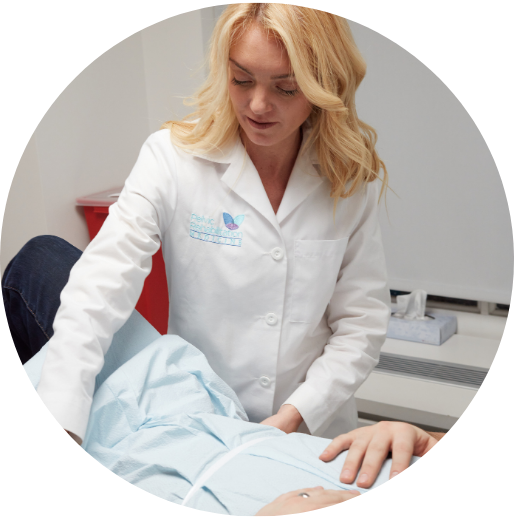
• Nashville, TN

Gynecologic Surgeon & Endometriosis Excision Specialist

Tarek Toubia, MD, MSCR, FACOG

Dr. Tarek Toubia will be joining PRM’s Nashville, TN Center of Excellence in May 2026. Stay tuned.

Dr. Tarek Toubia is a board-certified gynecologic surgeon specializing in minimally invasive surgery for endometriosis, fibroids, and complex pelvic conditions. He has performed over 500 complex surgeries, excising disease from areas including the ovaries, fallopian tubes, peritoneum, uterosacral ligaments, bowel, bladder, and pelvic sidewalls, while prioritizing fertility preservation whenever possible.

His approach centers on listening, validating each patient’s experience, and developing individualized care plans. He combines advanced surgical expertise with a multidisciplinary team that includes pelvic floor therapists, fertility specialists, and colorectal and urology colleagues to provide comprehensive care. Pre- and post-habilitation are key components of his practice, helping reduce pelvic floor tension, inflammation, and pain to support recovery and long-term outcomes.

Dr. Toubia completed fellowship training in minimally invasive gynecologic surgery with a focus on pelvic pain and endometriosis at the University of North Carolina. He has served in leadership roles including President of Medical Staff and Department Chair at Jennie Stuart Health, and has contributed to hospital boards and quality and patient safety committees. He is also a peer reviewer for the Journal of Minimally Invasive Gynecologic Surgery and serves as faculty at the AAGL Global Congress.

He is committed to reducing the time patients suffer from pelvic pain through timely diagnosis, evidence-based treatment, and minimally invasive surgical care. His mission at PRM is to combine compassionate communication with surgical precision to help patients regain control of their health and quality of life.

Get To Know Your Provider

Education & Training

MD, Saint Joseph University, School of Medicine | Beirut, Lebanon

Internship, General Surgery, Hotel-Dieu de France Hospital | Beirut, Lebanon

Residency, Obstetrics & Gynecology, Henry Ford Hospital / Wayne State University | Detroit, MI

Fellowship, Minimally Invasive Gynecologic Surgery & Pelvic Pain, University of North Carolina | Chapel Hill, NC

MSCR, Clinical Research, University of North Carolina Gillings School of Public Health | Chapel Hill, NC

Professional Experience

Obstetrics & Gynecology Staff Physician, Jennie Stuart Health | Hopkinsville, KY

Department Chair, Women’s Maternal & Child Health, Jennie Stuart Health | Hopkinsville, KY

President of Medical Staff, Jennie Stuart Health | Hopkinsville, KY

Adjunct Faculty, Lincoln Memorial University Debusk College of Osteopathic Medicine | Harrogate, TN

Adjunct Faculty Instructor, Vanderbilt University School of Nursing | Nashville, TN

Clinical Instructor, University of North Carolina School of Medicine | Chapel Hill, NC

My approach to caring for patients with endometriosis is centered on listening deeply, validating their experiences, and developing an individualized plan that addresses both symptom relief and long‑term goals. I believe optimal endometriosis care combines expert diagnosis, compassionate communication, and precise surgical treatment when needed.
Every patient’s journey with endometriosis is unique and thus treatment plans are tailored to the individual patient—whether the primary goal is pain relief, preserving or enhancing fertility, or providing a more definitive treatment. When surgery is the most appropriate treatment for the patient, using a minimally invasive and fertility‑preserving technique when required, I aim to excise disease thoroughly while minimizing tissue trauma and recovery time. I also incorporate non‑surgical strategies when they better align with the patient’s needs and preferences.
Endometriosis affects far more than the pelvis, so effective care often requires a collaborative team approach. I collaborate closely with pelvic floor physical therapists, urology and colorectal colleagues and fertility experts to create a comprehensive plan that treats the whole person—not just the disease. My goal is to help each patient regain control of their health, reduce pain, and return to the activities and relationships that matter most.

My background includes a Master’s degree in Anatomy, which shaped how I think about pelvic pain, disease spread, and surgical planes. That foundation allows me to approach endometriosis excision with precision and respect for surrounding nerves, vessels, and pelvic structures. When surgery is indicated, I focus on complete excision of disease while minimizing tissue trauma, using advanced minimally invasive and robotic techniques.

Equally important, I believe surgery is only one part of care. Optimal outcomes require a thoughtful, multidisciplinary plan that supports patients before and after surgery so they can heal fully and regain function.

Because of this, it’s crucial to take the time to walk through what each treatment modality will be expected to target, and how I can most effectively use advanced minimally invasive surgery as a tool, alongside other therapeutic interventions, to further them on their path to recovery.

I also received focused training in reproductive surgery and fertility optimization to allow for a tailored approach in determining how best to treat endometriosis within a patient’s goals of care. What may be best for eradication of pain (complete excision/extirpative surgery), may not be best for fertility preservation. So again, the importance lies within understanding my patient’s experience and how we can work as a team to formulate the best care plan. I offer full spectrum excisional procedures with multidisciplinary involvement when indicated.

Decreasing the time patients suffer with pelvic pain means refusing to accept long delays, dismissal, or “normalization” of their symptoms as inevitable. It is a commitment to early recognition, timely diagnosis, and evidence‑based treatment so patients are not left cycling through years of uncertainty and trial‑and‑error care.
It also means creating a space where patients are believed, heard, and taken seriously from the first visit, with clear next steps rather than vague reassurance. By combining thorough evaluation and adequate care including advanced minimally invasive surgery when appropriate, the goal is to shorten the journey from “something is wrong” to “I finally have a plan and relief is in sight.”

The mechanisms underlying pelvic pain in endometriosis are complex and multifactorial. Pain is not only driven by endometriosis lesions but sometimes by dysfunction in pelvic floor muscles and nerves. Years of nociceptive input from endometriosis can lead to chronic pelvic floor hypertonicity, myofascial trigger points, and central sensitization, all of which are independently associated with worse pain and outcomes after surgery if left untreated.
Pre- and post-habilitation are important because they calm an already inflamed, guarded pelvic floor so the body is better prepared to tolerate surgery and recover from it. Pelvic floor interventions before excision surgery aim to relax hypertonic muscles so that patients enter surgery in a lower‑inflammation, lower‑tension state which could improve how patients experience and recover from excision surgery. Continuing the pelvic floor interventions after surgery would address any residual pelvic floor spasms or neuropathic pain and result in a more durable pain relief and better long‑term function.

I completed fellowship training in minimally invasive gynecologic surgery with a dedicated focus on pelvic pain and endometriosis, working closely with leaders in the field at the University of North Carolina. For many years, I practiced in a community hospital where I was the only surgeon performing complex robotic gynecologic surgeries. Being the only surgeon performing complex minimally invasive surgeries in my community—without a more senior surgeon to defer to in challenging cases—meant that I personally managed the full spectrum of difficult situations. Over time, this high level of responsibility deepened my technical skills, strengthened my intraoperative decision‑making, and built a strong, steady confidence in safely treating advanced disease through minimally invasive surgery. Few years ago, I founded and led a dedicated fibroid and endometriosis clinic in a community setting, bringing specialty‑level care to patients who previously had to travel long distances for advanced treatment. This specialized clinic grew quickly and was able to serve patients traveling more than three hours for consultations and surgeries.

Throughout the years, I have held multiple leadership roles including department chair and president of the medical staff, and I was a member of the Hospital Board of Trustees for 2 years, reflecting a track record of clinical leadership and commitment to quality and safety.

In 2021, I was honored to receive the Pennyrile’s Best award after being voted Silver Best Doctor in the Pennyrile region, reflecting the trust of my community.

I have performed over 500 complex gynecologic surgeries

I preserve fertility by tailoring the surgery to a patient’s reproductive goals and protecting as much healthy reproductive tissue as possible. Fertility sparing surgery focuses on conservative excision of endometriosis, removing all disease around the reproductive organs and restoring normal anatomy all while using gentle techniques around the ovaries to minimize loss of healthy ovarian tissue.

I have been an active member of the American Association of Gynecologic Laparoscopists (AAGL) since 2010 and have served as faculty and session moderator at some of its Global Congress. I have also been a member of the Abstract and Video Review Committee since 2016, helping to evaluate new research and surgical techniques in minimally invasive gynecology.
I am a peer reviewer for the Journal of Minimally Invasive Gynecology (JMIG).
In 2021, I received the Focused Practice Designation in Minimally Invasive Gynecologic Surgery by the American Board of Obstetrics and Gynecology.
I held adjunct faculty appointments at the Vanderbilt University school of Nursing and at the Lincoln Memorial University College of osteopathic medicine.

Your Gynecologic Surgeon

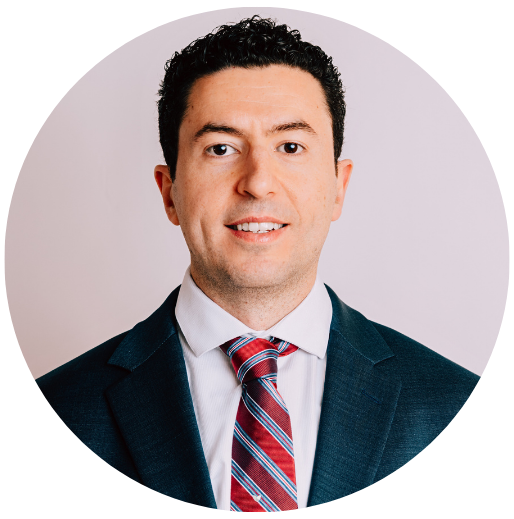
Meet Dr. Toubia

Prior to joining PRM’s Center of Excellence, Tarek Toubia, MD, MSCR, FACOG completed his residency in Obstetrics and Gynecology at Henry Ford Hospital / Wayne State University and earned his medical degree from Saint Joseph University, School of Medicine in Beirut, Lebanon.
Sarah

Dr. Toubia is literally the best doctor I’ve had my entire life. I just successfully gave birth to my 6th child because he made sure to address all of my concerns as well as my husband’s. My past birthing history and health problems made me very scared but he took charge and made sure that I was taken care of every step of the way during my ob appointments all the way to my induction and giving birth. He really is an amazing doctor who truly cares about every one of his patients. I’m so very thankful to him and his staff of nurses for helping me and my family through this pregnancy and birth!!

Sarah

Dr. Toubia performed my hysterectomy and I truly don’t have the words to express how grateful I am. From our very first appointment I knew I was in the best possible hands, he’s not just knowledgeable he’s masterful. He’s reassuring and genuinely caring, he doesn’t rush, he doesn’t dismiss and every time I’ve been in his office I have felt safe, seen, and respected. My surgery went smoothly, my pain was minimal, and my recovery has been better than I had imagined it to be. That’s not luck, it’s skill, precision, and deep experience. Dr. Toubia is the best in the game and I will be forever thankful for what he has done for me.

Donna

Dr. Toubia is amazing. He listened to me after years of fear going back to an ongyn. He heard my concerns, addressed the problem quickly. Im truly grateful for him and his staff

Patient Testimonials

Explore patient testimonials to learn more about outstanding care at PRM.

Access to Care for Pelvic Pain Patients

We Provide In Network & Out of Network Options for Patients

At Pelvic Rehabilitation Medicine, we are on a mission to provide access to care to every patient. We believe the cost of comprehensive care should not be a burden for patients seeking diagnosis and treatment that ensures a full and complete, pain-free life. Learn more about our insurance coverage.

FAQ's

FAQ's

Endometriosis excision surgery is an advanced minimally invasive procedure that involves carefully identifying and removing endometriosis lesions from affected areas while preserving healthy tissue. Unlike approaches that only treat visible disease on the surface, excision surgery focuses on removing endometriosis at its root to help reduce symptoms and improve quality of life. At PRM, fellowship-trained minimally invasive gynecologic surgeons use advanced laparoscopic techniques and comprehensive evaluation to develop individualized treatment plans based on each patient’s symptoms, goals, and disease severity.

Endometriosis surgery may be considered for patients whose symptoms are not adequately controlled with medications or hormonal treatments, whose pain significantly impacts daily life, or who are experiencing fertility challenges. Surgery may also be recommended when imaging or evaluation suggests deeper disease, such as endometriosis involving the bowel, bladder, or other pelvic structures. Common reasons to consider an endometriosis surgery consultation include persistent pelvic pain despite medical treatment, painful periods, painful intercourse, gastrointestinal or bladder symptoms, difficulty conceiving, or findings such as endometriomas or deep infiltrating endometriosis. During an evaluation at PRM, providers review your symptoms, medical history, imaging, and treatment goals to determine whether excision surgery is the right option for you and develop a personalized care plan.

During an endometriosis surgery consultation at PRM, patients can expect a comprehensive evaluation focused on understanding their symptoms, medical history, and treatment goals. The surgeon will review your experience with pelvic pain, painful periods, painful intercourse, bowel or bladder symptoms, previous diagnoses, and any prior treatments. The consultation may include a physical and pelvic exam to evaluate areas of tenderness, pelvic floor muscle dysfunction, scarring, or other findings that may contribute to symptoms. Additional imaging, such as specialized pelvic ultrasound or MRI, may be recommended to better understand the location and extent of endometriosis. Your surgeon will also discuss whether excision surgery is appropriate, explain the surgical approach, and review what to expect before, during, and after the procedure. PRM’s approach includes personalized pre- and post-operative care, which may involve pelvic rehabilitation, lifestyle strategies, and other treatments to support healing and long-term outcomes.

PRM’s endometriosis surgeons specialize in advanced laparoscopic excision surgery and care for patients through a fully integrated, multidisciplinary approach. Unlike a surgery only model, PRM combines surgical expertise with pelvic pain care to address the inflammation, nerve sensitivity, and pelvic floor dysfunction that can contribute to ongoing symptoms. PRM’s fellowship-trained Minimally Invasive Gynecologic Surgeons (MIGS) have specialized training in complex excision surgery and treat advanced endometriosis, including cases involving areas such as the bowel, bladder, and diaphragm. Their approach also includes comprehensive support before and after surgery, including pelvic rehabilitation through the PRM Protocol™ to help reduce pain, support healing, and improve long-term outcomes. PRM focuses on personalized, whole-body care designed to help patients achieve meaningful relief while reducing the need for repeated procedures. Providers also evaluate patients clinically based on symptoms, medical history, and physical examination, allowing treatment planning to begin without waiting for surgical confirmation.

Yes, endometriosis excision surgery can improve fertility for some patients by removing endometriosis lesions, treating scar tissue and adhesions, restoring normal pelvic anatomy, and reducing inflammation that may interfere with conception. The impact of surgery depends on factors such as the severity of endometriosis, age, ovarian reserve, and overall fertility health. For patients with mild to moderate endometriosis, removing visible disease may improve the chances of spontaneous pregnancy. In more advanced cases, surgery may help restore the relationship between the ovaries, fallopian tubes, and surrounding pelvic structures to support reproductive goals. At PRM, providers consider each patient’s fertility goals and individual circumstances when determining whether surgery is the right approach and how it fits into a broader fertility plan.

Recovery after endometriosis excision surgery varies depending on the extent of disease treated and each patient’s healing process. Many patients experience gradual improvement over the first several months rather than immediate relief. The first menstrual cycle after surgery (typically 4–8 weeks post-surgery) may be the most challenging, with some patients experiencing increased cramping, pelvic pain, or heavier bleeding as the body heals. By the second cycle, many patients begin noticing improvements, and within three to six months, patients often report reduced pain, improved energy, and better daily function. At PRM, recovery is supported through a comprehensive approach that combines surgical expertise with individualized follow-up care and additional treatments when needed to support long-term healing and quality of life.