Endometriosis is a complex, chronic condition where tissue similar to the uterine lining grows outside the uterus, often on pelvic organs like the ovaries, bladder, and intestines, well as through the rest of the body.
While the exact cause of endometriosis is still unknown, mounting evidence points to inflammation as a central driver of both symptom severity and lesion growth for those with endometriosis. Understanding this inflammatory process is key to managing the disease and improving patient outcomes.
The Inflammatory Cycle of Endometriosis
Endometriosis is not just a hormonal disorder—it is fundamentally an inflammatory disease. Each menstrual cycle triggers inflammation, followed by healing and scarring.
Over time, this repetitive cycle leads to chronic inflammation in the pelvic region. This inflammation causes the pelvic floor muscles to enter a state of chronic guarding, squeezing the nerves and resulting in persistent pelvic pain.
As the condition progresses, the pelvic floor becomes increasingly spastic and inflamed, exacerbating symptoms which can include:
- Severe period pain (often worse than typical cramps)
- Heavy menstrual bleeding
- Painful intercourse
- Chronic pelvic pain
- Bowel and urinary symptoms (such as constipation, bloating, or painful urination)
How Inflammation Promotes Lesion Growth
Inflammation creates an environment conducive to the growth and persistence of endometriosis lesions. Endometrial plaques release a form of “inflammatory soup” into the pelvis, contributing to inflammation around the pelvic nerves.
This inflammatory environment supports the adhesion, invasion, and angiogenesis (formation of new blood vessels) necessary for lesion development and maintenance.
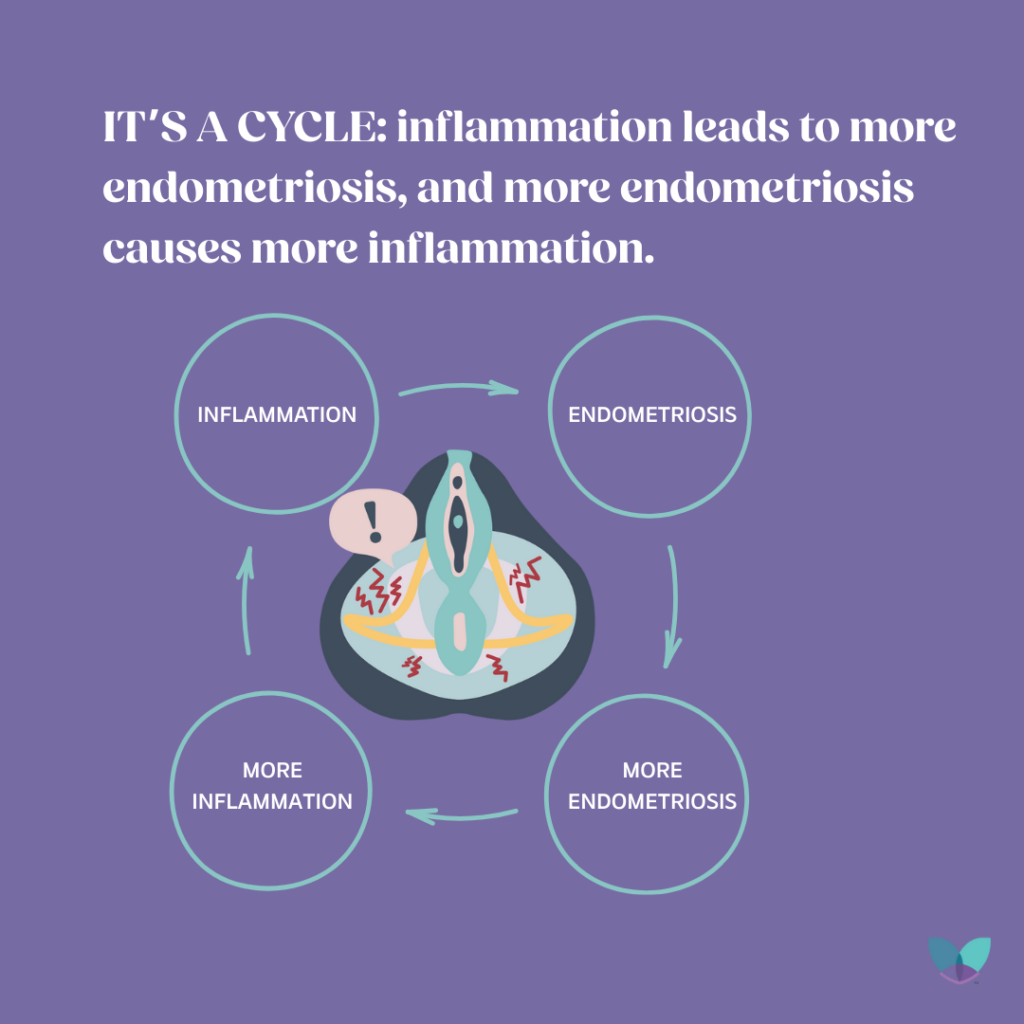
Inflammation creates an environment conducive to the growth and persistence of endometriosis lesions. Endometrial plaques release a form of “inflammatory soup” into the pelvis, contributing to inflammation around the pelvic nerves.
This inflammatory environment supports the adhesion, invasion, and angiogenesis (formation of new blood vessels) necessary for lesion development and maintenance.
The Role of Neurogenic Inflammation
Chronic inflammation in endometriosis also affects the nervous system. The pelvic floor muscles, under constant stress from inflammation, become spastic and inflamed, leading to a state known as neurogenic inflammation.
This condition sensitizes the nerves in the pelvic floor, lowering the pain threshold and causing heightened pain responses. Addressing this neurogenic inflammation is crucial for managing pain and preventing further lesion growth.
Strategies to Disrupt the Inflammatory Cycle of Endometriosis
Managing inflammation is essential to slowing the progression of endometriosis and alleviating symptoms. At PRM, we employ a comprehensive approach to address this cycle:
- Pre-Habilitation: Before excision surgery, patients undergo the PRM Protocol™, targeting neurogenic inflammation within the pelvic floor.
- Excision Surgery: Surgical removal of endometriosis lesions is performed by expert excision specialists.
- Post-Habilitation: After surgery, continued treatment focuses on reducing residual inflammation and addressing pelvic floor dysfunction.
Our unique and integrated approach to treating endometriosis aims to reverse the neurogenic inflammatory process, decreasing the likelihood of lesion recurrence and improving patient quality of life.
Stop the Inflammatory Cycle
Inflammation is both a symptom and a driver of endometriosis. By understanding and targeting the inflammatory processes at play, patients and healthcare providers can work together to manage the disease more effectively.
Comprehensive treatment strategies that address both the lesions and the underlying inflammation offer the best hope for reducing pain and preventing recurrence.
Schedule Your Endometriosis Consultation
References:
Treatment for Endometriosis Pain,
Endometriosis and possible inflammation markers – ScienceDirect.com