Endometriosis Wellness: What Actually Helps, According to a DNP, FNP-BC

PRM's Jennifer Ezavin, DNP, FNP-BC talks through what actually helps with endometriosis wellness, moderation over restrictive diets, capping high-intensity workouts to once a week, why stress physically clenches your pelvic floor (and a simple breathing fix for it), realistic sleep/hydration habits, and bladder training. Bottom line: none of it replaces medical care, and the goal is noticing what your body responds to, not doing everything perfectly.
Is your "anti-inflammatory diet" actually helping, or just one more rule making you feel worse? In this replay of PRM's TikTok Live, Theresa Porcaro (VP of Growth at PRM, and an endometriosis patient herself) sits down with Jennifer Ezavin, DNP, FNP-BC, PRM's National Director of Training & Quality, for an honest, no-judgment conversation about what wellness actually looks like when you're living with endometriosis or chronic pelvic pain. In this conversation: Why "anti-inflammatory diet" advice online often misses the point, and what matters more than the rules The real connection between stress, your nervous system, and pelvic floor flares Why HIIT and CrossFit aren't always doing your body favors, and what to do instead How to tell normal exercise soreness apart from a sign to stop The truth about sleep, hydration, and bladder training Five realistic habits to experiment with, not another list of things you're doing wrong If managing your health has started to feel like a second full-time job, this conversation is for you. This video is for general education and isn't a substitute for personalized medical advice. Always check with your own provider about what's right for you.
If you’ve ever felt like managing your health has become a second full-time job, you’re not imagining it. Between anti-inflammatory diet advice, supplement stacks, and workout routines that all promise relief, wellness culture can start to feel like just one more thing endometriosis and chronic pelvic pain patients are expected to get right, perfectly, all the time.
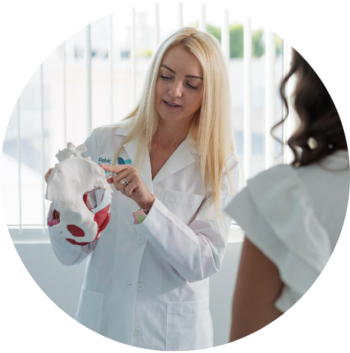
On a recent PRM TikTok Live, Theresa Porcaro (VP of Growth at PRM, and an endometriosis patient herself) sat down with Jennifer Ezavin, DNP, FNP-BC, PRM’s National Director of Training & Quality, to talk through what wellness actually means for this patient population, and what’s just internet noise.
Here are the highlights.
The first thing Jennifer pushes back on is treating pelvic pain as an isolated problem. At PRM, patients are evaluated as whole people, stress levels, sleep, diet, and movement patterns are all considered alongside the pain itself, because they’re often driving it.
That whole-person lens is also why there’s no universal fix. What calms one patient’s flare might do nothing for another’s, which is part of why generic wellness advice online so often falls flat.
Anti-inflammatory eating has real value, but Jennifer is candid that the phrase gets thrown around without much nuance. Telling a patient to “just cut gluten” or “cut caffeine” without offering a realistic substitute, or acknowledging that hormonal conditions like endometriosis and PCOS directly affect cravings, sets people up to fail.
Her actual guidance: moderation over elimination. If a slice of pizza doesn’t trigger you, have a slice. If dairy is fine in small amounts, don’t cut it entirely on principle. The goal isn’t a perfect diet — it’s noticing what your own body responds to, without turning every meal into a stress test.
This might be the most counterintuitive point in the conversation: daily high-intensity training (think CrossFit or HIIT every day) can actually work against patients with inflammatory conditions like endometriosis. Intense exercise spikes cortisol, which can feed the same systemic inflammation patients are trying to manage.
Jennifer’s rule of thumb: high intensity once a week is fine for most patients; low-impact movement, walking, especially on an incline, or gentle strength work — most days is often the better long-term choice.
Pilates gets a specific mention too. It’s a great option, but certain movements put real pressure on the pelvic floor, and patients recovering from surgery in particular may need to modify or scale back until they’ve rebuilt that strength.
How to tell soreness from a warning sign: if something starts spasming, pulling, or feels off during a workout, stop, don’t push through it and tell yourself you’re overthinking it. Rest is not the opposite of progress; it’s part of it.
Here’s the part patients are often surprised by: stress isn’t a vague, “it’s all in your head” explanation for pelvic pain — it’s physiological. Jennifer describes it simply: when you’re startled, you clench. Now imagine that response running on a low simmer all day, every day, because your nervous system is stuck in fight-or-flight. The pelvic floor clenches along with it, and eventually stops releasing properly.
That’s also why stress can worsen urinary frequency, flares, and general pelvic tension, it’s not a coincidence, it’s the nervous system staying switched on.
One practical tool Jennifer teaches: breathe like you’re unzipping a sweater, expand through the ribcage and abdomen on the inhale, then “re-zip” as you exhale. It sounds unusual, but it’s a simple way to interrupt the shallow, chest-only breathing most people default to under stress.
The “eight hours a night, no exceptions” advice doesn’t reflect most people’s actual lives. Jennifer’s take is more practical: sleep hygiene matters, but so does meeting yourself where you are. During sleep, the brain clears out metabolic waste through the glymphatic system, which is part of why poor sleep makes everything, including pain, feel worse.
A few realistic tools discussed:
On electrolyte drinks: fine in moderation, but not something to rely on multiple times a day, since overdoing certain electrolytes can cause its own side effects.
Rather than a list of rules, Jennifer’s closing advice was framed as things to try and adjust based on how your body responds:
None of this replaces medical care. If symptoms are persistent or worsening, that’s a sign to see a provider, not a sign you didn’t try hard enough at wellness. As Jennifer put it, don’t wait for symptoms to get worse before reaching out.
And maybe the most important takeaway from the whole conversation: be kind to yourself. It’s your journey, and it’s okay for it to look different from anyone else’s.
Ready to talk to someone about your own symptoms? Request an appointment with the PRM team or learn more about the PRM Protocol™. Jennifer sees patients at PRM’s Miami Center of Excellence.
It’s physiological, not “in your head.” Chronic stress keeps your central nervous system in fight-or-flight mode, which causes the pelvic floor to stay clenched instead of relaxing normally. Over time, that ongoing tension can contribute to flares, urinary frequency, and increased pain.
Not inherently — but doing it every day can work against you. Intense exercise raises cortisol, which can add to the systemic inflammation many endometriosis patients are already managing. Capping high-intensity workouts around once a week, with lower-impact movement on other days, tends to work better for most patients.
Normal muscle fatigue feels different from spasming, sharp pulling, or a sudden change mid-workout. If something feels off, stop and rest rather than pushing through it — that’s not overreacting, it’s listening to your body.
Bladder training means using the bathroom proactively instead of waiting for the urge to build. Over time, this can help retrain the bladder and reduce nighttime wake-ups to urinate.
There’s real value in it, but strict elimination diets aren’t necessary for everyone. A more sustainable approach is moderation — noticing which foods affect your symptoms and adjusting portions or frequency, rather than cutting entire food groups without a plan.
No. These are general wellness habits, not personalized medical advice. If symptoms are persistent, worsening, or interfering with daily life, that’s a sign to talk to a provider who can evaluate your specific situation.