Adenomyosis is one of the most underdiagnosed and misunderstood causes of pelvic pain—but at PRM, we know what to look for, how to diagnose it, and how to treat it without immediately resorting to surgery. If you’ve been struggling with symptoms like painful periods, heavy bleeding, or persistent pelvic pain, even after endometriosis excision surgery, you may be experiencing adenomyosis.
Understanding Adenomyosis: A Clinical Diagnosis First
Unlike conditions that show up clearly on imaging, adenomyosis can be tricky to identify. While transvaginal ultrasound and MRI can support the diagnosis, they aren’t always conclusive, especially in early or subtle cases. At PRM, we know that we cannot rely on imaging alone, especially in cases of endometriosis and adenomyosis. Our pelvic pain specialists know how to diagnose adenomyosis based on your history, symptoms, and physical exam.
We often see patients who have:
- Heavy, painful periods that have worsened over time, despite no fibroids showing up on scans
- Chronic pelvic pressure or bloating
- Pain with intercourse
- Persistent pelvic pain even after expert endometriosis excision surgery—this can be a sign that adenomyosis was overlooked.
- Difficulty conceiving or a history of miscarriage
These symptoms matter and should not be dismissed as a normal part of your period. If you are wondering if you are experiencing adenomyosis, take the adenomyosis symptom quiz now.
You Don’t Need Surgery to Be Taken Seriously
While the only way to definitively confirm adenomyosis is through pathology after a hysterectomy, that doesn’t mean you have to wait for surgery to be believed or treated. Our approach is centered on validating your pain now and helping you feel better, sooner.
At PRM, we recognize that adenomyosis is often misdiagnosed or attributed to other conditions. That’s why our pelvic pain specialists look for patterns and signs that others may miss. Whether or not your imaging confirms adenomyosis, if your symptoms and exam suggest it, we will start treatment.
Non-Surgical Treatment Options for Adenomyosis at PRM
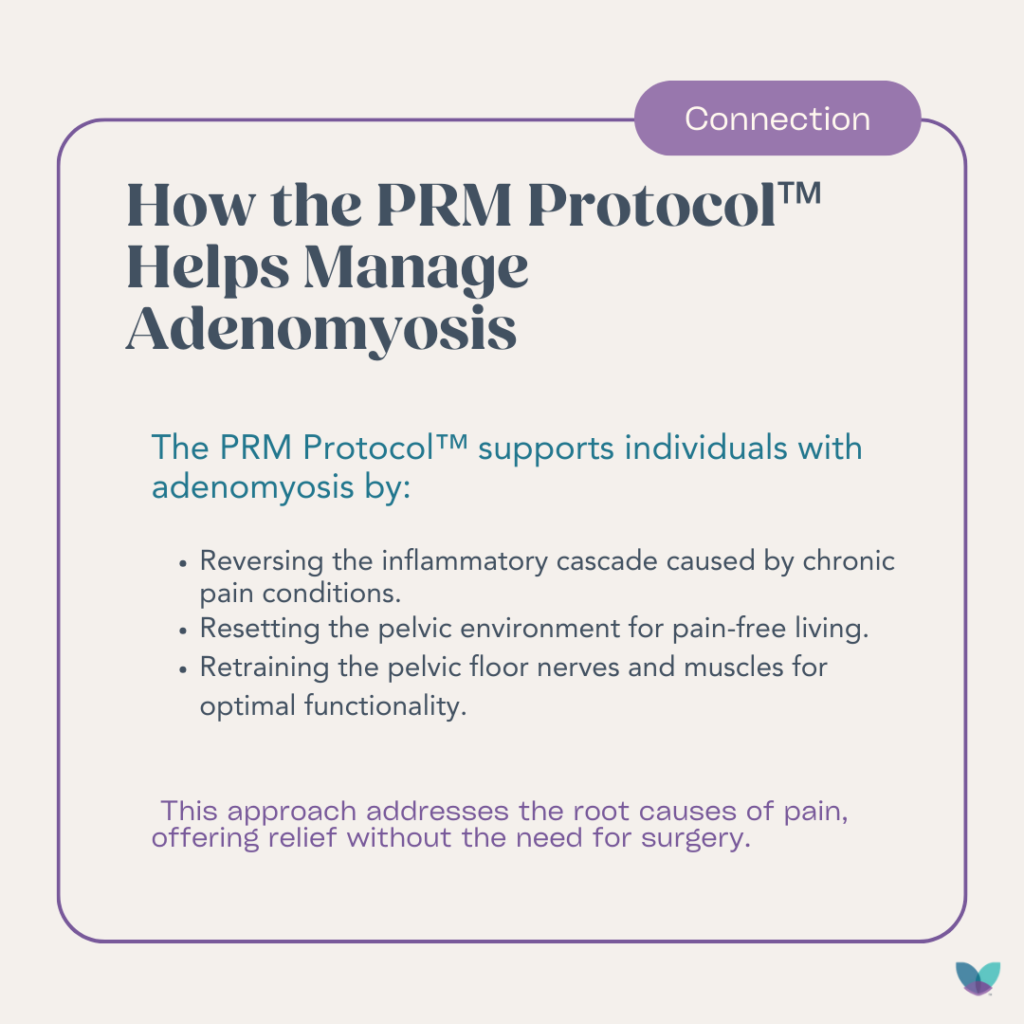
For patients who wish to preserve fertility or simply want to avoid surgery, we offer a comprehensive set of non-operative treatment options through the PRM Protocol™. Our individualized care plans are designed to reduce inflammation, manage symptoms, and improve quality of life—without compromising reproductive goals.
Here’s how we do it:
PRM’s Patented Treatment Protocol™
Our evidence-based, non-surgical treatment, the PRM Protocol™, is a non-invasive option for reducing pain and inflammation caused by adenomyosis. It helps calm inflammation at its source and is performed in a quiet and calm office setting with one of our pelvic pain specialists
Hormonal Therapies
Depending on your needs and fertility goals, we may recommend:
- Hormonal IUDs to reduce bleeding and pain
- Oral progestins for cycle regulation and symptom control
- Injection therapies that can help modulate hormone levels and reduce inflammation
All of these are part of our commitment to personalized, fertility-conscious care.
When Surgery Is an Option
If symptoms are severe and a patient isn’t planning future pregnancies, we may explore surgical options, including hysterectomy. But this is always a shared decision-making process, guided by your goals, values, and overall well-being—not rushed or taken lightly.
Adenomyosis Care That Meets You Where You Are
At PRM, we believe you don’t need to “prove” your pain through surgery or wait for a definitive diagnosis to start feeling better. Our providers are trained to catch what others may overlook, and our non-operative treatments—including our PRM Protocol™—are here to bring relief now.

If you’ve been told “everything looks normal,” but you’re still in pain—let’s take a deeper look together. You deserve answers. You deserve relief. And you deserve care that sees the full picture. Learn more about how PRM helps patients with adenomyosis reclaim their quality of life through non-invasive treatment and without surgery.