Pelvic Nerve Pain: Symptoms, Causes, and Treatment Options for Chronic Pelvic Nerve Pain

Pelvic nerve pain occurs when nerves in or around the pelvis become irritated, inflamed, compressed, or entrapped. Symptoms often include burning, shooting, or stabbing pain, pain with sitting, bladder or bowel symptoms, and pain that radiates into the hips or legs. Understanding the underlying cause is the first step toward developing an individualized treatment plan.
Burning. Shooting. Stabbing. Tingling.
If these words describe your pelvic pain, you may be experiencing pelvic nerve pain.
Unlike muscle soreness or menstrual cramps, nerve pain often feels sharp, electric, or burning. It can make sitting unbearable, disrupt bladder and bowel function, interfere with intimacy, and impact nearly every aspect of daily life.
Unfortunately, pelvic nerve pain is also one of the most misunderstood forms of chronic pelvic pain. Many patients spend years searching for answers before learning that irritated or inflamed pelvic nerves may be contributing to their symptoms.
At PRM, we specialize in diagnosing and treating complex pelvic pain, including conditions involving the pelvic nerves.
Pelvic nerve pain develops when one or more nerves within the pelvis become irritated, inflamed, compressed, or entrapped.
The pelvis contains an intricate network of nerves responsible for communicating between the brain and the:
When these nerves aren’t functioning properly, pain can develop far beyond one specific location.
Instead of pain staying in one spot, it often radiates throughout the pelvis and lower body.
People commonly describe pelvic nerve pain as:
Unlike muscle pain, nerve pain may come and go, worsen with certain activities, or spread into nearby areas.
Some patients experience constant discomfort, while others notice symptoms that flare throughout the day or around their menstrual cycle.
Because pelvic nerves supply multiple organs and structures, symptoms can vary significantly from person to person.
Common symptoms include:
Many patients experience several of these symptoms simultaneously.
The pelvis contains several major nerves that serve different functions.
Some of the most important include:
The pudendal nerve supplies sensation to much of the pelvic floor and external genitalia.
Irritation of this nerve may contribute to:
The sacral nerves help control:
Inflammation involving these nerves can create symptoms throughout the pelvis and lower extremities.
The ilioinguinal nerve provides sensation to portions of the groin and lower abdomen.
Pain involving this nerve may present as:
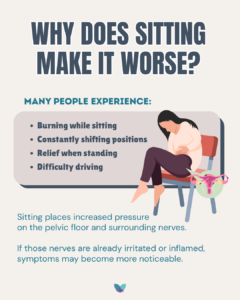
One of the hallmark symptoms of pelvic nerve pain is pain with sitting.
When sitting, increased pressure is placed on the pelvic floor and surrounding nerves.
If those nerves are already irritated or inflamed, sitting may increase compression and worsen symptoms.
Many patients describe:
Pelvic nerve pain is not a diagnosis itself, it is often the result of an underlying condition.
Potential causes include:
Often, more than one contributing factor is present.
Many people think of endometriosis as a disease affecting only the reproductive organs.
In reality, endometriosis is an inflammatory disease that can affect tissues throughout the pelvis.
Inflammation associated with endometriosis may contribute to irritation of nearby pelvic nerves, leading to symptoms such as:
This is one reason why endometriosis can mimic gastrointestinal, urologic, orthopedic, or neurologic conditions.
For many patients, nerve pain is one piece of a much larger clinical picture.
Yes.
Although endometriosis affects women, pelvic nerve pain affects both men and women.
Men may experience:
Pelvic nerve irritation is not exclusive to one sex and should be evaluated appropriately regardless of gender.
Many patients with pelvic nerve pain receive multiple diagnoses before finding the underlying cause.
Because symptoms overlap with other conditions, patients are often evaluated for:
While these conditions may sometimes coexist, persistent pelvic pain deserves a comprehensive evaluation that considers the muscles, nerves, connective tissues, and surrounding organs.
You should consider seeing a pelvic pain specialist if you experience:
The sooner contributing factors are identified, the sooner an individualized treatment plan can begin.
Treatment depends on the underlying cause.
After a comprehensive evaluation, treatment may include:
At PRM, patients may be candidates for the PRM Protocol™, a proprietary office-based procedure designed to directly treat inflamed pelvic nerves and spastic pelvic floor muscles as part of a comprehensive pelvic pain treatment plan.
Every patient’s treatment plan is individualized based on their diagnosis, symptoms, and contributing conditions.
Pelvic nerve pain is complex, but finding answers shouldn’t be.
Pelvic Rehabilitation Medicine specializes exclusively in chronic pelvic pain, combining expertise in pelvic nerves, pelvic floor dysfunction, and associated conditions to create individualized treatment plans.
Our multidisciplinary approach evaluates:
By identifying the factors contributing to pain, not simply masking symptoms, we help patients better understand their condition and explore treatment options tailored to their needs.
Whether you’ve been experiencing burning pelvic pain, pain with sitting, bladder symptoms, or radiating nerve pain for months, or even years, you deserve a thorough evaluation.
Understanding the role your pelvic nerves may be playing is an important first step toward identifying the underlying cause of your symptoms and exploring appropriate treatment options.
Request a consultation with Pelvic Rehabilitation Medicine to learn whether pelvic nerve pain may be contributing to your chronic pelvic pain.
Pelvic nerve pain is commonly described as burning, shooting, stabbing, tingling, numbness, or electric shock-like pain. Symptoms may occur in the pelvis, bladder, bowel, genitals, hips, tailbone, groin, or legs and may worsen with sitting or certain activities.
Pelvic nerve pain can develop when pelvic nerves become irritated, inflamed, compressed, or entrapped. Common contributing factors include endometriosis, pelvic floor dysfunction, chronic inflammation, surgical scarring, childbirth injuries, trauma, and connective tissue disorders.
Yes. Endometriosis-related inflammation can affect tissues surrounding the pelvic nerves, contributing to symptoms such as burning pelvic pain, pain with sitting, hip pain, tailbone pain, bladder symptoms, bowel symptoms, and pain that radiates into the legs.
Yes. While some underlying conditions differ, pelvic nerve pain can occur in both men and women. Men may experience symptoms such as perineal pain, penile pain, bladder dysfunction, chronic pelvic pain syndrome (CPPS), and pain with sitting.
Treatment depends on the underlying cause of the pain. A comprehensive evaluation may lead to a treatment plan that includes pelvic floor rehabilitation, medical management, treatment of inflammatory conditions, lifestyle modifications, and multidisciplinary care. At PRM, some patients may be candidates for the PRM Protocol™, an office-based treatment designed to target irritated pelvic nerves and spastic pelvic floor muscles as part of an individualized care plan.