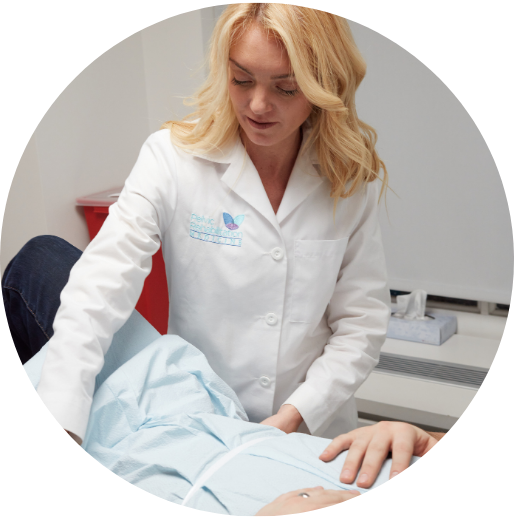
She is a Family Nurse Practitioner specializing in women’s health, hormonal care, and chronic pelvic pain. Her approach centers on listening, validating patient experiences, and providing evidence-based, individualized care.
Tiffany is passionate about supporting patients with endometriosis and pelvic pain, helping them feel believed, supported, and empowered. Aligned with PRM’s mission, she believes pelvic pain should be recognized and treated early rather than normalized or ignored. She advocates for collaborative, multidisciplinary care to improve symptoms and long-term outcomes.
She earned her MSN-FNP from Texas Woman’s University and her BSN from Wayland Baptist University, and brings extensive experience in women’s health, prenatal care, hormonal management, and complex gynecologic conditions.
Schedule your consultation with Tiffany in today!
They are an amazing and dedicated group of professionals. Whenever I come I feel taken care of and understood. My care here has been the best I’ve received in my dealing with the medical field. It’s been a journey and they were there every step of the way and I thank them so much for it.
I highly recommend them.
The doctors are so amazing. They listen when I felt nobody else has. All of their staff are so genuine & everyone cares about your health. They have many options for treatment. The shots have helped me be able to actually have my life back again
When there seemed to be no answers, this amazing office was able to offer a pathway for further options. Care, compassion and kindness are 3 things that have been difficult to find elesewhere
Explore patient testimonials to learn more about outstanding care at PRM.
Experience compassionate care and expertise in pelvic rehabilitation with Pelvic Rehabilitation Medicine. Schedule your appointment today and take the first step towards better pelvic health.
During a first appointment at PRM, patients can expect a comprehensive, compassionate evaluation focused on understanding their full health history, symptoms, and goals. Providers take time to listen carefully, review prior testing or treatments, and discuss factors that may be contributing to pelvic pain or related symptoms. A detailed physical examination is then performed to help identify areas of tenderness and assess the pelvic nerves, including branches of the pudendal nerve and other related nerve structures, depending on the patient’s symptoms. Based on these findings, the provider will confirm or clarify suspected causes of pain and discuss a personalized treatment plan. This may include conservative treatment options, additional evaluation, or coordination with other specialists when appropriate. Treatment duration is typically structured over four to six weeks, with similar overall outcomes between protocols. Patients are educated that nerve-related pain often improves gradually, and recovery is not always linear—some days may feel better than others. Over time, the goal is to see a steady increase in “good days” and overall symptom improvement. Before beginning care, patients will also review logistics such as cost and insurance coverage with a treatment plan coordinator, and in many cases, treatment can begin the same day as the initial evaluation.
Appointments at PRM can be scheduled by contacting the office directly by filling out a form on the PRM website or by phone. The care team can assist with provider selection, appointment availability, medical record requests, and questions about the new patient process.
PRM treats a wide range of pelvic health conditions, including endometriosis, chronic pelvic pain, pelvic floor dysfunction, painful periods, dyspareunia, bladder pain, gastrointestinal symptoms related to pelvic disorders, adenomyosis, fibroids, ovarian cysts, and other complex gynecologic conditions. Providers also help patients whose symptoms have gone undiagnosed or untreated.

PRM uses a patient-centered, multidisciplinary approach to chronic pelvic pain care. Providers evaluate the gynecologic, musculoskeletal, neurologic, gastrointestinal, urologic, hormonal, and pelvic floor factors that may contribute to symptoms. Treatment plans are individualized and may include medical management, our PRM Protocol™ treatment, surgical evaluation, lifestyle support, pain management strategies, and collaboration with additional specialists when needed.
Yes. PRM offers both surgical and non-surgical endometriosis treatment options based on each patient’s symptoms, diagnosis, and goals. Treatment recommendations may include our PRM Protocol approach, lifestyle modifications, minimally invasive surgery, or advanced excision surgery for conditions such as endometriosis. Providers work closely with patients to determine the most appropriate care plan for their individual needs.
PRM’s approach is centered on listening to patients, validating their experiences, and identifying the underlying causes of symptoms through comprehensive evaluation and evidence-based care. The practice emphasizes multidisciplinary collaboration, individualized treatment planning, patient education, and long-term support. PRM is committed to reducing delays in diagnosis and helping patients access coordinated care that focuses on meaningful improvement in quality of life. What further sets PRM apart is its deep specialization in pelvic pain and endometriosis. Unlike general practices that treat a wide range of conditions across the body, PRM’s experts focus specifically on complex pelvic pain disorders and endometriosis, allowing for a higher level of expertise and more targeted care. PRM also has one of the largest teams of endometriosis excision surgeons in the United States, which supports a more advanced, surgical, and comprehensive approach to treating endometriosis at its source.