with expert input from Dr. Majorie Maye Mamsaang, pelvic pain specialist in Miami, FL

What Is Levator Ani Syndrome?
Levator Ani Syndrome (LAS) is a condition caused by a spasm in the levator ani muscle, a key component of the pelvic floor. The levator ani is a group of muscles, including the pubococcygeus, puborectalis, and iliococcygeus, that form a hammock-like structure supporting vital pelvic organs such as the bladder, uterus, and rectum. These muscles attach to the front and back of the pelvis, encircling the rectum and perineum (the area between the genitals and anus).
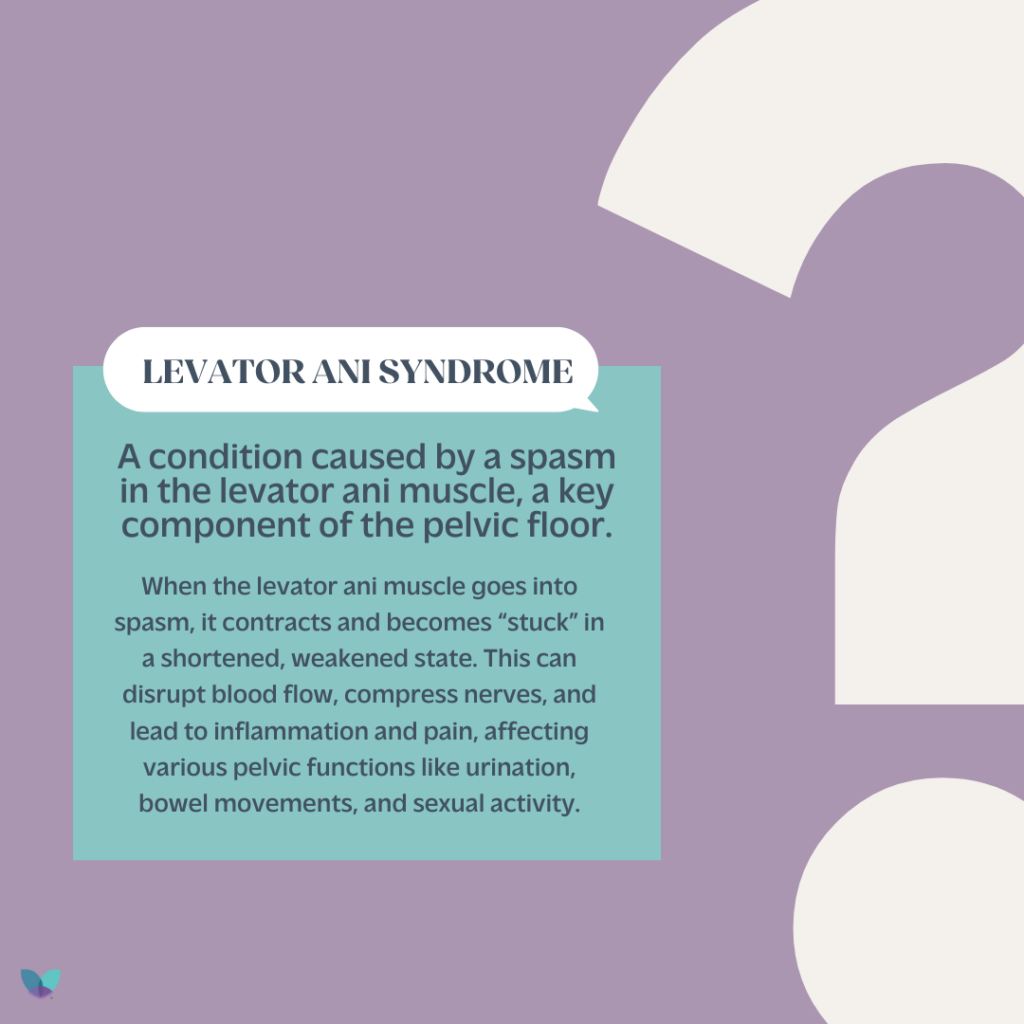
When the levator ani muscle goes into spasm, it contracts and becomes “stuck” in a shortened, weakened state. This can disrupt blood flow, compress nerves, and lead to inflammation and pain, affecting various pelvic functions like urination, bowel movements, and sexual activity. Levator Ani Syndrome is estimated to affect 5-8% of the population.
Symptoms of Levator Ani Syndrome
The symptoms of Levator Ani Syndrome can vary widely. While some individuals experience brief, intense pain, others may feel a persistent, vague ache. Symptoms can be triggered by sitting, sleeping, or arise spontaneously. A common complaint is the sensation of a “golf ball” in the rectum.
Common Symptoms:
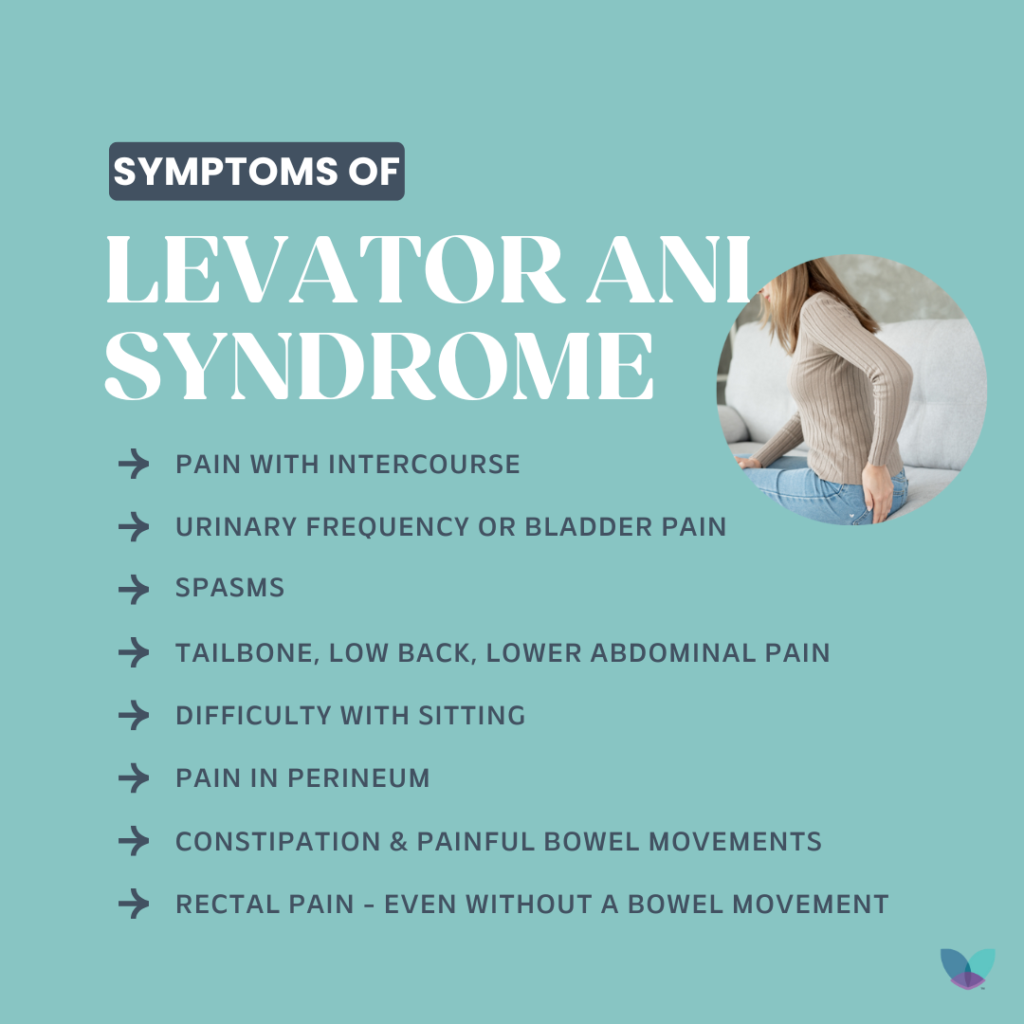
- Sexual pain: Vulvar pain, painful intercourse, penile pain, painful ejaculation
- Urinary issues: Urinary urgency, frequency, burning, or bladder pain
- Bowel discomfort: Severe constipation, painful bowel movements, or rectal pain
- Musculoskeletal pain: Tailbone, low back, lower abdominal, or pubic pain
- Other: Perineum pain, spasms, or difficulty sitting
Causes of Levator Ani Syndrome
LAS often results from multiple factors. It may remain dormant for years and be triggered by trauma or injury.
Potential Causes:
- Chronic constipation or diarrhea
- High-stress environments or anxiety
- Prolonged sitting or poor posture
- Hip joint injuries or lumbar spine issues
- Abdominal trauma or hypermobility
- Inflammatory diseases like endometriosis or Crohn’s disease
- Post-surgical complications, including hemorrhoid surgery
Understanding these causes can help guide effective treatments and empower patients to manage symptoms proactively.
Treatment Options for Levator Ani Syndrome
Managing LAS begins with relaxing and releasing the contracted muscles. The goal is to improve muscle awareness and reduce tension.
Effective Strategies:
- Diaphragmatic breathing: Belly breathing helps lengthen the pelvic floor.
- Pelvic therapy: Guided by a trained pelvic therapist.
- Lifestyle changes: Stress management, anti-inflammatory diets, and reducing prolonged sitting.
- Physical modalities: Warm sitz baths, massage, biofeedback, and light exercises like walking.
Why Avoid Kegels?
Kegel exercises often worsen LAS symptoms as the levator ani muscle is already tense. Focus instead on relaxation techniques.
How PRM Can Help
At PRM, we take a multidisciplinary approach to treating Levator Ani Syndrome. Along with modalities such as pelvic floor physical therapy, we provide treatment through the PRM Protocol™, which treats the symptoms of chronic abdominal pelvic pain by a direct treatment of inflamed pelvic nerves and spastic pelvic muscles which are often the root cause of symptoms.
In addition, we emphasize lifestyle modifications, such as dietary adjustments for constipation and stress management, to empower patients in their recovery journey.
Seeking Relief
If you’re experiencing symptoms of Levator Ani Syndrome, it’s essential to seek care from specialists who understand the complexity of pelvic health. At PRM, we’re here to guide you toward a pain-free, functional life.
Contact us to learn more about how our multimodal approach can support your journey to wellness.