For too long, people living with endometriosis have faced years of delayed diagnosis, dismissal, and unnecessary suffering. On average, it takes 7–10 years to receive a formal endometriosis diagnosis. Traditionally, this has been tied to surgical confirmation, which often means patients are left untreated until invasive measures are taken. At PRM, we believe patients deserve answers and relief much sooner.
Why We Clinically Diagnose Endometriosis
At PRM, our providers clinically diagnose endometriosis based on symptoms, patient history, and physical examination rather than requiring immediate surgical confirmation. This approach ensures patients don’t have to wait years or undergo unnecessary procedures before receiving care.
Common symptoms we evaluate include:
- Severe or persistent pelvic pain
- Pain with menstruation, ovulation, or intercourse
- Gastrointestinal or urinary symptoms tied to the cycle
- Fatigue and systemic inflammation
- Difficulty with mobility or daily activities due to pain
By focusing on a thorough evaluation, we can recognize the patterns of endometriosis and begin treatment earlier. This helps reduce time lost to suffering and prevents symptoms from worsening.
The PRM Protocol™: Our Comprehensive Options for Care
Once a clinical diagnosis is made, PRM offers a multi-step, integrated care plan tailored to each patient’s needs. Our treatment addresses the root cause of pain, nerve inflammation, and pelvic floor dysfunction, while providing whole-body support.
Our approach includes:
- In-office ultrasound-guided procedures to calm inflamed pelvic nerves and muscles
- Specialized pelvic floor physical therapy coordination for lasting improvement
- Collaborative care with excision surgeons when surgery is appropriate
- Lifestyle and integrative medicine support, including guidance on movement, nutrition, and stress management
- Ongoing follow-up to monitor progress and adjust treatment as symptoms change
Excision Surgery as One Option
For many patients, excision surgery can play an important role in long-term healing by removing endometriosis lesions directly. At PRM, we collaborate with highly skilled excision surgeons to provide this option when it is the right step in a patient’s journey.
At the same time, we know surgery is not the only path to relief. That’s why we developed the PRM Protocol™, a non-surgical, office-based approach that treats pelvic nerve inflammation, restores mobility, and supports healing both before and after surgery. This gives patients multiple options, empowering them to choose the right treatment plan for their unique needs.
Why This Matters
By diagnosing endometriosis clinically, PRM shortens the time between symptom onset and treatment. Patients receive validation, support, and a plan, without being told they must wait for surgery to “prove” their pain is real.
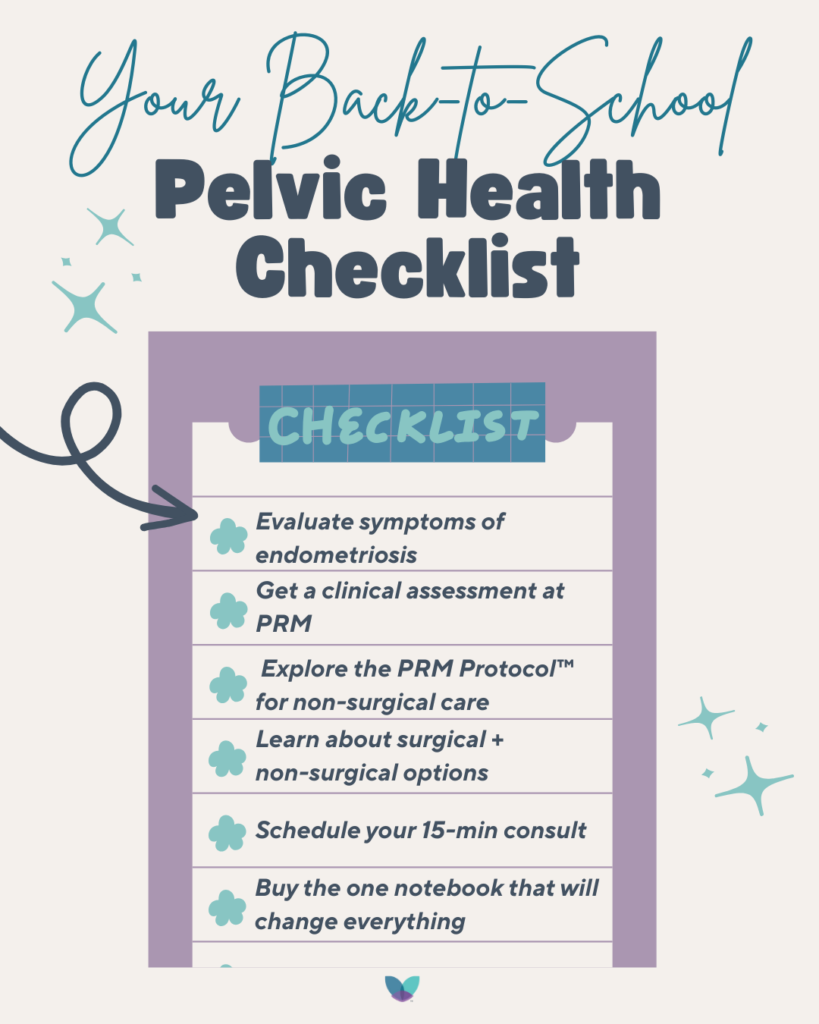
This back-to-school season, PRM wants to be on your priority health checklist. We’re now offering 15-minute consults at our locations to help you quickly evaluate your pelvic health, understand your options, and get on track with a plan, whether it’s non-surgical care with the PRM Protocol™ or collaboration with excision surgeons.
That’s why PRM brings together endometriosis excision surgeons and pelvic pain specialists all under one roof, so patients have access to coordinated, comprehensive care without needing to navigate multiple systems on their own.
Our mission is simple: We hear you. We see you. We believe you. And we are committed to reducing the years patients spend suffering from pelvic pain.
Ready to take the next step? Schedule your 15-minute consult today and add PRM to your back-to-school health checklist.