Introducing the PRM Interactive Endometriosis Symptom Tracker
How to Track Endometriosis Symptoms and Identify Patterns
Living with endometriosis often means experiencing symptoms that change from day to day or throughout the month. Chronic pelvic pain, fatigue, digestive issues, and painful periods can make it difficult to understand what your body is trying to tell you.
To help patients organize these experiences more easily, PRM created the Interactive Endometriosis Symptom Tracker.
This tool is designed to help you quickly record symptoms, recognize patterns in pelvic pain and fatigue, and walk into medical appointments feeling more prepared.
Instead of scattered notes, journals, or trying to remember symptoms weeks later, the tracker helps organize everything in one place.
Why Tracking Endometriosis Symptoms Matters
Endometriosis symptoms can affect many areas of the body. While painful periods are often the most recognized symptom, many patients experience a wider range of issues that may seem unrelated at first.
Symptoms commonly associated with endometriosis include:
-
chronic pelvic pain
-
painful periods
-
heavy menstrual bleeding
-
fatigue
-
digestive symptoms such as bloating, nausea, or constipation
-
bladder discomfort or urinary urgency
-
lower back or hip pain
-
pain during intercourse
Because these symptoms can appear at different times throughout the month, recognizing patterns can be difficult without consistent tracking.
Tracking symptoms over time may help patients notice connections between pain levels, menstrual cycles, fatigue, and other changes in their body.
The Challenge of Tracking Symptoms
Many people try to track symptoms informally, but this can quickly become overwhelming.
Patients often rely on methods like:
-
writing notes in journals
-
saving symptoms in phone notes
-
taking photos during symptom flare-ups
-
trying to remember symptoms before medical appointments
-
tracking information across multiple apps
Over time, these notes can become scattered and difficult to reference. Important details may be forgotten, especially when symptoms occur frequently or change throughout the month.
The Interactive Endometriosis Symptom Tracker was created to simplify this process and provide a more structured way to document symptoms.
What Symptoms Should You Track?
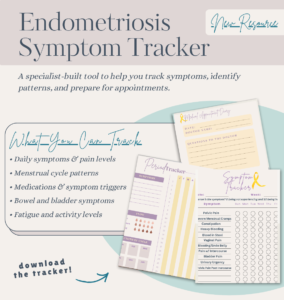
Tracking a variety of symptoms can provide a more complete picture of how endometriosis may be affecting your daily life.
Pelvic Pain and Pain Severity
Pelvic pain is one of the most common symptoms associated with endometriosis. Tracking pain severity, location, and frequency can help identify when symptoms worsen and how they impact daily activities.
Menstrual Symptoms and Cycle Changes
Many people with endometriosis experience painful periods or heavy menstrual bleeding. Tracking menstrual symptoms alongside other symptoms may help reveal connections between the menstrual cycle and pelvic pain.
Fatigue and Energy Levels
Fatigue is a common but often overlooked symptom. Monitoring energy levels can help patients recognize when fatigue occurs and whether it relates to other symptoms or certain times in the cycle.
Digestive Symptoms
Some patients experience digestive symptoms such as bloating, nausea, constipation, or diarrhea. Tracking digestive symptoms can help determine whether they occur alongside pelvic pain or during certain phases of the menstrual cycle.
Bladder and Urinary Symptoms
Bladder symptoms, including urgency or discomfort, can sometimes occur with endometriosis. Tracking these symptoms may help provide a more complete overview of how symptoms affect daily life.
The Interactive Symptom Tracker allows patients to record all of these symptoms quickly and view them in an organized format.
Identifying Symptom Patterns
One of the biggest benefits of tracking symptoms is the ability to identify patterns over time.
For example, patients may notice that:
-
pelvic pain increases around certain points in the menstrual cycle
-
fatigue worsens during symptom flare-ups
-
digestive symptoms occur alongside pelvic pain
-
certain activities trigger symptom flare-ups
Recognizing these patterns can make it easier to explain symptoms during medical appointments and help guide more productive conversations with healthcare providers.
Preparing for an Endometriosis Appointment
Many patients arrive at medical appointments unsure how to summarize everything they have been experiencing.
Bringing organized symptom information can help ensure important details are not forgotten.
Tracking symptoms ahead of time may help you:
-
describe how often symptoms occur
-
explain pain severity and location
-
identify patterns related to your menstrual cycle
-
discuss how symptoms affect daily life
-
ask more focused questions during the appointment
Using the Interactive Endometriosis Symptom Tracker can make this process much easier by organizing your responses into a clear overview.
Start Using the Interactive Endometriosis Symptom Tracker
Tracking symptoms does not have to be complicated.
The Interactive Endometriosis Symptom Tracker was created by pelvic pain specialists at PRM to help patients document symptoms, identify patterns, and prepare for conversations with healthcare providers.
You can use the tracker to record:
-
pelvic pain and pain severity
-
menstrual symptoms
-
fatigue and energy levels
-
digestive symptoms
-
bladder symptoms
-
symptom flare patterns
If you are looking for a simple way to start tracking your symptoms, this tool can help you organize your experience in minutes.
Download the Endometriosis Symptom Tracker
Understanding your symptoms is an important first step toward finding answers and exploring treatment options.