April is Adenomyosis Awareness Month, and at PRM, we are committed to being a reliable source of facts, education, and validation for those who may be struggling with the symptoms of this often-overlooked condition. If you’ve been experiencing certain symptoms but haven’t yet received a diagnosis, you may be wondering: “What is adenomyosis?” and “Could this be what I have?”
Adenomyosis is a medical condition that affects the uterus, and it can lead to a variety of symptoms that can be both painful and disruptive to daily life. If you’ve been experiencing heavy or painful periods, pelvic discomfort, or other issues related to your reproductive health, it’s important to know that adenomyosis might be the cause—and you’re not alone.
Take the Adenomyosis Symptom Quiz
What Is Adenomyosis?
Adenomyosis occurs when the tissue that normally lines the inside of your uterus (endometrial tissue) starts to grow into the muscle walls of the uterus. This can lead to an enlarged uterus and cause pain, bleeding, and other symptoms. Adenomyosis is often mistaken for other conditions like endometriosis or fibroids, so it’s crucial to recognize the signs and seek proper medical advice.
What Are the Most Common Symptoms of Adenomyosis?
Adenomyosis symptoms can vary from woman to woman, and in some cases, the condition may not cause any noticeable symptoms at all. However, there are several key symptoms to be aware of if you suspect you may have adenomyosis. Here are the most common ones:
Painful Periods (Dysmenorrhea)
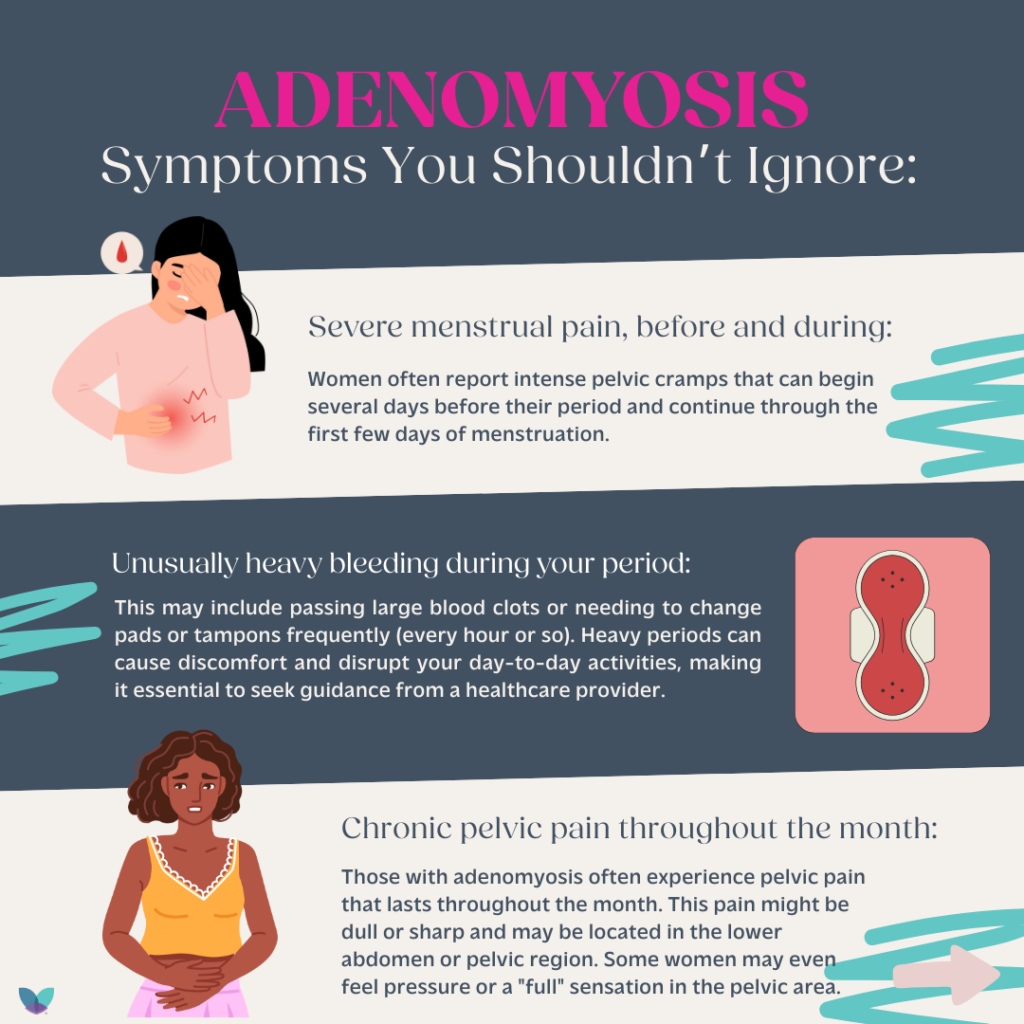
One of the hallmark signs of adenomyosis is severe menstrual pain. If you’ve been experiencing cramping that’s significantly worse than what you’ve had in the past, or if it lasts longer than usual, it could be a sign of adenomyosis. Women often report intense pelvic cramps that can begin several days before their period and continue through the first few days of menstruation.
Heavy Periods (Menorrhagia)
If you find yourself dealing with unusually heavy bleeding during your period, this could be another clue that adenomyosis is the cause. This may include passing large blood clots or needing to change pads or tampons frequently (every hour or so). Heavy periods can cause discomfort and disrupt your day-to-day activities, making it essential to seek guidance from a pelvic pain specialist.
Chronic Pelvic Pain
In addition to painful periods, women with adenomyosis often experience pelvic pain that lasts throughout the month. This pain might be dull or sharp and may be located in the lower abdomen or pelvic region. Some women may even feel pressure or a “full” sensation in the pelvic area.
Pain During Intercourse (Dyspareunia)
Pain during or after sexual activity is another common symptom of adenomyosis. This can range from mild discomfort to more severe pain. The pain may occur deep inside the pelvis or around the cervix and may be especially noticeable during or after deep penetration.
Enlarged Uterus
An enlarged uterus is another sign of adenomyosis. In some cases, the condition can cause the uterus to swell or feel enlarged. This can be detected by a pelvic pain specialist during a pelvic exam or imaging tests such as an ultrasound or MRI. In severe cases, an enlarged uterus may cause visible changes in the shape of the abdomen.

Bloating and Digestive Issues
Some women with adenomyosis report feeling bloated or having digestive issues, such as constipation or frequent urination. These symptoms may occur as a result of the enlarged uterus pressing against the intestines or bladder.
Fatigue
Heavy bleeding, chronic pain, and disrupted sleep patterns due to symptoms can all contribute to feelings of fatigue and exhaustion. Many women with adenomyosis report feeling unusually tired or drained, even if they are getting enough sleep.
How Is Adenomyosis Diagnosed?
If you think you might have adenomyosis, it’s essential to consult with a healthcare provider. Diagnosis usually involves a combination of a pelvic exam, ultrasound, MRI, and sometimes, a biopsy. In some cases, a definitive diagnosis can only be made after surgery, particularly if other conditions need to be ruled out.
What Causes Adenomyosis?
The exact cause of adenomyosis isn’t entirely understood, but there are several potential factors that could contribute to its development:
- Hormonal imbalances, particularly involving estrogen, may encourage the growth of endometrial tissue into the uterine muscle.
- Prior uterine surgery, such as a C-section or fibroid removal, may increase the risk of developing adenomyosis.
- Age and childbearing history also play a role, as adenomyosis is more commonly diagnosed in women over the age of 30 and in those who have had children.
How Is Adenomyosis Treated?
While there is no cure for adenomyosis, several treatment options are available to help manage the symptoms. These include:
- Pain Management through the PRM Protocol™: The PRM Protocol™, a patented treatment provided by PRM to reduce inflammation in the pelvic floor, is effective in reducing pain as a result of inflammation caused by adenomyosis.
- Hormonal therapies: Birth control pills, hormonal IUDs, or hormone therapy can help regulate periods and reduce bleeding.
- Uterine artery embolization (UAE): This minimally invasive procedure cuts off the blood supply to the affected areas of the uterus.
- Surgical options: In more severe cases, a hysterectomy (removal of the uterus) may be recommended, especially if other treatments have not provided relief.
Getting Support and Finding Answers
Adenomyosis can be a difficult condition to navigate, especially if you’ve been struggling with symptoms without a clear diagnosis. It’s important to remember that you are not alone. If you are experiencing any of the symptoms mentioned in this blog, don’t hesitate to seek support from a healthcare professional who can help guide you toward the right diagnosis and treatment.
At PRM, we are dedicated to raising awareness about adenomyosis and providing resources to help you take control of your health. Whether you’re still figuring out what’s going on with your body or you’ve already been diagnosed, we’re here to provide facts, validation, and a community of support.
If you think you might have adenomyosis or if you’ve been living with symptoms that haven’t been properly addressed, it’s time to take the next step. Schedule an appointment with a PRM pelvic pain specialist and have your symptoms evaluated as soon as possible.