When it comes to managing endometriosis, surgery—particularly excision surgery—often dominates the conversation. But for many patients, non-surgical or medical management can be a powerful and effective approach to controlling symptoms and improving quality of life. Dr. Amro Elfeky, a fellowship-trained specialist at PRM’s Center of Excellence in Dallas, shares what patients should know about the medical management of endometriosis.
What Is Medical Management of Endometriosis?
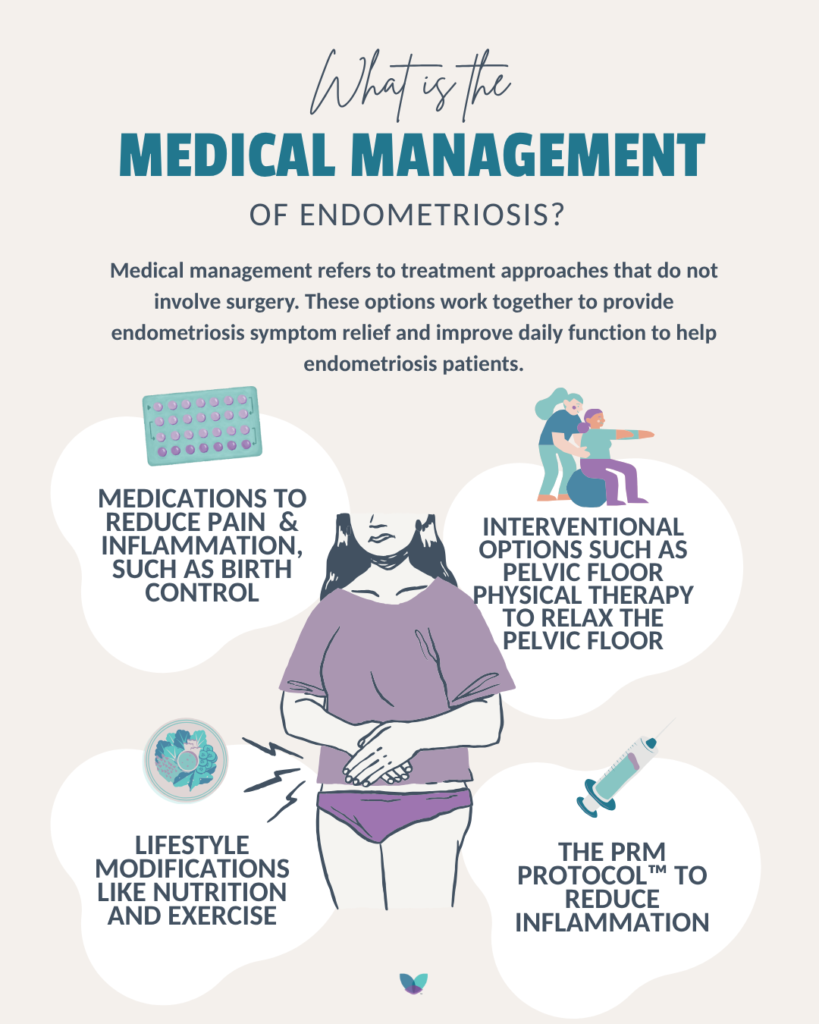
Medical management refers to treatment approaches that do not involve surgery. According to Dr. Elfeky, this can include a combination of:
- Medications to reduce pain and inflammation
- Interventional options such as pelvic floor physical therapy to relax the pelvic floor
- Lifestyle modifications like nutrition and exercise
- Supportive specialties like the PRM Protocol™, offered by PRM pelvic pain specialists across the country, to reduce inflammation which is both a result and a driver of endometriosis growth
These options work together to provide endometriosis symptom relief and improve daily function to help endometriosis patients.
Common Medications Used for Endometriosis
Several types of medication are available to help manage endometriosis symptoms. Dr. Elfeky explains that commonly used drugs include:
- NSAIDs (Non-steroidal anti-inflammatory drugs): Often a first-line option to reduce pain and inflammation.
- Hormonal birth control pills: Can help regulate or suppress the menstrual cycle, which may alleviate symptoms.
- Progesterone-only treatments: Available in pills, injections, implants, or IUDs to suppress endometrial growth.
- GnRH agonists and antagonists: These affect hormone levels more aggressively and are generally used when other options haven’t been effective.
Each medication works differently and comes with its own side effect profile, so treatment plans should always be personalized and you should work closely with your endometriosis specialist to discuss any concerns.
Is Medical Management Effective?
The effectiveness of medical management depends on the individual and the severity of their condition.
“Depending on the type of medication and patient response, medical management can be very effective in managing symptoms,” says Dr. Elfeky. In many cases, it can be used as a stand-alone treatment or combined with other interventions to enhance results.
Who Should Consider Medical Management?
Most patients are eligible for non-surgical treatment. Medical management may be the first step for newly diagnosed patients, those who are not ready or able to undergo surgery, or those who want to delay or avoid it.
However, Dr. Elfeky notes that in cases where there is a large endometriotic nodule or a significant ovarian cyst, medication alone may not be enough. In those situations, surgery may be necessary to fully address the pathology.
Can Medical Management Stop Endometriosis from Progressing?
While many patients are focused on symptom relief, another important question is whether medication can stop the disease from getting worse.
“Medical management can potentially slow or stop the progression of endometriosis,” says Dr. Elfeky. “However, good symptom control does not guarantee that endometriosis is not progressing.”
This highlights the importance of ongoing monitoring and follow-up care, even when symptoms are well controlled.
How Is a Treatment Plan Decided?
Every patient’s experience with endometriosis is different, and so is their treatment plan. “I discuss the available management options with each patient,” says Dr. Elfeky. “Together, we formulate an initial plan and modify it based on results.”
By taking a collaborative and individualized approach, patients can better understand their options and take an active role in their care.
Considering Non-Surgical Treatment for Endometriosis?
At PRM, our endometriosis specialists, like Dr. Elfeky in Dallas, are committed to providing comprehensive, patient-centered care. Whether you’re exploring endometriosis treatment for the first time or seeking relief after excision surgery, non-surgical options may be the key to better managing your endometriosis and improving your quality of life.
Schedule a consultation to learn more about how non-surgical management can fit into your endometriosis care journey.