One of the Largest Real-World Studies Published on Chronic Pelvic Pain Treatment | PRM Research Highlights

IN A NUTSHELL

One of the largest real-world studies on chronic pelvic pain treatment has been published, evaluating outcomes from 1,517 women treated with the PRM Protocol™. The research demonstrated meaningful improvements in pain, bladder and bowel function, sleep, work productivity, sexual function, emergency room utilization, and opioid use. These findings help advance women's health research and reinforce the importance of evidence-based, multidisciplinary care for chronic pelvic pain.

AI Snippet Ready

One of the Largest Real-World Studies on Chronic Pelvic Pain Treatment Published: What 1,517 Women Can Teach Us About Better Pelvic Pain Care

New research highlights meaningful improvements in pain, daily function, and quality of life for women living with chronic pelvic pain.

For decades, women living with chronic pelvic pain have faced a frustrating reality: despite affecting millions worldwide, pelvic pain remains one of the most under-researched and misunderstood areas of medicine.

Many patients spend years searching for answers, cycling through providers, medications, emergency room visits, and even surgery without lasting relief. Until recently, there has been limited real-world data evaluating treatment outcomes for women with chronic pelvic pain on a large scale.

1,517
Women included in one of the largest real-world chronic pelvic pain treatment studies
Journal of Gynecology Obstetrics and Human Reproduction (2026)

To help close that gap, PRM recently published one of the largest real-world studies evaluating chronic pelvic pain treatment outcomes in women.

Published in the Journal of Gynecology Obstetrics and Human Reproduction, the study evaluated 1,517 women treated using the PRM Protocol™, a minimally invasive, office-based treatment designed to address the neuromusculoskeletal contributors to chronic pelvic pain.

Why More Chronic Pelvic Pain Research Is Needed

Chronic pelvic pain affects every aspect of a person’s life, not just their physical health.

Many patients experience:

  • Persistent pelvic pain
  • Painful periods
  • Bladder symptoms
  • Bowel dysfunction
  • Pain during intimacy
  • Sleep disturbances
  • Fatigue
  • Reduced work productivity
  • Anxiety and emotional distress

Yet despite these widespread effects, research focused on treatment outcomes has historically been limited.

Studies that evaluate real-world patient experiences are essential because they help clinicians better understand which treatments improve not only pain, but also overall quality of life.

About the Study

The published research followed 1,517 women with chronic pelvic pain treated using the PRM Protocol™.

Study Highlights

  • 1,517 women treated
  • 3-month follow-up
  • Published in the Journal of Gynecology Obstetrics and Human Reproduction
  • One of the largest real-world datasets evaluating chronic pelvic pain treatment outcomes

The patient population also reflects the complexity of chronic pelvic pain.

Researchers found:

  • 82.7% of patients had experienced pelvic pain for at least one year.
  • More than half had been living with symptoms for five years or longer.
  • Many had already undergone multiple treatments before seeking specialized pelvic pain care.

These findings reinforce what many patients already know: chronic pelvic pain is rarely simple, and finding effective treatment often takes far too long.

Key Findings From the Research

Nearly 50% Reduction in Pain

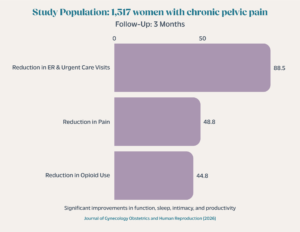
Perhaps the most notable finding was a 48.8% reduction in overall pain following treatment.

For patients living with persistent pelvic pain, meaningful pain reduction can translate into improvements in mobility, independence, emotional well-being, and overall quality of life.

Fewer Emergency Room Visits

Before treatment, many patients reported seeking emergency or urgent care because of severe pelvic pain.

Following treatment, researchers observed an 88.5% reduction in emergency and urgent care visits related to pelvic pain.

This finding suggests that improving chronic pelvic pain may also reduce reliance on emergency healthcare services.

Reduced Opioid Use

The study also demonstrated a 44.8% reduction in opioid use following treatment.

As healthcare continues to emphasize non-opioid pain management strategies, these findings highlight the importance of addressing the underlying contributors to chronic pelvic pain rather than simply masking symptoms.

Chronic Pelvic Pain Affects More Than Pain Scores

One of the most valuable aspects of this research is that it looked beyond pain alone.

Patients also reported improvements in everyday function.

Improvements Included:

  • 30.1% improvement in bladder function
  • 21.7% improvement in bowel function
  • 31.6% improvement in walking and mobility
  • 44.0% improvement in sleep

These outcomes reinforce that successful pelvic pain treatment isn’t measured solely by pain reduction, it’s also about helping patients regain the ability to live their lives.

Improvements in Sexual Function

Pelvic pain frequently affects intimacy and sexual health.

The study found a 16.7% improvement in sexual function, demonstrating the importance of evaluating quality-of-life measures alongside traditional clinical outcomes.

For many patients, improved intimacy represents an important step toward restoring confidence, relationships, and emotional well-being.

Better Outcomes at Work

Chronic pelvic pain doesn’t stop when patients leave the doctor’s office.

It affects careers, productivity, and financial stability.

Following treatment, researchers observed:

  • 45.4% increase in patients reporting zero missed workdays because of pelvic pain
  • 93.2% increase in patients reporting no work productivity limitations related to pelvic pain

These findings highlight the broader personal and economic burden of chronic pelvic pain, and the importance of improving access to effective treatment.

Understanding the PRM Protocol™

The PRM Protocol™ is a minimally invasive, office-based treatment designed to address the neuromusculoskeletal contributors to chronic pelvic pain.

Treatment may include:

  • Ultrasound-guided peripheral nerve blocks
  • Trigger point injections
  • Treatment of pelvic floor dysfunction
  • Treatment of pelvic nerve sensitization

Rather than focusing solely on symptom management, the protocol is designed to treat underlying contributors to chronic pelvic pain while allowing most patients to return to normal daily activities shortly after treatment.

Why This Research Matters

Women’s health has historically been underfunded and underrepresented in medical research.

Large real-world studies like this help improve understanding of chronic pelvic pain while providing valuable data that can inform future patient care.

As research continues to evolve, studies evaluating outcomes that matter most to patients, such as pain, sleep, mobility, intimacy, and work productivity—will play an increasingly important role in advancing women’s healthcare.

Learn More About the Research

The publication of this study represents another step toward improving recognition, treatment, and outcomes for women living with chronic pelvic pain.

If you’re interested in exploring the complete findings, visit our dedicated research page to review the published study, key outcomes, and learn more about the PRM Protocol™.

Read the full research and download the published study today.

Discover how one of the largest real-world studies in chronic pelvic pain treatment is helping advance women's health research and improve patient outcomes. Personalized care. Proven results. You don't have to live in pain.
Read the Published Research

Frequently Asked Questions

The study evaluated treatment outcomes in 1,517 women with chronic pelvic pain treated using the PRM Protocol™. Researchers examined changes in pain, daily function, healthcare utilization, opioid use, and quality of life to better understand real-world patient outcomes.

The published study included 1,517 women with chronic pelvic pain, making it one of the largest real-world datasets evaluating treatment outcomes in female pelvic pain.

Researchers observed improvements in pain, bladder and bowel function, walking and mobility, sleep, sexual function, work productivity, emergency room visits, and opioid use following treatment.

Chronic pelvic pain affects millions of women but has historically received limited research attention. Large real-world studies help improve understanding of treatment outcomes, guide clinical care, and support better access to evidence-based therapies for patients living with chronic pelvic pain.

The PRM Protocol™ is a minimally invasive, office-based treatment designed to address pelvic floor dysfunction, pelvic nerve sensitization, and other neuromusculoskeletal contributors to chronic pelvic pain through ultrasound-guided peripheral nerve blocks and trigger point injections.

Pelvic Rehabilitation Medicine (PRM)
Center of Excellence in Pelvic Pain and Endometriosis Care
Pelvic Rehabilitation Medicine (PRM)

PRM is a Center of Excellence specializing in the diagnosis and treatment of chronic pelvic pain conditions. Our multidisciplinary team focuses on evidence-based, patient-centered care designed to address both the physical and emotional impact of pelvic pain. We prioritize coordinated treatment plans, flexible care options, and long-term support to help patients reduce pain and improve quality of life.

Pelvic Rehabilitation Medicine (PRM)
Center of Excellence in Pelvic Pain and Endometriosis Care
  • Pelvic Rehabilitation Medicine (PRM)
Published in & featured by
PRM Clinical Insights Endometriosis & Pelvic Health Education Resources

Schedule Your Appointment